
What Type of Bollard Is Best for Home Security?
The most robust-looking bollard isn’t automatically the right choice for your driveway. If access needs to stay simple, a design that’s awkward to raise, lower or remove can quickly become a daily frustration. So, what type of bollard is best for home security? The answer depends on your driveway’s access needs, how often vehicles pass and the ground where the bollard will be installed.
A visible barrier can help manage vehicle access without making everyday use difficult. The right option should fit your household’s routine, but no bollard can guarantee that a vehicle won’t be stolen.
This guide compares fold-down, telescopic, removable and static bollards, focusing on how each operates and which driveway routines it may suit. You’ll also find practical checks for the site and installation. Bollard Secure supplies these bollard types and offers installation for customer-purchased bollards, including groundwork, core drilling and concreting to product specifications. Use the comparisons to narrow down the option that fits your home and how you use your driveway.
Table of Contents
What does home security need from a driveway bollard?
A driveway bollard controls vehicle access to a property or parking space. It can make it harder for a vehicle to enter or occupy that space, but it can’t guarantee that a crime won’t happen. Its purpose is to manage access in a way that suits the property and the people who use it.
Start by defining what you need it to do. Are you aiming to discourage unwanted vehicle access, add a physical barrier in front of a parked car, or control entry across the driveway? These aims overlap, but they aren’t identical. Protecting one parking space may call for a different position and operating routine from controlling access across a wider driveway.
A bollard can deter unwanted vehicle access, but it can’t guarantee theft prevention. Its suitability depends on the property layout, likely access, product specification and installation. For a broader overview of how bollards are used for traffic control and access management, see these types of traffic bollards.
Start with the vehicle and access you need to protect
Be specific about the concern: vehicle theft, unwanted vehicles entering the property, or other drivers using a particular parking space. Then list who needs legitimate access. Include household members, multiple drivers and occasional authorised visitors. For deliveries, decide whether a driver needs to reach a drop-off point or can leave a parcel elsewhere.
A driveway bollard controls access to private parking. A parking post may instead be intended to reserve a particular space. Consider where a barrier would need to sit to address your concern without obstructing vehicle movement or access relied on by others.
Why no single bollard type is best for every home
How often vehicles pass affects the practical choice. If a vehicle uses the driveway several times a day, a bollard that must be raised, lowered or removed for each journey may become inconvenient. A fold-down or telescopic design can move out of the way when needed, but its operating method still has to work for everyone using the driveway.
For occasional access, manual operation may be less of a daily consideration. Ground conditions matter too: the surface construction and available fixing space can affect the installation approach. Underground services also need to be considered during planning.
So, what type of bollard is best for home security? There isn’t a universal answer. Don’t choose by appearance or category alone. A general label such as “strongest” won’t tell you whether a particular bollard suits your driveway. First define the access-control job, then compare suitable options against the site, product specification and household routine.
Compare home-security bollard types by how they operate
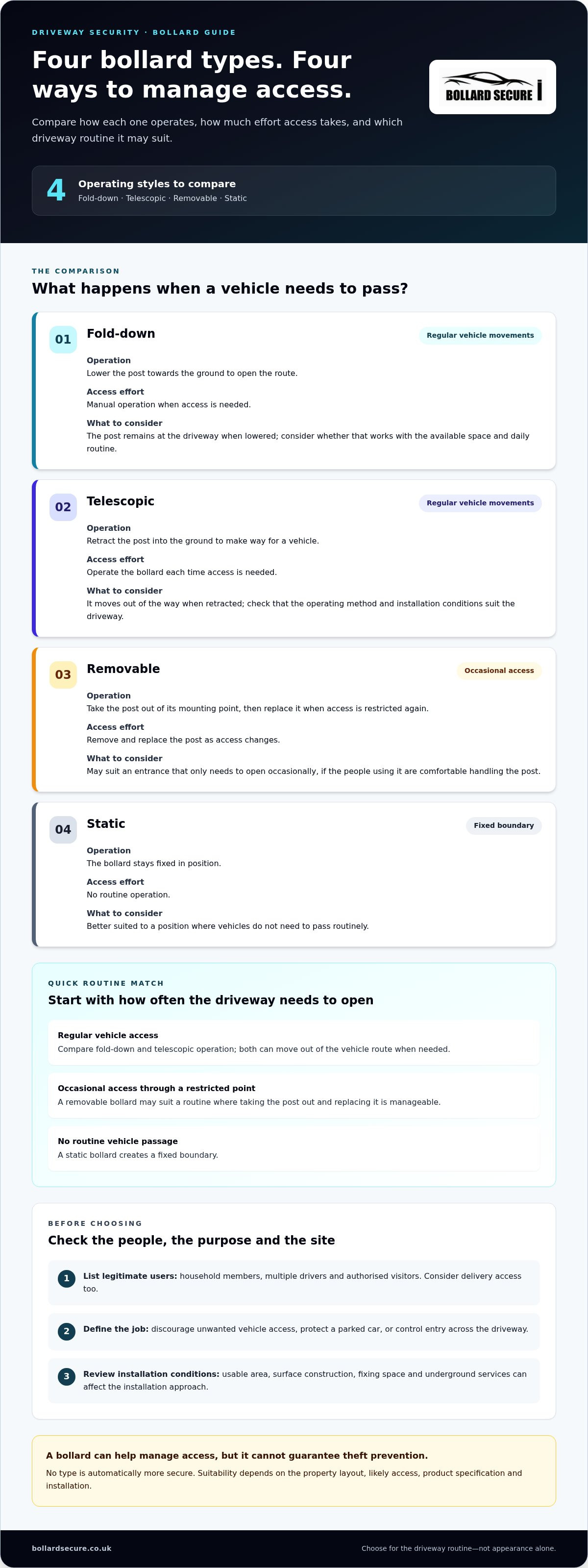
The main difference is what you do when a vehicle needs to pass. A fold-down bollard lowers towards the ground, while a telescopic bollard retracts into it. A removable bollard comes out of its mounting point, and a static bollard stays in place. Each creates a different balance between convenient access and a fixed boundary.
Fold-down and telescopic bollards for regular vehicle access
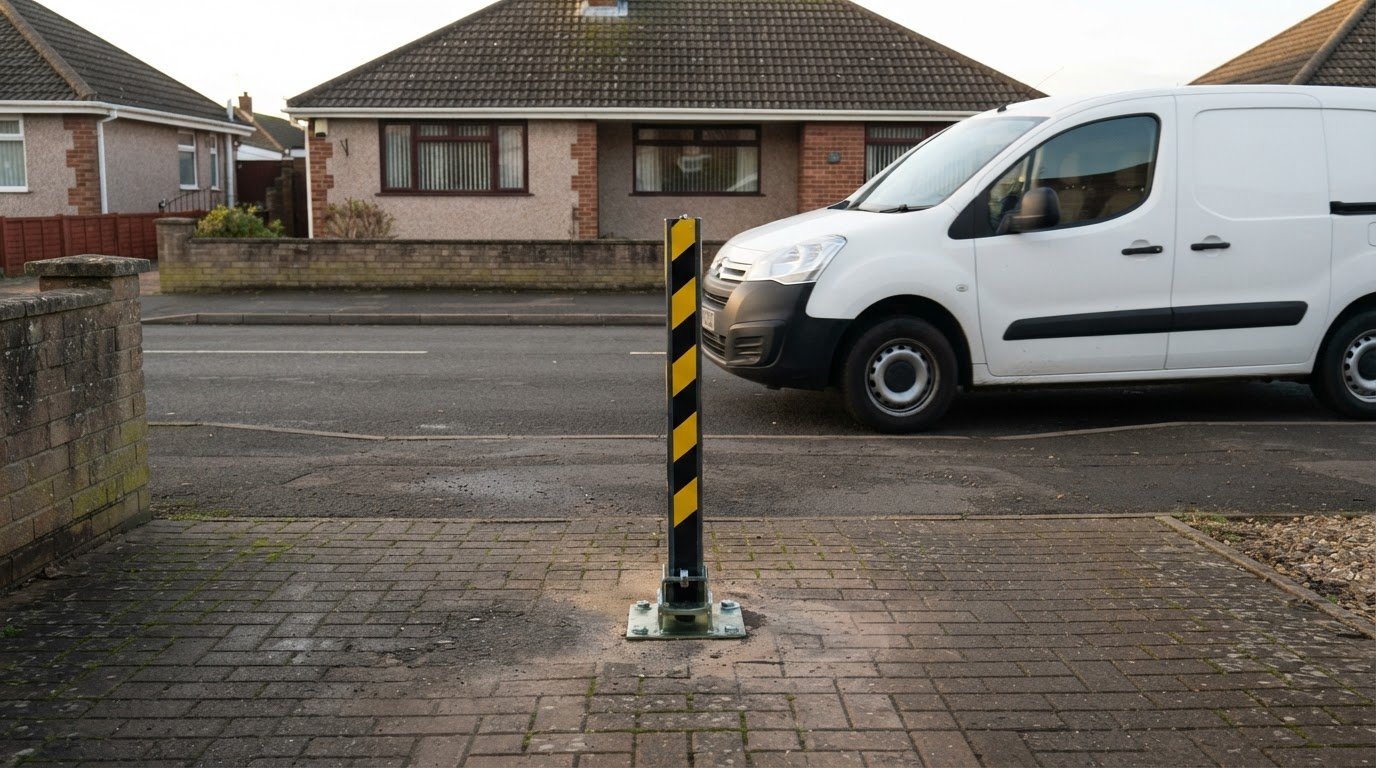
Both types let you open a vehicle route, but they do so differently. A fold-down bollard pivots towards the ground, leaving the post at the surface when lowered. A telescopic bollard retracts into the ground. If vehicles use the driveway regularly, consider which operation fits the available space and feels manageable as part of the daily routine. Bollard Secure supplies both fold-down and telescopic options.
Removable and static bollards for less frequent access
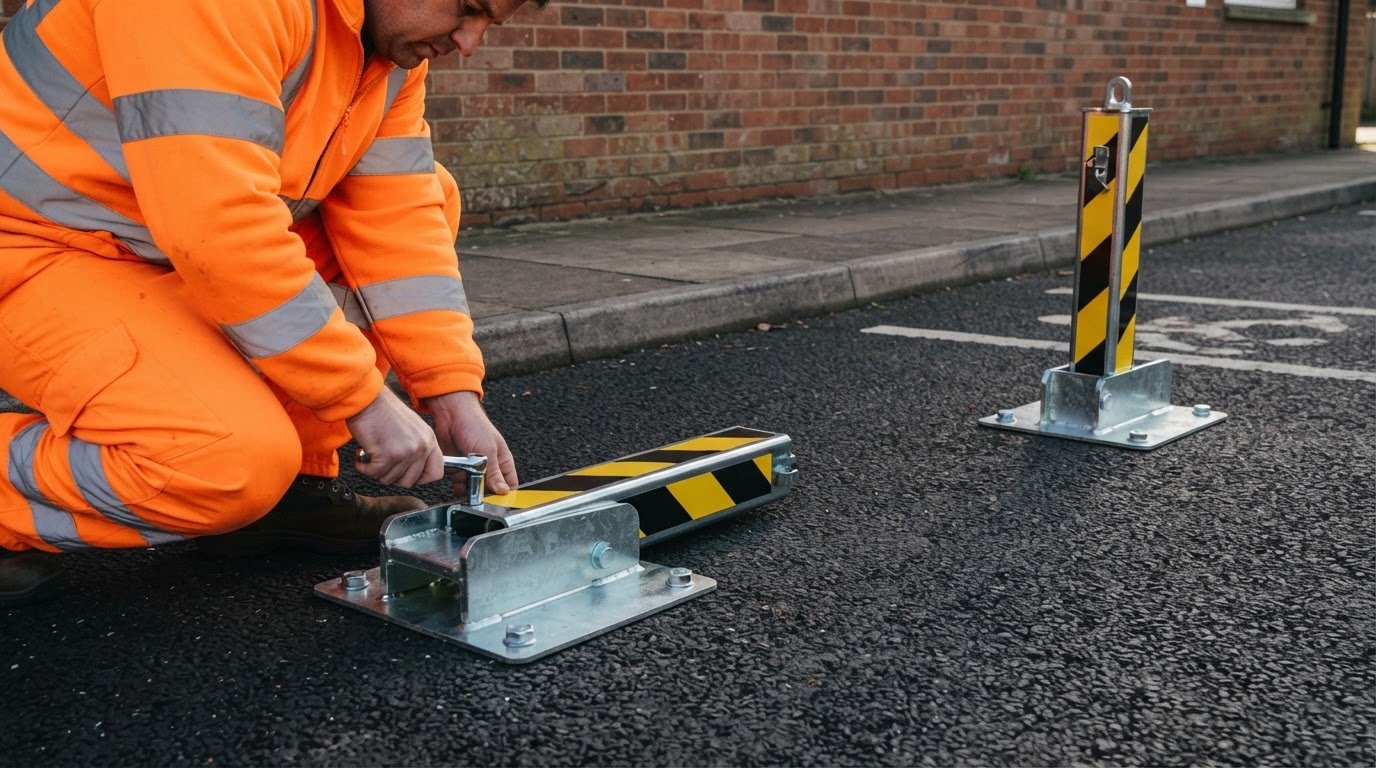
A removable bollard can suit a driveway entrance that only needs to open occasionally, provided the people using it are comfortable taking the post out and putting it back. A static bollard creates a fixed boundary, so it’s better suited to a position where routine vehicle passage isn’t needed. Neither category is automatically more secure: installation and product specification matter too.
A parking post may be a better match if the main aim is to mark or reserve a space, rather than control vehicle entry across the driveway. Before choosing a type, identify the point you need to protect and the movement you need to allow.
In brief: fold-down suits regular access, removable suits occasional access, and static suits a fixed boundary. Treat this as a starting point, not a promise of security performance. To explore Bollard Secure’s driveway bollard options, compare the operating style with your household’s routine.
Which bollard suits your driveway access routine?
Think about every person and vehicle that uses the driveway, not just the main car. A bollard should be manageable to secure after authorised access, whether you raise or lower it, retract it or remove it. Count routine movements on a typical day, then consider less predictable access such as deliveries and visitors.
If you use the driveway every day
For regular vehicle movements, focus on an operation that household members can use consistently. A fold-down bollard lowers out of the vehicle route, while a telescopic one retracts into the ground. Neither is automatically easier. Consider how each operates, who will use it and whether they’ll remember to secure the driveway between journeys.
Multiple drivers can change the calculation. If people arrive and leave at different times, a bollard that one person finds simple may become a regular inconvenience for someone else. Picture the actual routine: who moves it, who secures it again, and whether that’s practical each time. For a closer look at this style, see the Fold-Down Bollard for Driveway: 2026 UK Buying Guide.
Plan for deliveries too. Decide whether drivers should enter the driveway or leave parcels at another agreed point. A bollard controls vehicle entry; it doesn’t determine who is authorised. Make the access routine clear to everyone who uses the space.
If access is occasional or the space is shared
If vehicles rarely need to pass a particular point, a removable bollard may be more practical than a design operated for every journey. The trade-off is that someone must take it out and replace it when access changes. A static bollard may suit a boundary where vehicles aren’t expected to pass at all.
Shared driveways need an agreed routine as well as a suitable operating style. Decide who moves the bollard, how other users will gain access and who will secure it afterwards. If the space is shared but sees frequent vehicle movements, a fixed obstruction could cause avoidable friction.
Daily use: Compare fold-down and telescopic operation with the number of journeys and the people using the driveway.
Occasional access: Consider whether removing and replacing a bollard is manageable for those who need entry.
No routine vehicle access: A static bollard may suit a fixed boundary better than an option designed to move.
The useful question isn’t simply “what type of bollard is best for home security?” It’s which operating routine people will use consistently at your property. Base your choice on real household habits, including shared access and deliveries, rather than an idealised routine.
Check the driveway and installation before choosing
A bollard needs to suit both the way you use the driveway and the place it will be installed. A product that fits your access routine may still be unsuitable if there isn’t enough room for it to operate or the surface can’t accommodate its fixing method. Use this checklist to organise the decision before choosing a product.
Measure the usable area. Note the vehicle route’s width and the space around the proposed bollard. Allow for its operation, whether it folds down, retracts or is removed. Check nearby walls, gates and pedestrian routes too.
Review the surface. Identify what the driveway is made from and how it is constructed. Existing paving or other surface layers can affect the groundwork and fixing approach.
Map access. Mark where vehicles enter and leave, where you want access controlled, and how household members or authorised visitors will pass. Include any route a delivery vehicle may need.
Select the operation. Compare the site and access plan with the way a fold-down, telescopic, removable or static bollard works.
Assess the surface, space and approach to the driveway
Look beyond the spot where the bollard will stand. Check whether a lowered or removed post would obstruct a path, and whether a vehicle can approach and turn without being impeded. Gates, walls and changes in the driveway surface may influence positioning. Underground services and existing construction are important planning considerations, especially before drilling or excavation.
Plan installation around the chosen bollard
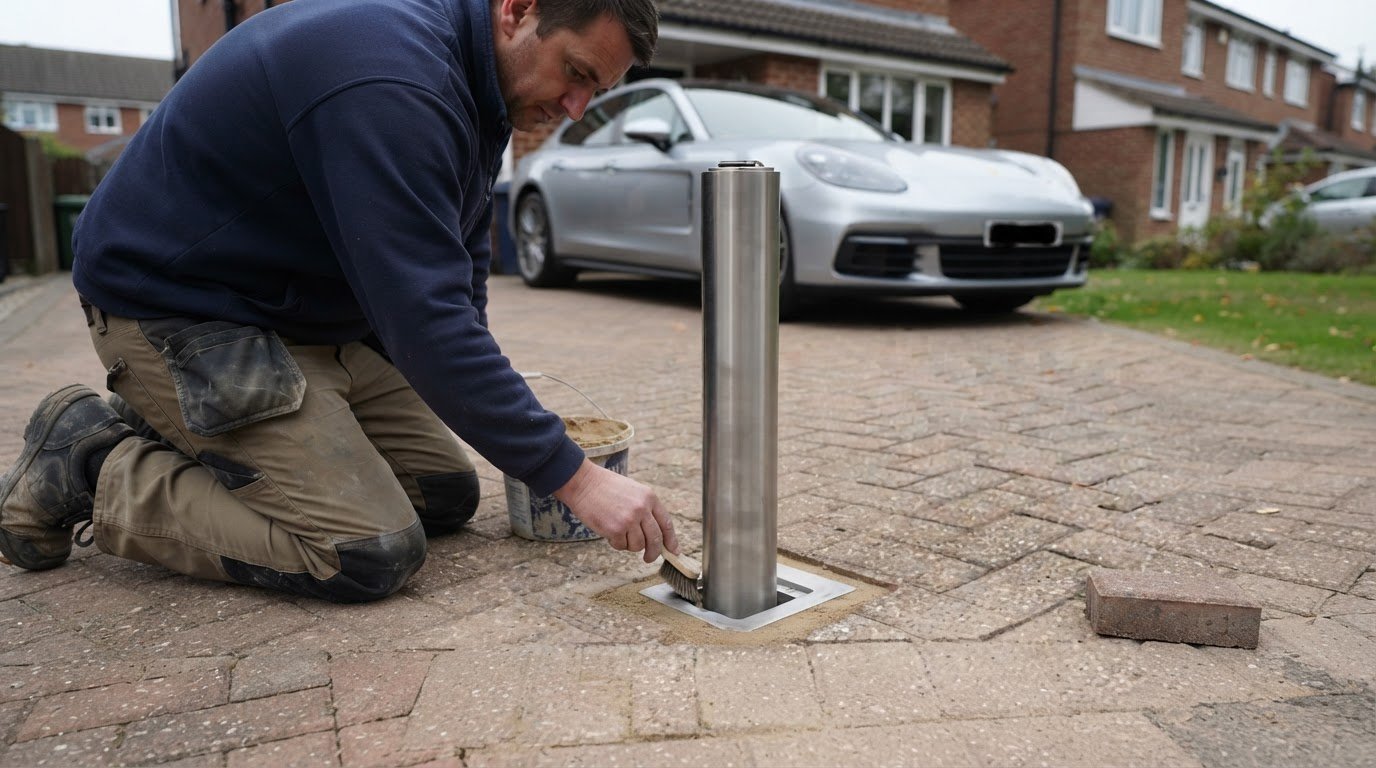
Different bollards can require different groundwork or fixing methods, so don’t rely on a generic installation depth or assume every surface is suitable. The product specification and conditions at the site should guide the plan. Bollard Secure’s installation-only service covers groundwork, core drilling and secure concreting to product specifications, including for customer-purchased bollards.
Site assessment connects the product choice with the work needed to install it. For example, a telescopic option needs space below the surface, while a fold-down design needs room to lower without blocking the vehicle route. These are planning considerations, not proof that a particular driveway is suitable. Surface construction, fixing space and underground services can all affect the installation approach.
If you’re still deciding what type of bollard is best for home security, use your measurements and access map alongside the product specifications. That helps you avoid choosing by category alone and gives installation planning a clear starting point.
Ready to plan the groundwork around your chosen bollard? Arrange bollard installation with Bollard Secure, including groundwork, core drilling and concreting to product specifications.
Choose a home-security bollard and plan your next step
Your choice should bring together three things: how often vehicles need access, how the bollard operates and what your driveway can accommodate. Treat the options below as practical starting points, not a universal security ranking. A bollard’s suitability depends on its specification, intended use and installation at your property.
Use a simple decision summary
Match the expected access routine to the way each bollard moves, then check that the driveway layout and surface can support the chosen option. A product category alone doesn’t establish how much protection it provides. Base your decision on the product’s stated specification and the job it is intended to do.
Regular vehicle access: Consider a fold-down bollard if you want the post to lower for vehicles to pass. A telescopic bollard is another option if retracting the post into the ground suits the site and routine.
Occasional access: A removable bollard may suit a point that needs to open now and then, provided removing and replacing it works for the people who use the driveway.
A fixed boundary: A static bollard may be a starting point where vehicle access through that location isn’t part of the routine.
Then revisit the practical details: available space, approach routes, surface construction and any underground services that could affect installation planning. If several people use the driveway, make sure the operating method works for them, not just for the person choosing the bollard. This turns the comparison into a realistic household decision.
Arrange a product or installation route
Bollard Secure supplies fold-down, telescopic, removable and static bollards for residential driveways. You can purchase bollard hardware or use the installation-only service for customer-purchased bollards. Installation work includes groundwork, core drilling and secure concreting to product specifications. Let the chosen product’s requirements guide the installation approach, rather than relying on a generic depth or fixing assumption.
Start with your access pattern, narrow down the operating style, then consider whether the driveway and product specification align. This won’t guarantee a security outcome, but it gives you a practical basis for choosing an option that fits your property and routine.
Explore Bollard Secure’s security bollards to compare the options and plan a suitable next step for your driveway.
Take the next step towards a more usable driveway
The best choice is one that fits the way your household actually uses the space. Before deciding, picture a normal week: who needs to enter, when the driveway must be secured, and whether the operating routine will remain practical. This real-world check can help turn a shortlist into a confident decision.
If you’re still weighing up what type of bollard is best for home security, match your access needs with the product’s intended use and the conditions at your property. A considered choice can support both security and convenience, without promising a guaranteed security outcome.
Explore Bollard Secure’s options and take a practical next step for your driveway: explore security bollards. With a clear view of your routine and site, you can move forward with greater confidence.
Frequently Asked Questions
Are bollards effective for home security?
A bollard can create a physical barrier to vehicle access and may deter opportunistic entry, but it can’t guarantee that a crime will be prevented. If you’re deciding what type of bollard is best for home security, consider the product specification and installation alongside the property’s other security measures. A bollard can control driveway access while other measures address different risks. Treat it as one part of a considered home-security approach.
Can a driveway bollard protect more than one parked vehicle?
It may help control access to a driveway, but don’t assume one post protects every vehicle parked there. Coverage depends on the driveway’s width, where vehicles sit and the bollard’s position. Controlling the entrance is different from securing separate parking positions within a wide drive. Map the vehicle layout and access points first. The number and arrangement of bollards depend on the site, so there’s no reliable quantity to prescribe without those details.
Do bollards need maintenance?
Follow the manufacturer’s care and operating instructions for the specific bollard. Keep moving parts and locking arrangements clear, and look for visible damage that could affect operation. For example, check that the post moves and secures as intended. Don’t force it if it feels obstructed. Maintenance needs vary with the product and its exposure to the elements, so use the relevant product guidance rather than assuming a universal inspection schedule.
Can a security bollard be installed on a sloping driveway?
It depends on the slope, surface construction and space the bollard needs to operate. Consider how a vehicle approaches the proposed position and whether the bollard can open, lower or retract as intended without obstructing movement. A slope may affect where it can be positioned, but it doesn’t automatically rule out installation. Assess the site alongside the chosen product’s specification rather than relying on a general yes or no for every sloping driveway.
Will a bollard stop keyless car theft?
No. A bollard controls vehicle access to a space; it doesn’t block keyless signals or prevent electronic theft methods. Its role is physical, so treat it as one layer of vehicle security, not a complete answer to every theft risk. Continue sensible security habits for your vehicle and follow its manufacturer’s guidance on keyless entry. A bollard alone can’t guarantee that a vehicle won’t be stolen.
Can a bollard be fitted without blocking pedestrian access?
It can be positioned with pedestrian movement in mind, but the available space and selected bollard type matter. Map where people walk across or alongside the driveway, including the route to a front door, before choosing a position. Consider how the bollard operates and where it sits when moved. Pedestrian routes are part of site planning, not a substitute for checking any applicable requirements for the property.
Could a bollard affect my home insurance?
It could be relevant to your policy, but the effect depends on your insurer and the terms of your cover. Don’t assume that installing a bollard automatically earns a discount, changes your cover or meets a particular policy condition. To understand how a specific installation is treated, review your policy wording and discuss the security measure with your insurer. Keep information about the product and installation available for that conversation.
Comments