
Professional Bollard Installation Services Across the UK
The right bollard in the wrong place can create a problem instead of solving one. Security bollards help deter unauthorised vehicle access, protect people and property, and manage vehicle movement around driveways and commercial sites. Professional bollard installation services in the UK take account of the site as well as the bollard, so security and access work together.
Choosing a bollard is only part of the decision. Ground conditions, access needs, the number of posts and the installation work all affect the quotation. Supply-only and fitted prices cover different things, so understand what is included before comparing options.
This guide explains why bollards are installed and what can influence a quotation, then explores how costs vary with the number of posts and how fitted prices compare with supply-only. You’ll also find out what professional installation involves and when a specialist approach can help, giving you a clearer basis for planning security at your property or site.
Table of Contents
Why Install Security Bollards?
Security bollards help control vehicle access around car parks, commercial buildings and homes. The right option depends on the security need, site layout and access required.
Security for Properties and Parking
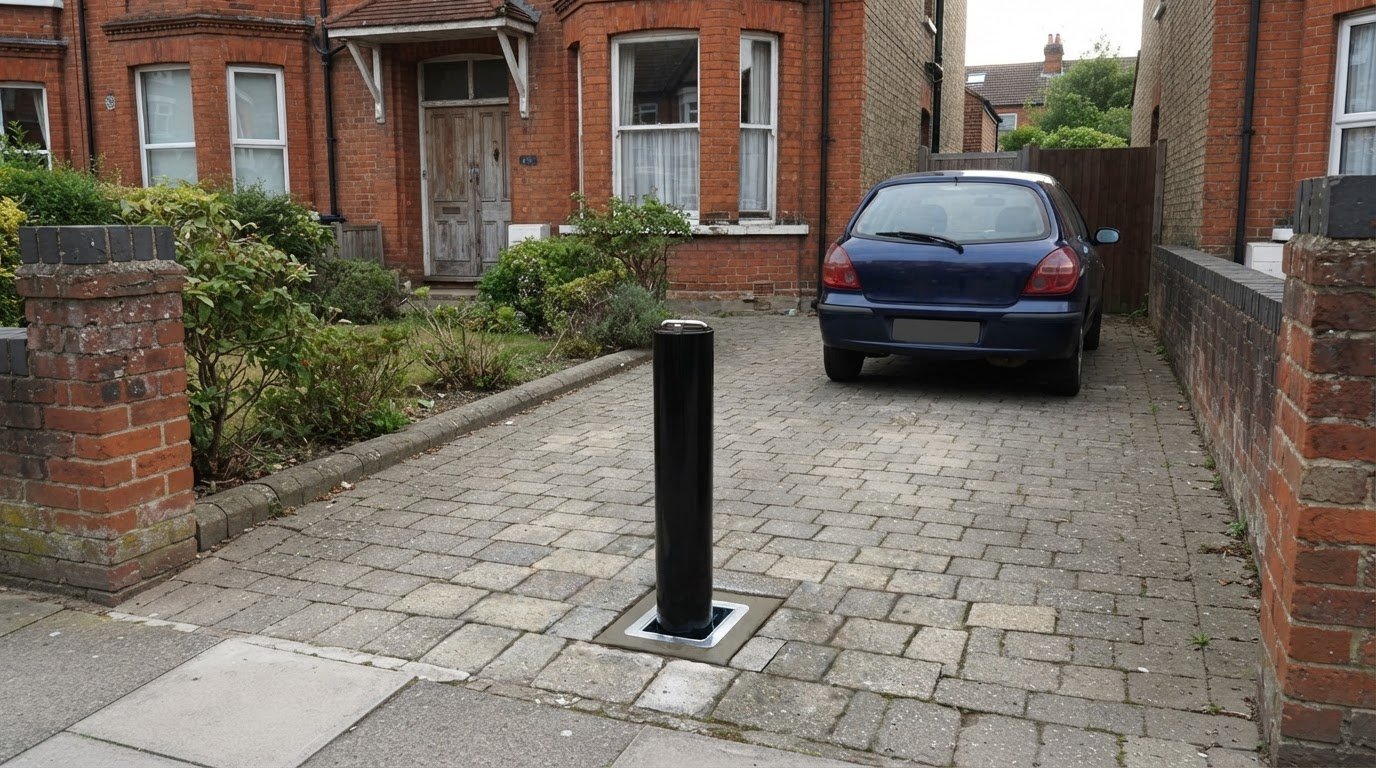
In a commercial car park, bollards can separate vehicle routes from entrances, walkways or loading areas. At home, driveway bollards can help prevent unauthorised vehicle access. Fixed posts stay in place; removable and retractable types allow authorised access when needed, while automatic bollards operate mechanically. Consider how often vehicles need to pass, who uses the area and whether a route must remain open. A site assessment should also consider visibility, pedestrian movement and congestion, particularly near entrances.
Regulations, Planning and Standards
The Road Traffic Regulation Act 1984 includes sections concerning bollards and other obstructions in the UK, according to the UK legislation register. Obstructing a public highway, including a road or pavement, can be a criminal offence, so distinguish private land from public routes before planning placement. Driveway bollards on private property generally don’t require planning permission; owners of listed properties or homes in conservation areas should check with their local planning authority. For commercial sites, consider the bollards’ stated impact resistance and applicable BS EN standards when matching protection to risk. Placement should preserve pedestrian routes and avoid creating pinch points.
Professional Installation and Aftercare
Professional bollard installers in the UK can assess access, ground conditions and placement before recommending an installation approach. For a commercial site, that means considering vehicle movement around entrances; for a residential driveway, it means keeping everyday access practical. Installation risks include poor positioning, obstructed pedestrian routes and foundations that don’t suit site conditions. Regular maintenance can help keep bollards effective, and professional servicing can support their upkeep. Repair needs depend on the damage and bollard type. Warranty terms vary, so read the applicable terms for the specific installation. To find a commercial installer near you, look for a service that assesses the site and explains the proposed work.
Bollard installation quotations
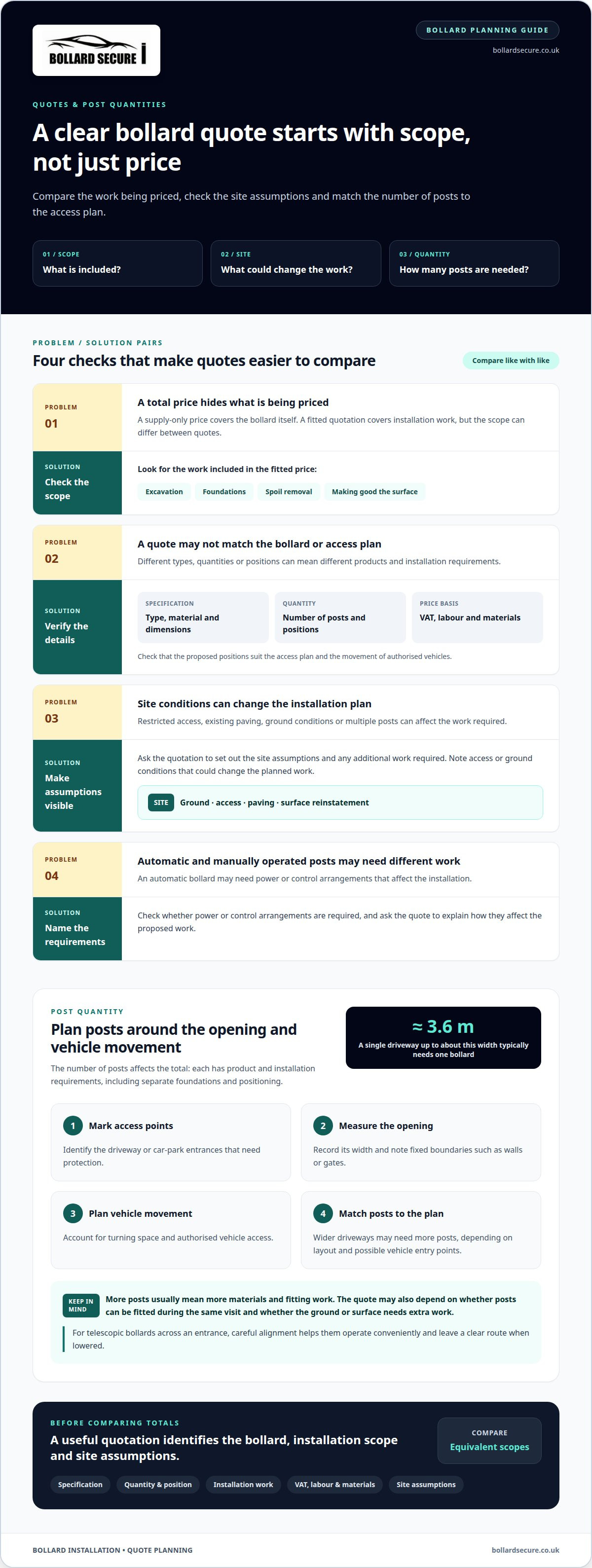
A useful quotation should identify the bollard, installation scope and site assumptions. The requirements for securing a home driveway may differ from those for a commercial entrance used by delivery vehicles. The total depends on the bollard type and quantity, ground conditions, access for installation and any additional work required. Professional bollard installation services in the UK should make clear what the quotation covers.
First separate the product cost from the fitting work. A supply-only price covers the bollard itself, while a fitted quotation should explain the installation included. Check whether the total covers excavation, foundations, removal of spoil and making good the surrounding surface. Comparing these details helps you assess equivalent quotations rather than totals with different scopes.
Automatic bollards may need different installation work from manually operated posts. The quotation should identify any required power or control arrangements and explain their effect on the work. Restricted access, existing paving or multiple posts can also change the installation plan. Professional bollard installation services in the UK should set out the proposed scope for your site.
Bollard specification: confirm the type, material and dimensions being quoted.
Quantity and position: check that the number and placement match the access plan.
Installation scope: identify excavation, foundations, surface reinstatement and waste removal.
Price basis: establish whether the total includes VAT and all listed labour or materials.
Site assumptions: note any access or ground conditions that could change the planned work.
A clear scope makes it easier to understand what you’re paying for and where quotations differ. If you’re planning a driveway or commercial entrance project, review the bollard installation service details alongside the work you need priced.
Costs by number of posts
The number of bollards affects the total because each post has its own product and installation requirements. One post may suit a narrow driveway, while a wider entrance or commercial parking area may need protection at several points. Choose the quantity according to the access opening and the level of vehicle control needed, not simply by selecting the fewest posts.
A single driveway up to about 3.6 m wide typically needs one bollard. Wider driveways may need more, depending on the layout and where vehicles could enter. For a commercial car park, map the vulnerable access points first. That helps distinguish posts needed for security from those that would unnecessarily restrict routine vehicle movement.
More posts usually mean additional materials and fitting work, including separate foundations and positioning. The quotation also depends on whether posts can be fitted during the same visit and whether the ground or surface requires extra work. For example, telescopic bollards across an entrance need careful alignment so they operate conveniently and leave a clear route when lowered.
Use these steps to assess the quantity before reviewing a quotation:
Mark each access point: identify the driveway or car-park entrance that needs protection.
Measure the opening: record its width and note fixed boundaries, such as walls or gates.
Plan vehicle movement: account for turning space and access for authorised vehicles.
Match posts to the plan: compare the proposed number and positions with the areas at risk.
More posts can extend protection, but they can also affect everyday access and increase installation work. A homeowner may prioritise securing a driveway, while a business may need to protect several entrances without disrupting deliveries. Choose a quantity that balances access with security. Each position should serve a clear purpose; there is no need to add posts simply because a wider arrangement is possible.
Fitted and supply-only bollard prices
The main difference is what the price includes. A supply-only price covers the bollard; a fitted price includes the product and installation work. They are not directly comparable until you know whether excavation, foundations and surface reinstatement are included. A lower supply price may still leave you responsible for arranging the fitting.
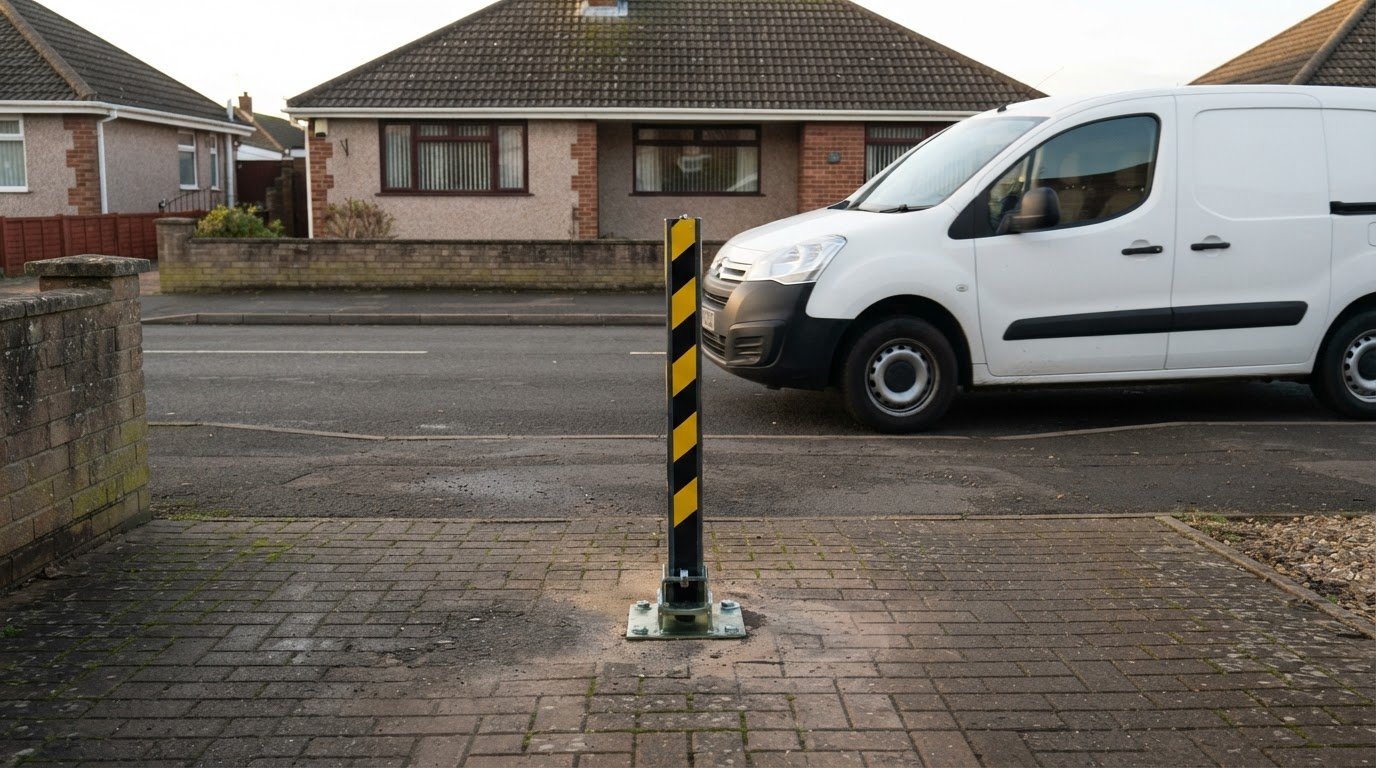
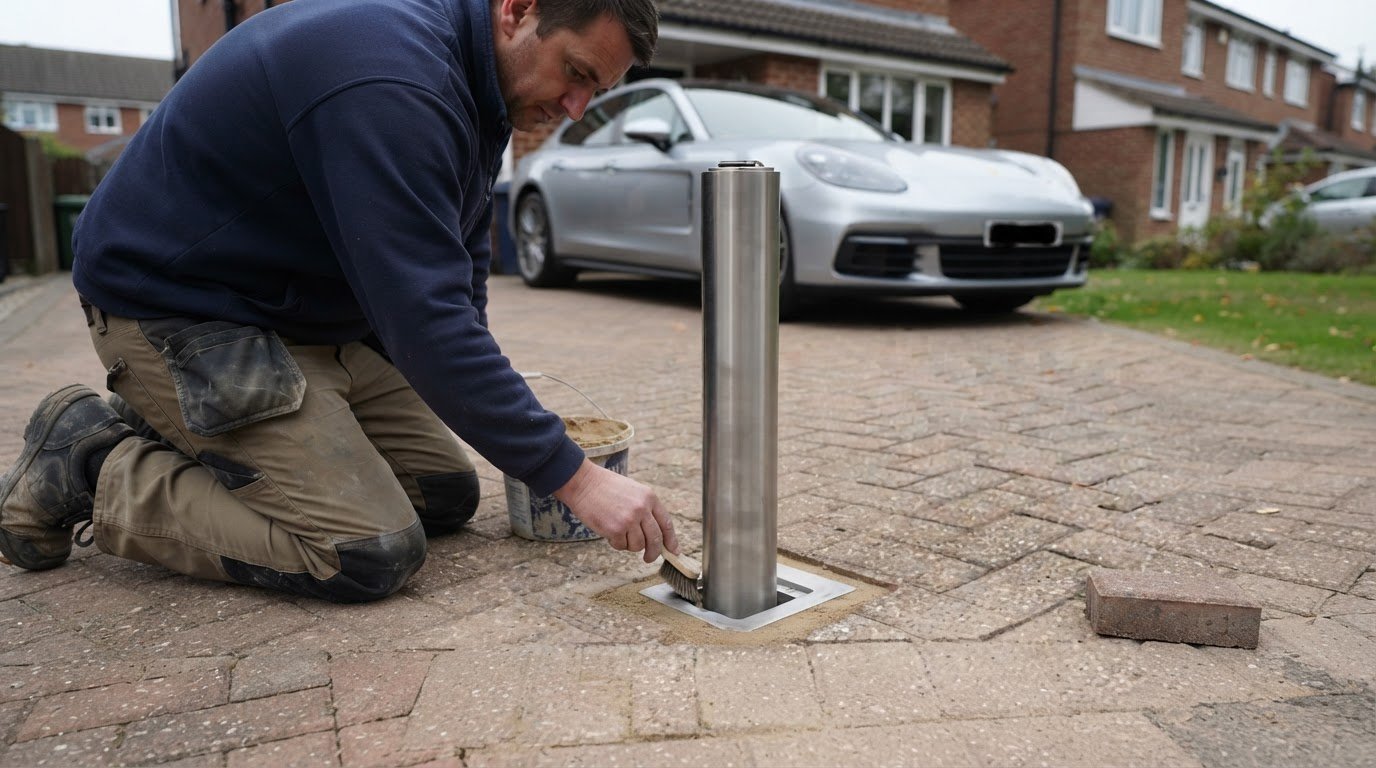
Consider a telescopic bollard for a driveway. With a supply-only purchase, you receive the post without fitting, so you’ll need to arrange the ground preparation and installation. A fitted quotation should state the installation scope, including foundation work and treatment of the surrounding surface. Paving and site access can affect the work involved.
Automatic bollards require a different comparison. Their installation may involve electrical or control arrangements as well as the physical post. Check whether a fitted figure covers those elements, or only the bollard and its placement. For any option, compare the same specification and quantity, then review whether VAT, labour, materials and surface reinstatement appear in each total.
Use this simple comparison:
Supply-only: identify the bollard included and the installation tasks left to arrange.
Fitted: confirm which groundwork, foundations and finishing tasks form part of the price.
Automatic: establish which power and control components are included in the quoted scope.
Both options: compare like-for-like specifications, quantities and stated inclusions.
Supply-only may suit someone who can organise suitable installation independently. A fitted option can make the scope clearer by bringing the bollard and installation work together. The right comparison is therefore about the total work required, not just the product figure. For a quote based on your site and chosen bollard, request a fitted installation quotation.
Check each quotation’s scope when comparing these figures.
Bollard Secure: Bollard Installation Only Service
Bollard Secure’s Bollard Installation Only Service is for customers who have already bought a bollard and need it fitted. It offers homeowners and commercial site managers a way to arrange installation separately from the product purchase.
Bollard Secure installs fold-down bollards, telescopic bollards and parking posts. The installation approach depends on the product, its intended position and site conditions. Sharing those details helps define the work and ensure it suits your access needs.
If you’ve bought a bollard and need it fitted, contact Bollard Secure to discuss the installation-only service.
Plan the next step around your site
Start by considering how the space is used each day. Decide who needs vehicle access, which areas need protection and whether posts must fold or retract away. This practical assessment can help you choose security that doesn’t make routine access awkward.
For professional bollard installation services in the UK, Bollard Secure installs fold-down bollards, telescopic bollards and parking posts. The right option depends on your site, access needs and the installation work required. Consider these details when deciding how to proceed.
A clear discussion about your entrance or parking area is a useful next step. Share how the space is used and which bollard you’re considering, then request a free, no-obligation quotation from Bollard Secure.
Contact Bollard Secure for a quotation and take the next step towards a security arrangement suited to your site.
Frequently Asked Questions
What's Included in Professional Installation?
Bollard Secure’s installation charge includes the travel, labour and materials needed to complete the fitting. For customers with an existing bollard, the installation-only service includes groundwork suited to the product specification. Before digging, installers carry out a CAT scan to locate underground cables and pipes. After fitting, they demonstrate how to operate the bollard.
How much does bollard installation cost in the UK?
There is no single installation cost for every UK site. The quotation depends on the bollard type, quantity, installation requirements and site conditions. Supply and installation are different from fitting hardware you’ve already bought. Bollard Secure’s installation charge includes travel, labour and the materials required to complete the work. Remember, a parking post reserves a space; it is not a security bollard.
Comments