
Removable Bollards for Driveway: A Practical UK Buying Guide
Need to keep your driveway secure while sometimes leaving the entrance completely clear? Removable bollards for driveway access lift out of a ground socket, so you can take the post away when needed. That flexibility comes with practical considerations: who will lift and store it, how often access changes, and whether the driveway can accommodate the socket.
A lift-out bollard, telescopic model and fold-down post all manage access differently. This guide compares their everyday operation, explains what to consider before installation, and helps you match a design to your driveway and routine. Bollard Secure supplies removable bollards and provides installation-only support, including groundwork carried out to the product’s specifications. By the end, you’ll have a clear checklist for choosing a suitable arrangement.
Table of Contents
Removable Bollards for Driveways: When Does a Lift-Out Design Make Sense?
Removable Bollard Features: Assess the Post, Socket and Everyday Handling
Removable vs Fold-Down and Telescopic Bollards: Compare Access Needs
Plan Removable Bollard Installation Around the Driveway and Ground
Choose Removable Bollards for Your Driveway and Take the Next Step
Removable Bollards for Driveways: When Does a Lift-Out Design Make Sense?
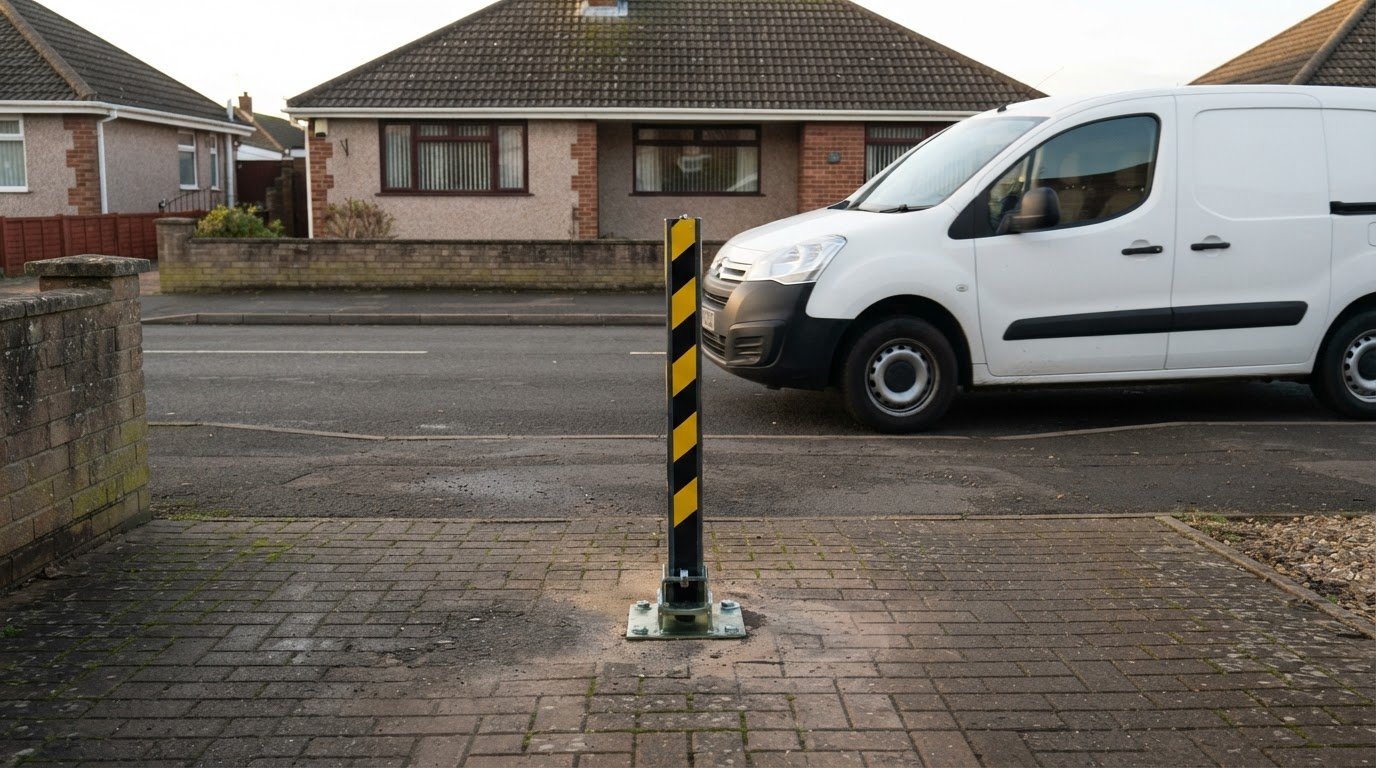
A removable bollard is a post that lifts out of a fixed ground socket to allow vehicle access, then slots back into place to restrict entry. Unlike a permanently fixed post, it can be taken away when the driveway needs to be clear. The socket remains in the ground, so the post and socket work as a system.
That difference makes your access routine central to the decision. Removable bollards for driveway use may suit a household that wants a physical barrier in place most of the time but occasionally needs an unobstructed entrance. Consider how often that happens, who will remove and replace the post, and where it can be stored without getting in the way.
How a removable driveway bollard works
The arrangement has two main parts: the post and its ground socket. The socket is fitted into the driveway. When access is needed, the post is lifted out; when you want to restrict vehicle access again, it is returned to the socket. The precise fit and locking arrangement depend on the product, so check the details rather than assuming every model operates in the same way. For a general overview of bollards and their uses, see Bollard (Wikipedia).
When the post is removed, the socket remains as a fixed point in the surface. Choose a location that works in both situations: with the bollard in place and with it out. Consider how the socket sits within the driveway and whether the cleared entrance provides enough room for the vehicles and people who need to pass through.
Which driveway situations may suit a lift-out post?
A lift-out design may be practical when you need clear access occasionally, for example for a larger vehicle, a delivery or work at the property. The post can be returned to restrict access when you are not using the entrance. If you need to open it repeatedly throughout the day, however, lifting, moving and replacing the post may become an extra task. In that situation, compare designs that do not need separate storage.
Picture the whole process before choosing:
Frequency: How often will someone need to remove the post? Occasional access and repeated daily openings place different demands on the routine.
Operators: Who will lift and replace it? Consider everyone who regularly uses the driveway, not only the person choosing the product.
Storage: Where will the post go while it is out? Choose a secure, practical spot that does not block a path, garage space or parking area.
Access: Will removing it provide enough clear width for the vehicles or deliveries you expect?
If there is no convenient storage place, or the entrance needs to open often, weigh those drawbacks before settling on a lift-out arrangement. A removable bollard is most practical when its handling routine fits the household as well as the driveway layout.
Removable Bollard Features: Assess the Post, Socket and Everyday Handling
A suitable lift-out bollard is more than a post that looks right at the entrance. Its dimensions, locking arrangement and ground socket need to work together, and the removal routine should suit the people who will use it. Compare the product’s stated features with your site and everyday needs.
Post dimensions, visibility and driveway placement
Start with the way you use the driveway. Its width, the angle vehicles approach from and the space needed to turn or park all affect where a post can go. A position that restricts a vehicle may also narrow a pedestrian route or interrupt a routine manoeuvre. Look at the whole entrance, not just the point you want to protect.
Construction: Compare the stated material and build with the intended use. Base your decision on the details for the specific product.
Dimensions: Check the post’s height and width against its planned position, available clearance and vehicle movements.
Visibility: Consider how clearly drivers and pedestrians can see the post in its setting. Check the product details for any particular colour, finish or visibility feature.
Placement: Keep pedestrian movement, parking and turning space in view. Near a pavement or shared access, consider the boundaries and routes people need to use. The Highways Act 1980 provides wider statutory context for highways.
Assess the position with the post both in place and removed. A location that works beside a parked car may be awkward when a wider vehicle approaches, or leave too little room for people walking through.
Locking, removal and storage considerations
Locking arrangements vary, so compare the details of each product rather than assuming one mechanism is standard. Check how the post is secured in its socket and how the intended users will operate it. A system that one person finds straightforward may be less practical for another, particularly if the post must be lifted and replaced regularly.
The socket needs to suit the selected bollard and the conditions at the installation site. Treat the post and socket as a compatible system: their dimensions and fitting requirements must match, and the surrounding surface must accommodate the planned work. Bollard Secure’s installation service can include excavation, core drilling and concreting to product specifications. For owners who already have a bollard, removable bollards and fitting support bring product and installation considerations together.
Decide where the post will go when it is out. The storage place should be accessible to the people who remove it without obstructing a doorway, walkway or parking space. If there is no suitable spot, include that in your comparison before choosing a lift-out design. Planning for dimensions, socket compatibility and handling can make everyday use more manageable.
Removable vs Fold-Down and Telescopic Bollards: Compare Access Needs
All three designs can help manage vehicle access, but they behave differently when you need the entrance clear. The key distinction is what happens to the post: it is lifted away, folded down or lowered into a ground housing. No design is automatically right for every driveway. Consider how often access changes and what you want the space to be like when the barrier is not in use.
Removable: The post lifts out of its socket. This clears the entrance, but the post needs to be handled and stored separately.
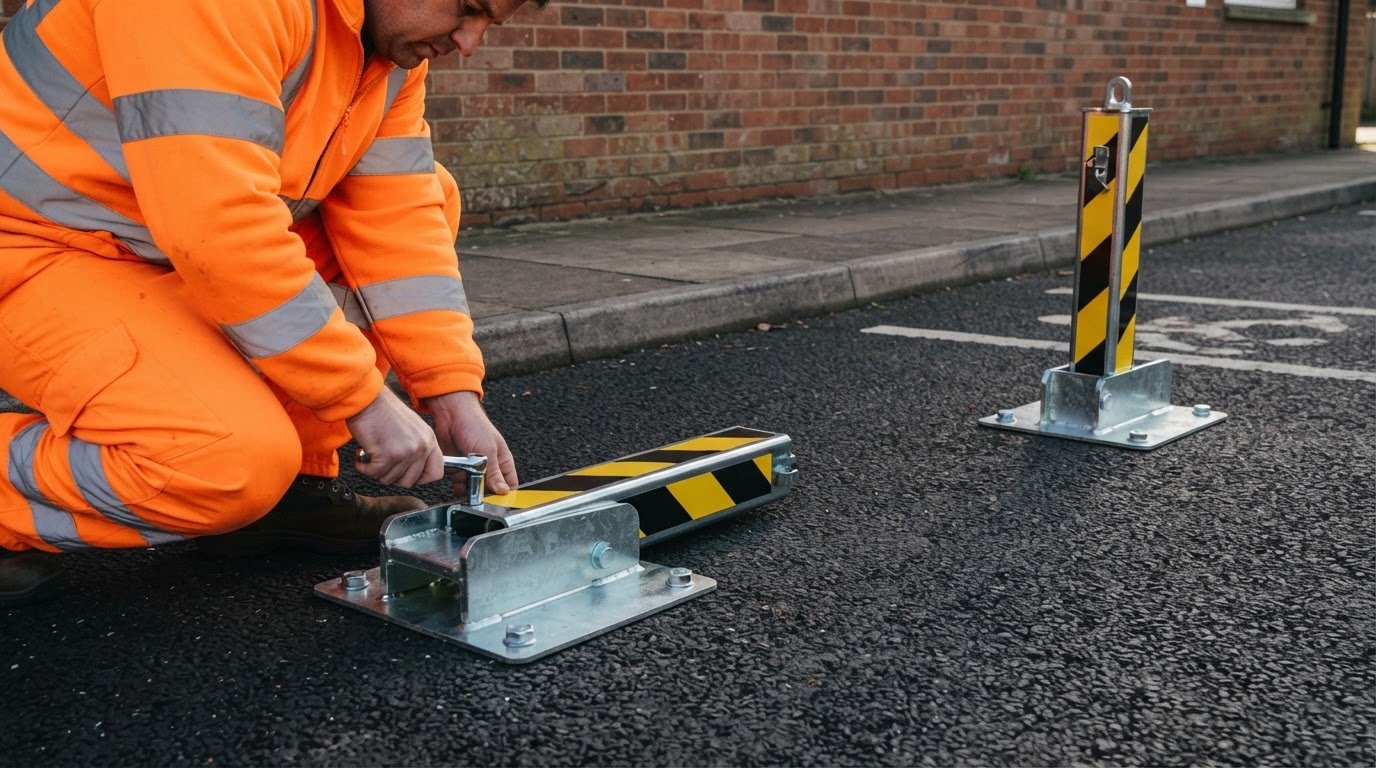
Fold-down: The post hinges down and remains attached at its base. It stays at the driveway rather than being carried elsewhere.
Telescopic: The post retracts into a housing set in the ground. It stays within that ground arrangement rather than being stored as a separate post.
These are differences between design types, not a measure of security or ease for every product. Ground arrangements and operating details depend on the bollard and its installation. Compare the product specifications with your routine.
Removable or fold-down: which access routine fits?
A removable bollard clears the opening once the post is lifted out, but someone must carry it to a suitable storage place and bring it back when access needs to be restricted. A fold-down bollard stays at the entrance and is lowered in place. That avoids separate post storage, although the folded post remains on the driveway surface.
Consider how often the entrance switches between open and secured. If it happens only occasionally, carrying and storing a post may fit your routine. If you expect frequent changes, compare that repeated handling with lowering a post where it stands. Also consider the space around the base and how the folded position may sit alongside parking or pedestrian movement. For more detail on that option, see the fold-down bollard buying guide.
Removable or telescopic: what changes?
Both designs use a ground fitting, but only the removable option requires the post to leave the driveway. A telescopic bollard retracts into a ground housing; a lift-out post is handled separately and needs somewhere to be stored. Decide whether you prefer to keep the post within the ground arrangement or are comfortable moving and storing it.
When choosing removable bollards for driveway use, include the entire access routine in your decision: who will lift the post, where it will go and how often that process is needed. For a telescopic option, consider how its ground housing and operation suit the site. Compare the product details and installation requirements rather than assuming one type will be quicker, easier or more secure. The right fit is the one whose operation, ground arrangement and day-to-day demands work for your driveway.
Plan Removable Bollard Installation Around the Driveway and Ground
A removable bollard depends on more than a well-chosen position. Its ground socket needs to suit both the bollard and the driveway, so plan the fitting around the product specifications and site conditions. A practical sequence is to choose the position, assess the surface, prepare the ground, fit the socket and check that the post operates as intended.
Check the driveway surface and socket position
Start by considering how the entrance works through a normal day. Mark the intended position and check whether vehicles can turn, enter and leave without awkward manoeuvres. Keep pedestrian routes clear, and consider drainage and access to the bollard itself. A spot that seems ideal for restricting a vehicle may be inconvenient if it interrupts walking routes or routine parking.
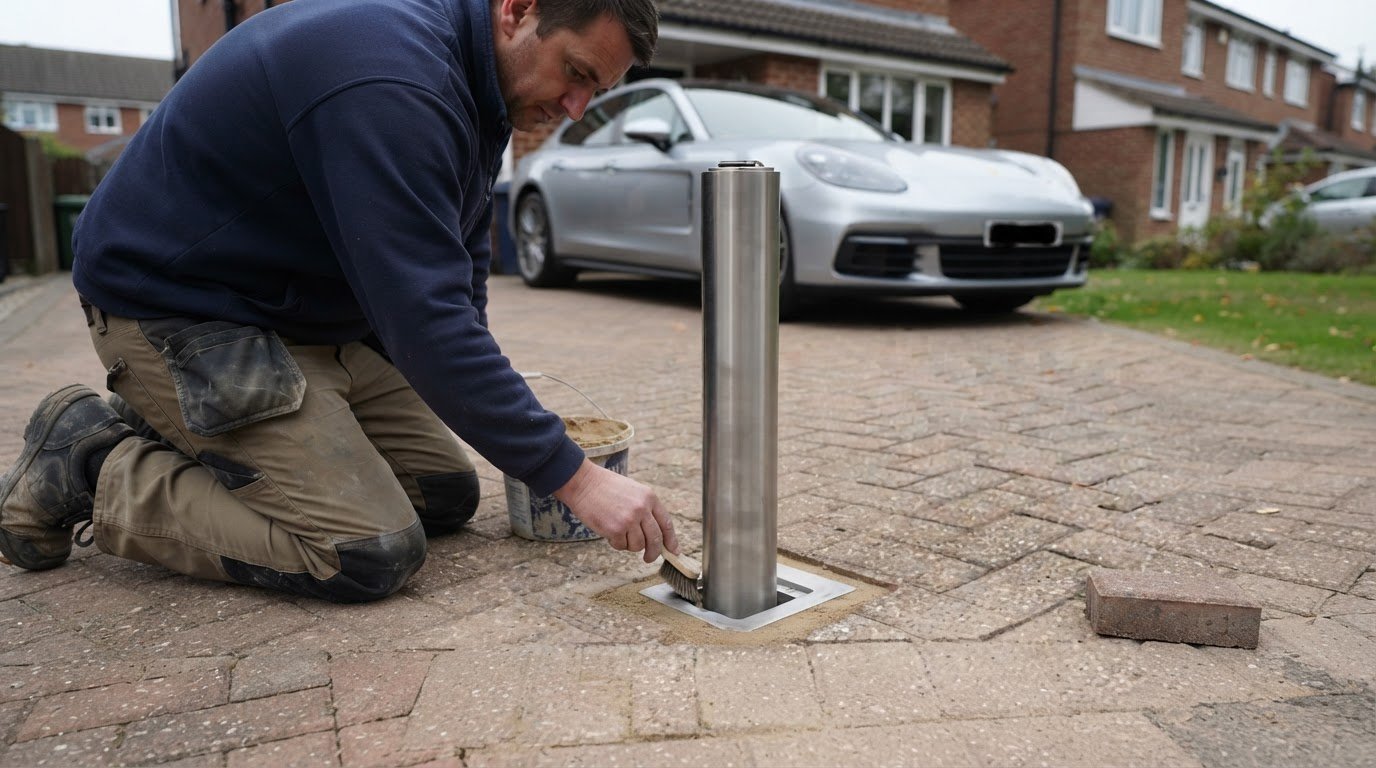
Next, assess the surface where the socket will sit. Block paving, tarmac and other driveway finishes may require different groundwork, and conditions below the surface can also affect preparation. Do not assume one depth or fitting method suits every installation. The socket must be installed to the selected bollard’s specifications, with the groundwork suited to the conditions on site.
For removable bollards for driveway installations, check that the socket position works when the post is out as well. Consider whether the remaining point in the surface affects vehicle movement or obstructs people using the driveway. Settling on the location before work begins helps align the installation with the way you will use the space.
Choose a fitting route that suits your purchase
Once you have considered the position and surface, plan the work around the product’s requirements. Depending on the bollard and site, preparation may involve excavation, core drilling or secure concreting. These steps are not identical for every driveway: the appropriate method follows the product specifications and the conditions at the installation point.
Keep the key checks in view with a clear installation sequence:
Plan the position: Check access, vehicle movements and pedestrian routes.
Assess the surface: Consider the driveway finish and conditions around the proposed socket.
Prepare the ground: Carry out the groundwork required for the selected product and location.
Fit and check: Install the socket to specification, then confirm the post can be removed and replaced as intended.
Professional fitting brings the groundwork and product requirements together. Bollard Secure provides an installation-only service for customers who already have a bollard. The work can include excavation, core drilling and concreting to product specifications. If you are planning a fitting, explore professional bollard installation.
Choose Removable Bollards for Your Driveway and Take the Next Step
The right choice depends on the whole routine, not just the post. Removable bollards for driveway access may suit a household that needs the entrance fully clear from time to time and has a practical way to lift and store the post. If access changes often, consider whether handling and storage will remain manageable in everyday use.
A practical removable bollard buying checklist
Before choosing, work through these points with the people who will use the driveway. They help connect the product’s stated features to the site and your regular access needs.
Access pattern: Decide how often you need full vehicle access. Occasional deliveries or larger vehicles may suit a lift-out routine better than repeated opening and closing throughout the day.
Users: Consider who will remove and replace the post, and whether the task suits everyone who needs access.
Storage: Identify a safe, accessible place for the post when it is out. If it would block a walkway or be difficult to retrieve, account for that before selecting.
Position and ground: Consider the socket location, driveway surface, vehicle movements and pedestrian routes together.
Product details: Compare the selected bollard’s stated dimensions, locking arrangement and fitting requirements with its intended use and installation.
This checklist can reveal practical mismatches early. A post may suit your access pattern, for example, but the available storage place or proposed socket position could make the routine awkward. Resolve those points before choosing a product and planning the groundwork.
When to arrange professional fitting
Professional installation is a practical option when the work needs to follow the selected bollard’s specifications and the conditions at the driveway. Depending on the product and site, fitting may include excavation, core drilling and secure concreting. The socket and surrounding work need to follow the product requirements, rather than relying on one method for every type of ground.
If you already have a bollard, Bollard Secure’s installation-only service provides fitting for existing products. If you are still choosing, Bollard Secure also supplies removable bollards, bringing product selection and professional installation support together.
Use your checklist to prioritise occasional full access, manageable handling, suitable storage and a fitting plan that accounts for the ground. Then browse removable bollards and installation support to explore the options.
Make Your Driveway Access Plan Work Day to Day
Before deciding, picture a typical week at home. When does the entrance need to stay secure, and when must it be completely clear? Note those occasions to turn a general preference into a practical choice, especially if other household members will use or operate the bollard. Include their routines in the plan.
The best removable bollards for driveway access are the ones that fit how you use the space, including the times when you need the post out of the way. Once that routine is clear, you can plan the product and installation around it. Bollard Secure supplies removable bollards and provides installation support, including an installation-only service for customers who already own a bollard.
Explore removable bollards and installation support to plan the next step for your driveway.
Frequently Asked Questions
Is a removable bollard suitable for a residential driveway?
Yes. Removable bollards for driveway security may suit a home where occasional full access is useful, provided the handling routine works for the household. Consider whether a delivery van needs a clear entrance now and then, or whether vehicles come and go repeatedly each day. Also account for the driveway layout, who will operate the post and where it can be stored. If lifting it out seems impractical, compare other bollard types.
How does a removable driveway bollard work?
A removable bollard lifts out of its ground socket to open the entrance, then goes back in when you want to restrict vehicle access. The socket stays in the driveway while the post is away. This is the basic arrangement; locking and operating details differ between products. Picture where the post will go during a delivery and how it will be returned afterwards.
Can I install a removable bollard in block paving or concrete?
The surface alone does not determine suitability. The underlying ground, the position and the selected bollard’s installation requirements all matter. Depending on the product and site, preparation may involve excavation, core drilling or concreting. There is no single method or depth that applies to every driveway. Plan the work around the product specifications and conditions at the proposed socket location.
What is the difference between removable and fold-down bollards?
A removable bollard is lifted out and stored elsewhere, while a fold-down bollard lowers but remains attached at the driveway. The choice often comes down to whether you would rather move the post away or leave it in place when access is open. Consider how frequently the driveway changes between open and secured. For a fuller look at the fold-down option, see the fold-down bollard buying guide.
Are removable bollards difficult to lift out and store?
That depends on the particular bollard and the person handling it. Consider who will use it, how often access changes and whether the product’s stated details suit those users. The storage spot should be easy to reach without creating an obstacle or taking up space needed for everyday tasks. If access is frequent, a design that stays attached to the ground may suit your routine better.
Do removable bollards prevent vehicle theft?
A bollard can act as a physical barrier to vehicle access, but it cannot guarantee that theft will be prevented. The result depends on the product, its installation, the site and wider security circumstances. Treat it as one part of a security plan, not a complete substitute for other sensible precautions. Consider the access you need to control and choose a product with specifications suited to that purpose.
Can Bollard Secure install a removable bollard I already own?
Yes. Bollard Secure provides an installation-only service for customers who already own a security bollard. Fitting is planned around the product specifications and driveway conditions; the work can include excavation, core drilling and secure concreting. The appropriate groundwork depends on the installation rather than following one fixed method for every site. This gives existing bollard owners a professional fitting route without needing to purchase another post.
Comments