
Protect your driveway from vehicle theft with bollards and safer habits
A locked driveway bollard creates a physical barrier that can stop a thief driving your car away, even if they get inside. Knowing how to protect your driveway from vehicle theft also means building safer habits, such as never leaving the engine running while the car is unattended. A barrier works best as part of a practical security routine, not as a substitute for care.
An open driveway can leave a vehicle exposed, so consider both access and everyday routines. This guide explains why driveways can be vulnerable, what to consider when choosing an anti-theft bollard, and how simple habits can reduce opportunities for theft. It also compares bollards, parking posts and wheel clamps to help you choose what suits your property.
Table of Contents
1. How Do I Choose The Right Anti-Theft Bollard For My Property?
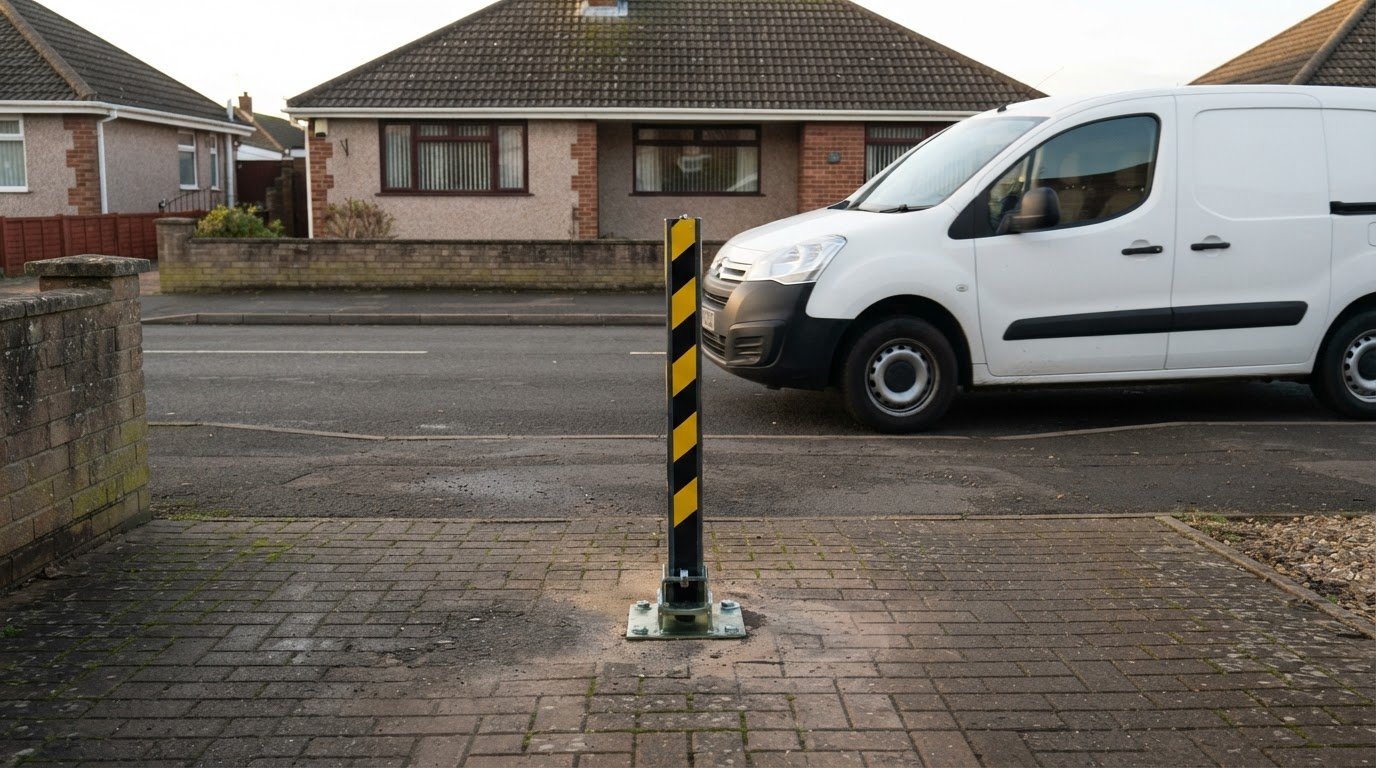
A driveway bollard creates a physical barrier between your vehicle and the road. When locked in place, it can prevent thieves from driving your car away, even if they gain access. Position it to block the vehicle’s exit without obstructing everyday access.
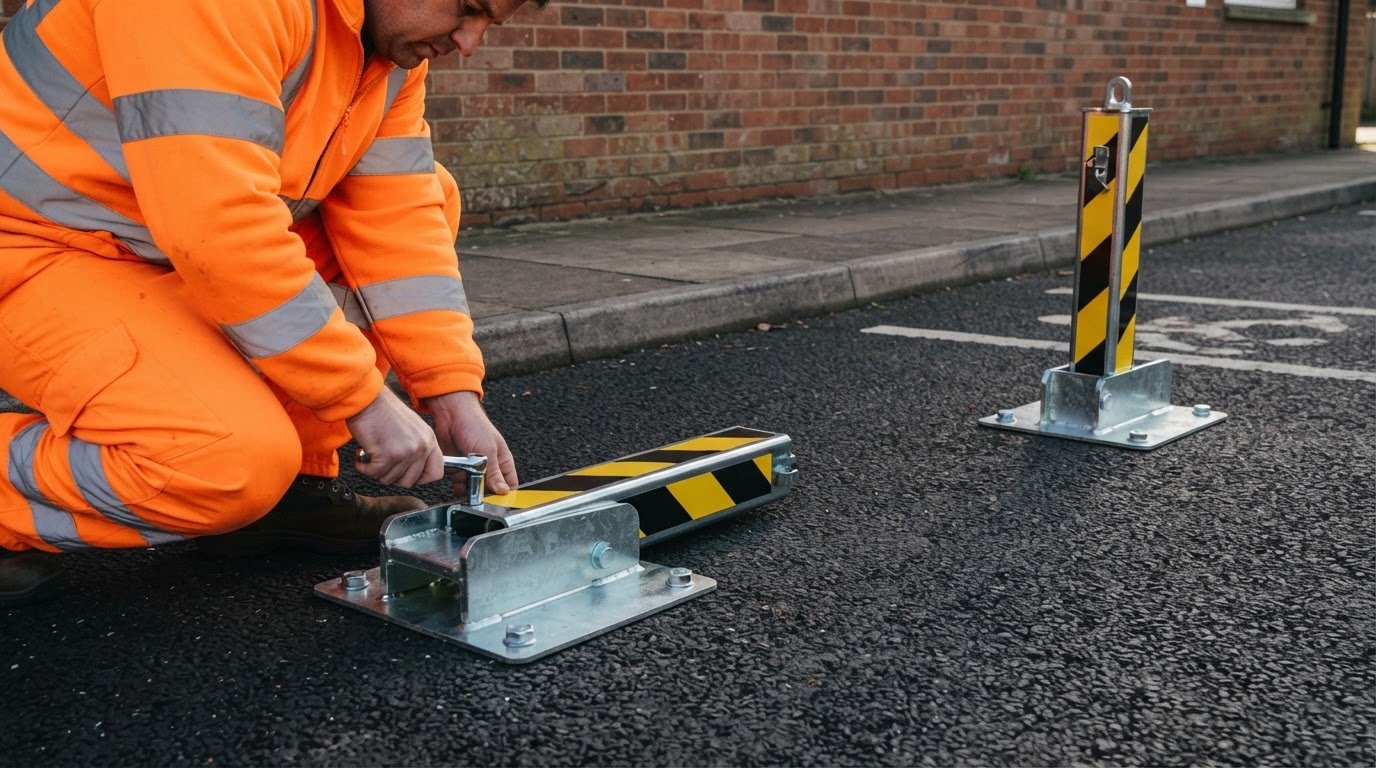
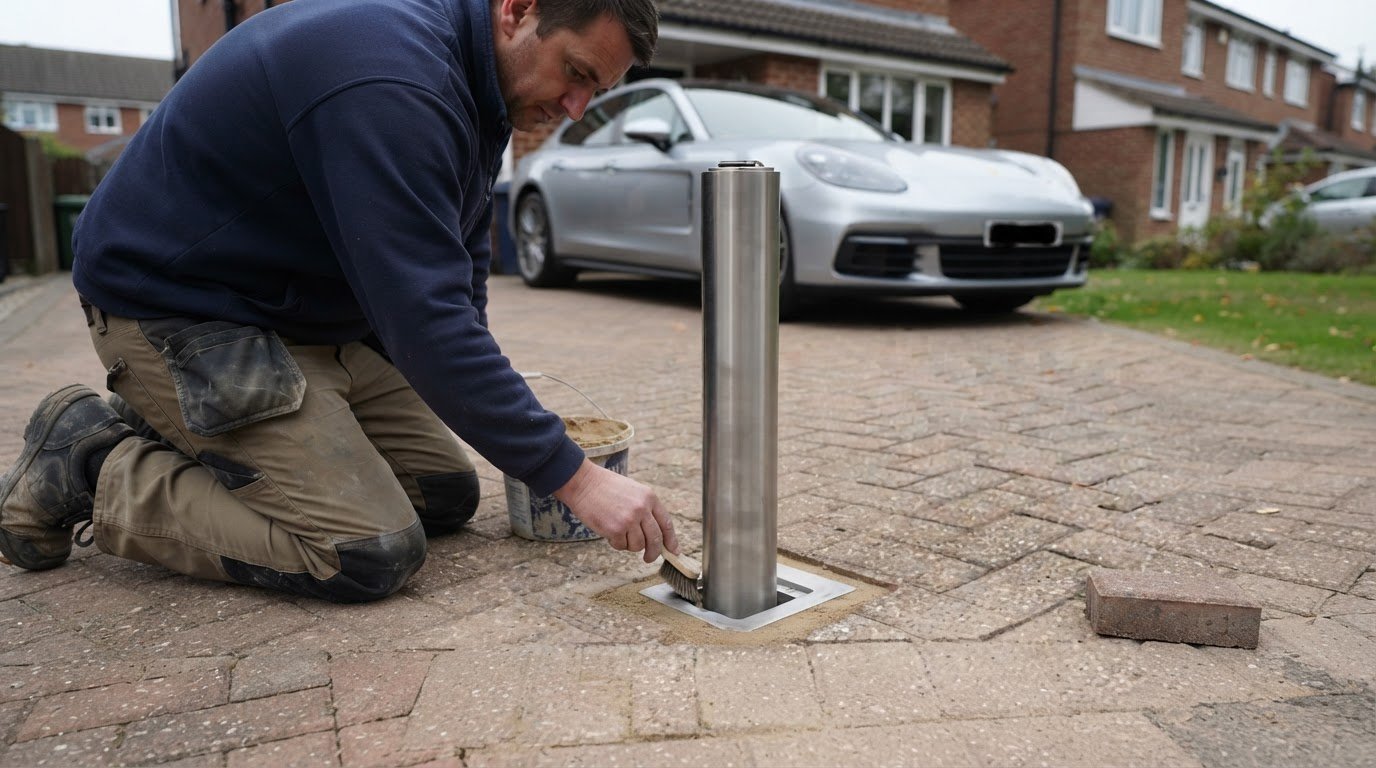
Choose a bollard based on how you use the space. Static bollards suit areas that do not need vehicle access. Removable bollards lift out when you need a clear entrance. Fold-down models lower for access, while telescopic bollards retract into the ground. If you use the driveway frequently, a fold-down or telescopic design may be more convenient. On a wide entrance, multiple bollards can make it harder to manoeuvre around the barrier.
Think about the whole approach, not just the barrier. Position bollards across the entrance or in front of the parked vehicle, and add a gate where suitable. Motion-activated lighting can make activity more visible, while CCTV can record it. A steering wheel lock, secure key storage and a parking-mode dashcam add further layers. Keep keys away from doors and windows, and use a Faraday pouch or metal container to help block a keyless-entry signal. If your car allows it, switch off keyless entry.
In England, planning permission and safety considerations can depend on a bollard or gate’s design and position, particularly near a highway or pedestrian route. Insurance policies vary: some may reduce premiums for driveway security, but requirements are not uniform. There is no single cost for gates, bollards or CCTV; equipment, installation and site conditions all affect the total.
Where possible, park behind another vehicle and turn your wheels towards a kerb or obstruction. Alarms can alert you, while steering and wheel locks add a physical obstacle. Each needs to be used correctly, and none blocks the driveway entrance. If your car is stolen, report it to the police promptly and notify your insurer.
2. Avoiding leaving the car unattended with its engine running
Never leave your car unattended with the engine running, even on your own driveway. A brief stop to collect a parcel or fetch something indoors can give an opportunistic thief an immediate chance to take the vehicle. The keys may still be inside, and the car is ready to move. Switch off the engine before stepping away, remove the keys and take them with you.
Make this part of a repeatable routine. Before leaving the driver’s seat, put the car in park or select a gear, apply the handbrake and turn off the ignition. Check that the windows are closed, the doors are locked and the keys are with you. Lock the car even if you’re only walking a few steps to the house. Don’t rely on distance, visibility or a quiet street to prevent theft.
On cold or frosty mornings, don’t leave the vehicle running to warm up or clear the windows while you go indoors. Stay with the car while it’s running, or switch off the engine and use a scraper and de-icer before setting off. If you need to carry shopping inside, turn off the vehicle, take the keys and lock it between trips. These small steps remove an easy opportunity without adding complexity to your routine.
A driveway barrier can provide another layer of driveway security, but it doesn’t replace switching off and locking the car. Choose a removable or telescopic option if you need regular access, and secure it whenever the vehicle is parked. For a physical barrier that complements safer habits, explore driveway security measures. Used together, consistent locking and a well-positioned barrier can help protect your car and support greater peace of mind.
3. Why driveways are vulnerable to vehicle theft
An open driveway can give criminals direct access to a vehicle and a clear route to the road. Quiet residential streets may offer little immediate attention, allowing a thief to act quickly. Across the UK, 129,159 vehicles were stolen in the year ending March 2024. That figure shows why homeowners should consider how their parking space is exposed, not only whether the car is locked.
Visibility can affect how easily suspicious activity is noticed. Neighbours may have a clearer view of a car near a lit, visible entrance than one parked behind a house, hedge or tall fence. Poor lighting at night can also make someone approaching the vehicle less conspicuous. Motion-activated lighting and a camera covering the driveway can improve visibility and record activity, although neither physically stops a vehicle from leaving.
Keyless entry creates another point of vulnerability. In a relay attack, criminals use electronic devices to relay a signal between the car and its key inside the home. Keep keys away from doors and windows, and store them in a metal container or Faraday pouch to help block the signal. If your vehicle has keyless entry, switch it off when it isn’t needed.
Driveway layout matters. A wide, open entrance can let a thief approach the car, gain access and drive away without negotiating an obstacle. A physical barrier at the entrance or in front of the parked vehicle can restrict that route. On a wide driveway, multiple bollards may make it harder to manoeuvre around them. Combine a barrier with lighting and visible CCTV, then park where the vehicle can be seen from inside the home. These measures address different weaknesses: access, concealment and delayed detection. Keep the car locked too, since an open driveway can leave its exit unprotected.
4. How do driveway security posts, bollards and wheel clamps compare for preventing car theft?
Driveway bollards and security posts protect the vehicle by restricting its route off the property. A locked bollard can stop a thief driving away, even if they get into the car. Posts are short barriers, usually placed at the entrance or directly in front of the parked vehicle. They don’t rely on power, monitoring or ongoing subscriptions, making them a straightforward physical measure.
Placement matters. Put the bollard where it blocks the car’s exit without preventing normal driveway access. A single bollard may leave room to steer around it on a wide entrance, so multiple bollards can close that gap. Secure the barrier in its raised position: fold-down and removable models need to be locked when the car is parked. Choose a design that suits how often you need to enter or leave.
A wheel clamp works differently. It attaches to a wheel, making the vehicle harder to move, and must be fitted and removed for each journey. That may suit a car left parked for extended periods, but it adds a regular task. A clamp protects the vehicle itself, while a driveway bollard can also restrict unauthorised access to private land. Neither replaces locking the car and taking its keys indoors.
For many households, these measures can complement each other. A bollard blocks the exit, while a wheel clamp adds another obstacle to moving the car. Check that the chosen barrier sits in the right position for your vehicle and driveway layout. If a fixed physical obstacle suits your access needs, explore driveway bollard options for a practical way to restrict vehicle movement.
Bollard Secure: Fold-down Bollards
Bollard Secure supplies and installs Fold-down Bollards for homeowners who want a physical barrier across a driveway entrance while keeping regular vehicle access. Raise and lock the bollard when your car is parked, then fold it down when you need to drive through. This is a practical option for households that use the driveway throughout the day.
If your driveway layout or routine calls for a different approach, Bollard Secure also supplies Telescopic Bollards, Removable Bollards and Parking Posts. Consider where the vehicle parks and how the barrier will fit your daily movements before choosing.
To discuss a driveway security option for your property, contact Bollard Secure about its Fold-down Bollards.
Make your driveway security plan work for everyday life
Assess your driveway as you use it: where you park, which way you leave and when you need clear access. This turns how to protect your driveway from vehicle theft into a practical decision about access, barriers and habits, rather than a search for one device to do everything.
Consider what will help you secure the vehicle consistently, even on a rushed morning or late return. A barrier that fits your routine is easier to use. Note practical constraints, such as multiple vehicles or a narrow turning area, before choosing an approach. Then make safer parking and key-handling part of the same routine.
Bollard Secure can help you consider a physical barrier suited to your driveway and access needs. Contact Bollard Secure for advice and take a clear next step towards a more secure parking space.
Frequently Asked Questions
Do driveway bollards really prevent car theft?
A locked bollard can physically stop a vehicle leaving through the protected access point, even if someone gets inside. It doesn’t prevent every possible method of theft, so keep the vehicle locked and its keys secure too. Check that the bollard blocks the car’s route rather than leaving enough space to drive around it. A barrier is most useful when positioned and secured properly.
Why are cars being stolen from driveways?
An open driveway can give thieves a direct approach and quick escape route, especially when parked vehicles are poorly lit or hidden from view. Keyless-entry systems can also be targeted through signal relay attacks. If you’re considering how to protect your driveway from vehicle theft, keep keys away from external doors and windows, switch off keyless entry where possible, and improve visibility around the entrance.
How do I choose the right anti-theft bollard for my property?
Start with your access routine and the space available at the entrance. A static bollard suits an area that does not need vehicle access; a removable model can be lifted out when required. Fold-down and telescopic designs allow access when lowered or retracted. Decide how to protect your driveway from vehicle theft by considering who will operate the barrier and whether its position leaves enough room to turn safely.
Are bollards better than alarms or trackers?
These measures serve different purposes. A bollard is a physical obstacle that can stop a car being driven out; an alarm alerts people to activity, while a tracker can help police locate a stolen vehicle. A tracker doesn’t prevent theft. Consider whether your priority is restricting access, attracting attention or supporting recovery, then combine measures that address different risks.
Are bollards suitable for residential areas?
Yes, driveway bollards can suit homes where a vehicle needs a physical access barrier. The right design depends on the driveway layout and how often vehicles enter or leave. A fold-down or telescopic style can be practical where access is frequent, while a static option may suit a space dedicated to parking. Position the barrier without obstructing pedestrians.
Can a driveway bollard be removed or lowered easily?
That depends on the type. Fold-down bollards lower to clear the way, telescopic models retract into the ground, and removable bollards can be taken out when access is needed. Static bollards remain in place. Consider who will operate the barrier and how often access is required; the easiest option is the one that fits your household’s regular routine.
Comments