
Choose a driveway parking post for your surface and space
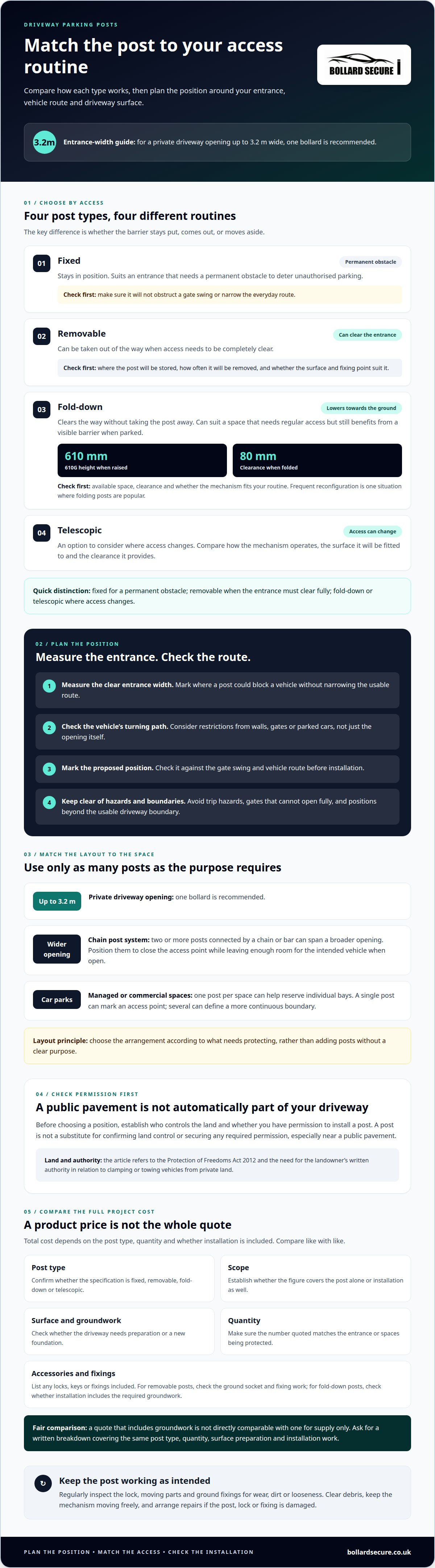
A public pavement isn’t automatically an extension of your driveway. Before planning a driveway parking post there, establish who controls the land and whether you have permission to install one. For a private driveway opening up to 3.2 m wide, one bollard is recommended.
Choosing the right post also means balancing security with everyday access. A fixed post stays in place, while removable, fold-down and telescopic options can move out of the way when you need to drive in or out. The best fit depends on your surface, the width of the entrance and how often access needs to change.
This guide explains how to choose between post types, plan their positions and consider the site before installation. Use the practical checks below to narrow down your options and identify when a parking post may not suit the position you have in mind.
Table of Contents
Choosing the number and spacing of driveway posts
Start by measuring the clear width of the entrance, then mark where a post could block a vehicle without narrowing the usable route. For driveway openings up to 3.2 m wide, one bollard is recommended. Consider the vehicle’s turning path as well as the opening itself, particularly where a wall, gate or parked car restricts manoeuvring.
A wider entrance may need a different arrangement. Chain post systems use two or more posts connected by a chain or bar to span a broader opening. Position them so the barrier closes the access point while leaving enough room for the intended vehicle to pass when it is open. Keep posts clear of gates and routes where they could create a trip hazard.
In managed car parks and commercial premises, one parking post per space can help reserve individual bays. A single post can mark a particular access point, while several can define a more continuous boundary. Choose the layout according to what needs protecting, rather than adding posts without a clear purpose.
Keep the boundary in mind before choosing a position. The National Archives (legislation.gov.uk) identifies the Protection of Freedoms Act 2012 in its statement about clamping or towing vehicles from private land without the landowner's written authority. A post is not a substitute for establishing who controls the land or securing any required permission, especially near a public pavement.
How do you maintain and repair a driveway parking post? Inspect the lock, moving parts and ground fixings regularly for wear, dirt or looseness. Clear debris and keep the mechanism moving freely. Arrange repairs if the post, lock or fixing is damaged.
Before installation, mark the proposed position and check it against the entrance, gate swing and vehicle route. A post too close to a gate may stop it opening fully, while one beyond the usable driveway boundary could interfere with access outside your property. Planning the position helps ensure the number and spacing of posts serve a practical purpose.
Fixed, removable, fold-down and telescopic posts
Four common choices are fixed, removable, fold-down and telescopic posts. Compare how each works with your access routine and driveway surface.
Fixed post options
A fixed post stays in position and suits an entrance that needs a permanent obstacle to deter unauthorised parking. Check the location, surface and vehicle approach before choosing one. A post beside a frequently used gate, for example, could obstruct its swing or narrow the route. Mark the position first and check that it will not hinder everyday access.
Removable post options
A removable post can be taken out of the way when access is needed, making it useful where an entrance sometimes needs to be completely clear. Consider where you will store the post and how often you will remove it. The fixing point must suit the surface and hold the post securely when it is in place.
Fold-down posts offer another way to clear an entrance without taking the post away. They can suit a space that needs regular access but still benefits from a visible barrier when parked. Folding posts are popular where areas need frequent reconfiguration. The 610G fold-down post stands 610mm tall when raised and leaves 80mm of clearance when folded.
A fold-down post lowers towards the ground to clear the way when access is open. Consider the available space and how the mechanism will fit your routine. A garage entrance used frequently may call for a different option from a space that stays closed for long periods. Compare how each post operates, the surface and the clearance it provides.
Use these distinctions to narrow your choice: fixed for a permanent obstacle, removable for an entrance that must clear fully, and fold-down or telescopic where access changes. If the surface or mechanism makes the decision difficult, explore parking post options suited to your driveway.
How much do driveway parking posts cost in the UK?
The total cost depends on the post type, quantity and whether installation is included. Compare like with like: a product-only price does not cover the same work as a supply-and-install project. A fold-down post and a static post, for example, may involve different installation work and total costs.
Separate the main parts of a quote. The product is one element; installation, groundwork and any additional fixings can also affect the total. Fixing a post to a suitable existing surface involves different work from creating a new foundation. The surface condition and access to the installation point also affect the work required.
The quantity matters, too. One post for a single entrance is different from several posts for multiple spaces. Ask for the full quantity to be priced together, and check that the quote says whether installation is included for every post. A clear breakdown helps you compare options without overlooking work at any location.
Post type: confirm whether the specification is fixed, removable, fold-down or telescopic.
Scope: establish whether the figure covers the post alone or installation as well.
Surface: identify whether the existing driveway needs preparation or new groundwork.
Quantity: make sure the quoted number matches the entrance or spaces being protected.
Accessories: list any locks, keys or fixings included in the quoted scope.
For a removable post, check that the quote explains the ground socket and fixing work. For a fold-down post, check whether the quoted installation includes the required groundwork. These details help distinguish a product-only price from the cost of the complete project.
Before comparing totals, check that each quote covers the same post type, quantity, surface preparation and installation work. A quote including groundwork is not directly comparable with one for supply only. A written breakdown makes it easier to see what the quoted cost covers.
How can a driveway parking post be made secure and resistant to theft?
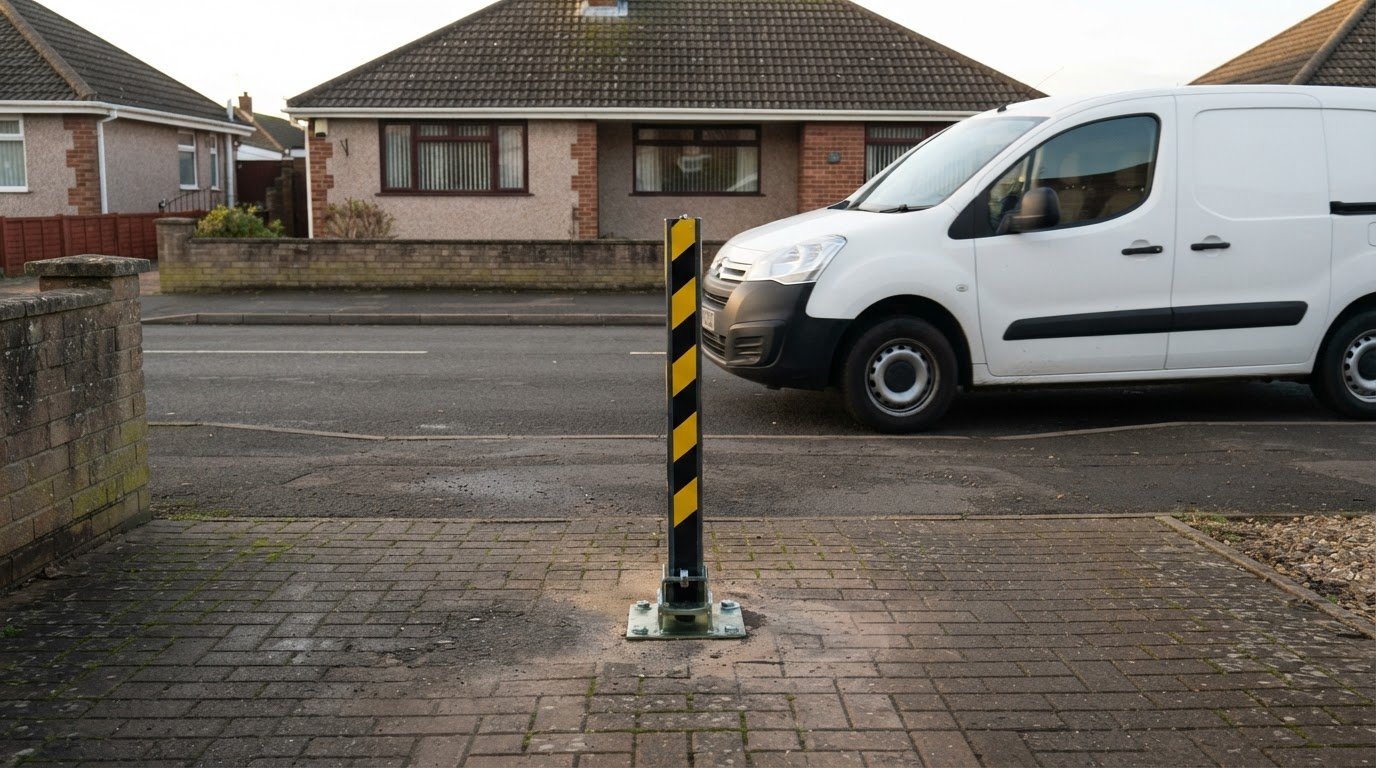
Security starts with the fixing, not just the visible post. A post anchored securely into a suitable foundation is harder to remove than one attached only to a weak surface layer. The foundation for a standard parking post should be at least 450 mm deep. Larger or security-rated bollards may require foundations more than 800 mm deep.
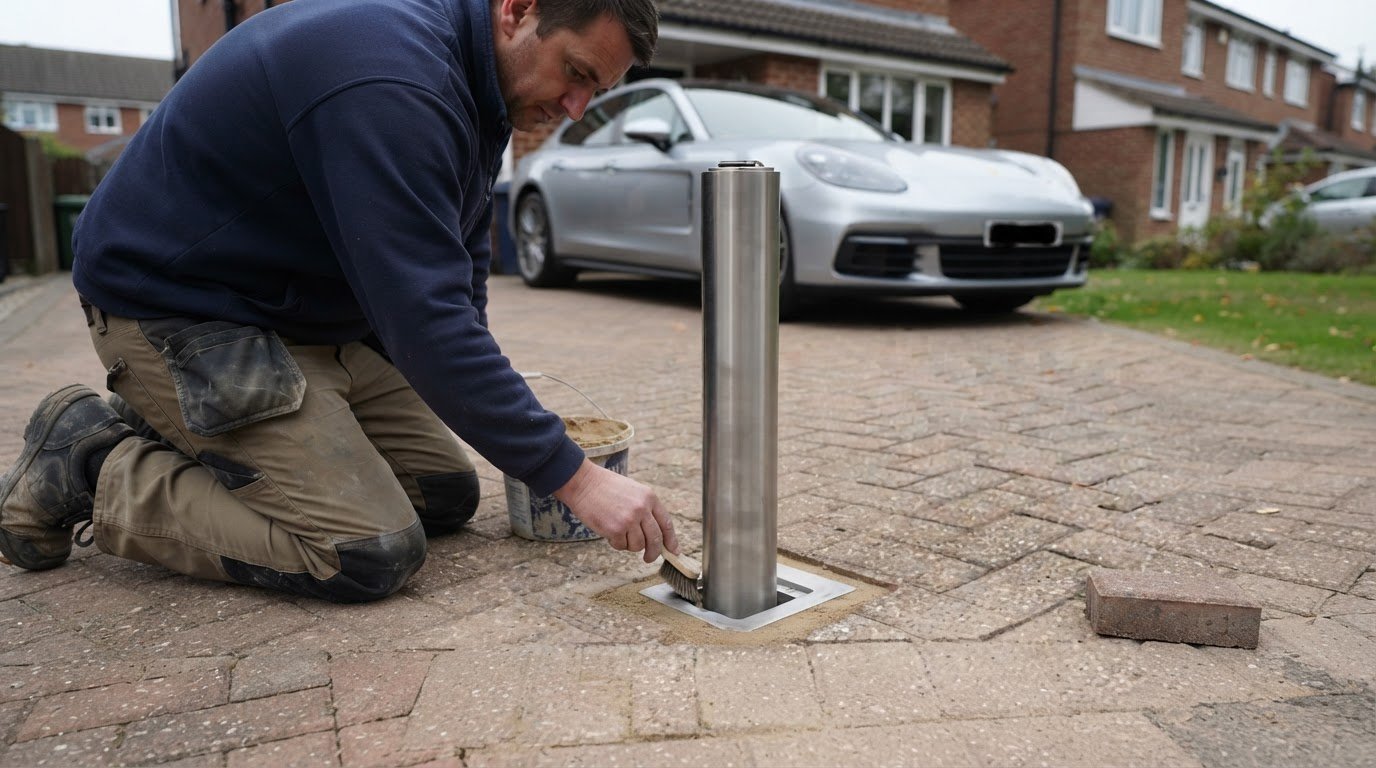
The fixing method must suit the ground. A post on a paved driveway needs fixings suited to the paving and supporting base; a new foundation involves excavation and secure setting. Loose or cracked paving can weaken the fixing, so assess the surface around the proposed position before installation. The post should sit firmly without rocking.
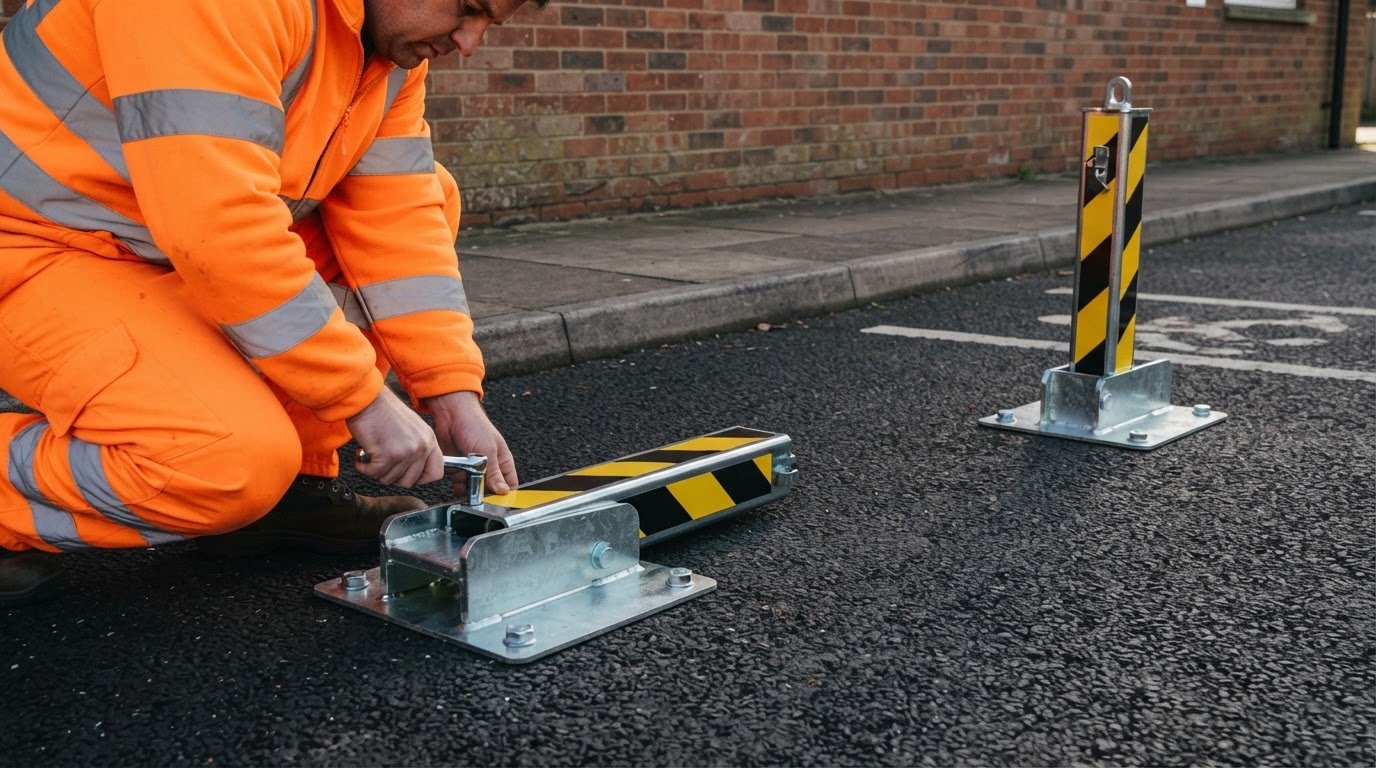
For a removable model, the ground socket and locking mechanism are important parts of the security system. Keep the socket free from grit that could stop the post seating properly, and lock the post in place whenever it is raised. A fold-down design should also be checked for secure locking in its upright position. Follow the manufacturer’s instructions for operating and maintaining its mechanism.
Use a simple inspection routine to spot faults early:
Check the base: look for movement, damaged concrete or loose fixings.
Test the lock: make sure the key turns and the post secures as intended.
Inspect moving parts: clear debris and watch for sticking or visible damage.
Review the position: confirm the post remains aligned and doesn’t obstruct access.
Arrange prompt repairs for a damaged lock, loose fixing or bent post. If the post cannot lock securely, it may no longer provide its intended deterrent. Do not force a stuck mechanism, as this could cause further damage. If the foundation has shifted, address the ground fixing rather than simply straightening the post above ground.
For a security installation, consider the post, lock and foundation as one system. Arrange driveway post installation to have the fixing planned around the surface and required level of security.
Bollard Secure: Parking Posts
Bollard Secure supplies Parking Posts for drivers who want to reserve a driveway or parking space. The right style depends on how often the entrance needs to be clear and how the post will fit the surface.
Choose a Parking Post to reserve a space. If you need a security bollard that moves out of the way, consider Bollard Secure’s Removable Bollards or Fold-down Bollards. Telescopic Bollards retract into the ground to leave the surface clear when access is open. Think through your daily routine and the installation position before choosing.
Ready to discuss an option for your space? Contact Bollard Secure and explain how the entrance is used and whether the post needs to move out of the way. This helps focus the discussion on a practical fit.
Choose a post that works with your daily routine
Before choosing a driveway parking post, picture how you use the entrance on an ordinary day. Consider who needs access, how often vehicles come and go, and whether the space needs to be cleared. This practical check helps you weigh convenience alongside the purpose of the post, so it supports how you use your property rather than becoming an obstacle.
Bollard Secure supplies Parking Posts, Fold-down Bollards and Telescopic Bollards for different access needs. A Parking Post is designed to reserve a space, while a bollard can suit access-control needs. Consider what the equipment needs to do and how the entrance is used, then contact Bollard Secure to discuss a suitable option.
Contact Bollard Secure for advice about choosing a post for your driveway. Take the next step with a clearer idea of the access you need and the protection you want.
Frequently Asked Questions
Can I put a parking post on a public pavement?
Do not assume a public pavement can be treated as part of your driveway. Before planning work, establish who manages the pavement and obtain the relevant permission. A post must not obstruct pedestrians or interfere with access. If the boundary between your property and the pavement is unclear, resolve that before choosing a position or arranging installation.
How deep does a parking post foundation need to be?
A standard parking post foundation should be at least 450 mm deep. Larger or security-rated bollards may require foundations more than 800 mm deep. The required depth depends on the post and the installation design, so the foundation should suit the particular product. Don’t rely on a shallow fixing simply because the visible post looks small.
How many parking posts should I install for my home parking space?
For a single home space, start with the entrance width and the area you want to reserve. One Parking Post may suit a narrow access point, while a wider opening may need a different layout. Check that the post leaves enough room for your car to turn in and out without striking a wall or gate.
What are the benefits of installing a parking post?
A Parking Post is designed to reserve a space and deter unauthorised parking. It can make the boundary of a private bay clearer to passing drivers. It is not a security bollard and should not be treated as vehicle-impact protection. Choose it to manage parking access, not as a substitute for equipment designed for another security purpose.
What is a parking bollard?
A bollard is used to control or mark vehicle access. “Parking post” and “security bollard” are not interchangeable terms: a Parking Post reserves a parking space, while a security bollard serves a different purpose. Consider what you need the equipment to do before choosing it for a driveway or parking bay.
Will a parking post damage my driveway?
Installation can involve drilling or excavation, which may disturb the surface around the fixing point. Suitability depends on the driveway’s construction and condition. Bollard Secure can install on concrete, tarmac and block paving, after checking the site to determine a suitable fixing method. Discuss any existing cracks or loose paving before work begins.
Comments