
Planning Permission for Security Bollards in the UK: What Applies
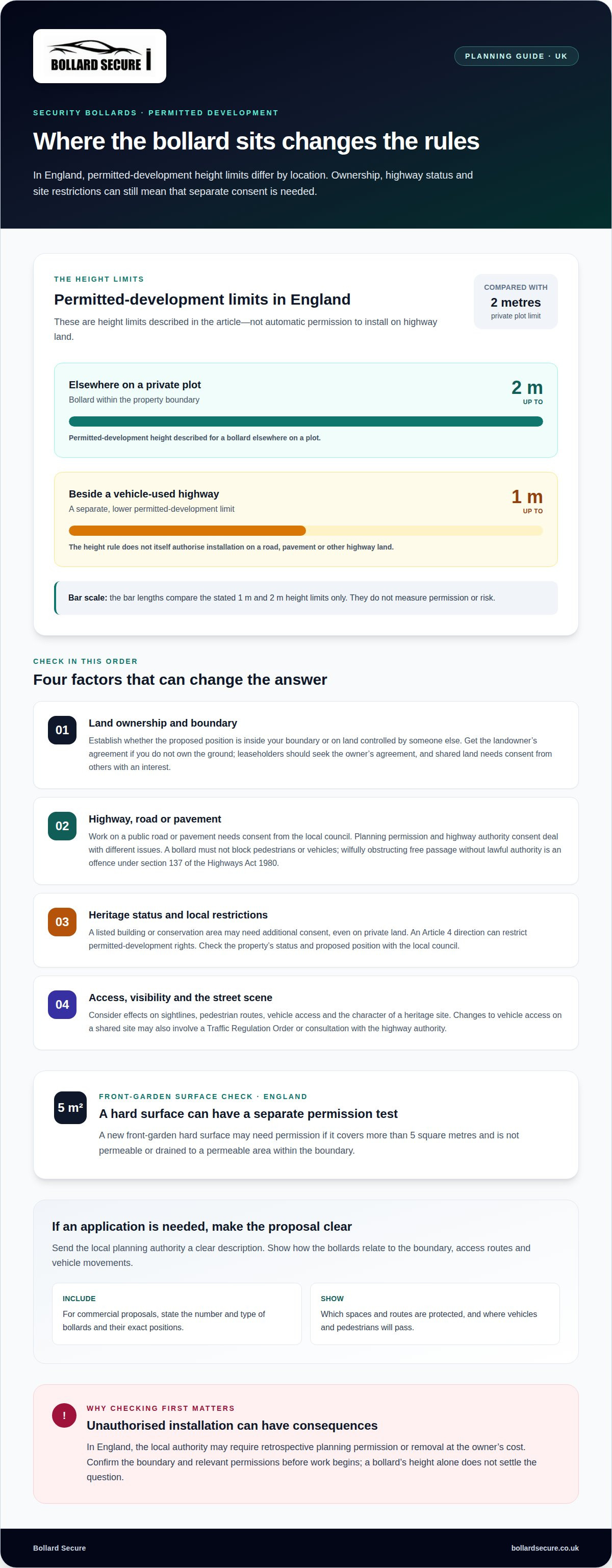
A bollard on your own driveway usually doesn’t need planning permission, but its location and height can change the answer. Planning permission for security bollards in the UK is more likely to be an issue on public land, near a highway, or at a listed building or in a conservation area. In England, bollards beside a highway used by vehicles may be up to 1 metre high under permitted development rules, according to the UK Government.
Before choosing a parking post or arranging an installation, it helps to know whether permission is needed. The answer depends on land ownership, the site’s location and any restrictions on access or appearance. This guide explains how planning permission for security bollards in the UK can vary, including what to consider for parking posts and sites across the UK.
Table of Contents
Do you need planning permission for bollards?
It depends on land ownership, the location and the effect on access or the street scene. In England, permitted development rules include specific height limits, but heritage status, highways and changes to a front garden can bring separate requirements.
Listed buildings and conservation areas
A listed building has protected historic status, while a conservation area is designated for its special architectural or historic character. Installing bollards at either may require additional consent, even on private land. Before choosing fixed or retractable bollards, check the property’s status and discuss the proposed position and appearance with the local council. A design that affects the building’s setting or the conservation area may receive extra scrutiny.
Highway authority consent and traffic orders
Highway authority consent concerns work affecting a public road or highway, while a Traffic Regulation Order can regulate traffic movement or access. In England, a bollard beside a highway used by vehicles may be up to 1 metre high under permitted development rules, according to UK Government. That height does not itself grant permission to install on the highway. A scheme changing vehicle access on a shared site may also require a Traffic Regulation Order or consultation with the highway authority.
Land ownership and local authority contact
Land ownership determines whose agreement is needed, so establish the boundary before planning installation. Ask the freeholder or landowner for consent where you don’t own the ground; contact the local planning authority about planning restrictions, and the highway authority if the site meets a road or pavement. In England, bollards beside a vehicle-used highway have a 1 metre permitted-development limit. A new front-garden hard surface may need permission if it covers more than 5 square metres and isn’t permeable or drained to a permeable area within the boundary, according to UK Government.
Risks of installing without permission
Unauthorised bollards can prompt local authority enforcement in England, including a demand for retrospective planning permission or removal at the owner’s cost. On a public highway, section 137 of the Highways Act 1980 makes wilfully obstructing free passage without lawful authority an offence. If installation affects sightlines, pedestrian routes or vehicle access, those impacts may also trigger approval requirements. Confirm the land boundary and relevant permissions before work begins, rather than relying on the bollard’s size alone.
Planning permission for bollards on private property
On private property, first check whether the bollard will stay within the boundary and whether permitted development rights apply. Planning permission for security bollards in the UK depends on those details and any restrictions affecting the site.
Bollards within private boundaries
Permitted development allows some bollards on privately owned land without a planning application, but ownership and location matter. In England, a bollard elsewhere on a plot may be up to 2 metres high under permitted development rules. A driveway post within your boundary differs from a barrier placed on a verge or shared access. Article 4 directions can restrict permitted development rights, so local rules still matter.
If you’re a leaseholder, get the landlord or property owner’s agreement before arranging installation. On common land shared by two or more people, seek written consent from the other person or entity with an interest in the land. Keep the proposed position within the boundary, and consider whether the bollards could obstruct a neighbour’s access to a public road.
Applying and preparing documents
If planning permission is required, apply to the local planning authority with a clear description of the proposal. For a commercial application, state the number and type of bollards and their exact positions. A location drawing can show how the installation relates to the boundary, access routes and nearby vehicle movements.
For planning permission for security bollards UK applications, explain how the proposed barriers affect access and how the space is used. The authority’s decision turns on the site and proposal, including applicable local restrictions. If an Article 4 direction applies, permitted development rights may not cover the work.
Commercial and private car parks need the same boundary-focused assessment. Bollards wholly within a property boundary may not need planning consent in some cases, but a commercial tenant should get the landowner’s agreement before applying. A change in how a site is used can also prompt a planning review. For a parking area, show which spaces and routes the bollards will protect and where vehicles and pedestrians will pass. This gives the authority a clear picture of the proposal and its practical effects.
Bollards on public land and council-controlled spaces
The key distinction is whether the proposed position is within your boundary or on land controlled by the council. Public roads, pavements and verges involve permissions beyond those for bollards on a private driveway.
Bollards on roads and pavements
A public road or pavement forms part of the highway, so installing a bollard there needs consent from the local council. Planning permission and highway authority consent address different issues: planning considers the development, while highway consent relates to work on the highway. Section 137 of the Highways Act 1980 makes wilfully obstructing the free passage of a highway without lawful authority an offence. A bollard must not block pedestrians or vehicles.
For a proposal beside a road, provide the council with a location drawing and details of pedestrian and vehicle access. It may ask for bollard specifications and evidence of the land boundary. This information helps distinguish a bollard on a private driveway from one on a public pavement. A telescopic design does not remove the need for consent if the installation occupies highway land.
Grass verges and public land
A grass verge outside your property boundary may be public land or council-owned, even if it borders a private driveway. Bollards on public land or a public right of way require permission. Owning nearby residential land does not give you permission to install bollards on council land. Identify the boundary and landowner before arranging work.
If the verge is shared or privately owned, obtain written consent from the person or organisation with authority over it. A landlord or property management company may control the land around rented homes. For council-controlled land, contact the council about the proposed position, access and approval process. Include a drawing showing how the bollards relate to the road, pavement and nearby entrances.
On public roads, the council may ask for details of the bollard type, position and effect on access before considering consent. A proposal that changes traffic movement on a shared site may also involve consultation with the highway authority or a Traffic Regulation Order. Keep public access clear: obstructing a footway or restricting vehicle access can create safety and legal problems, whether the bollard is removable or fixed.
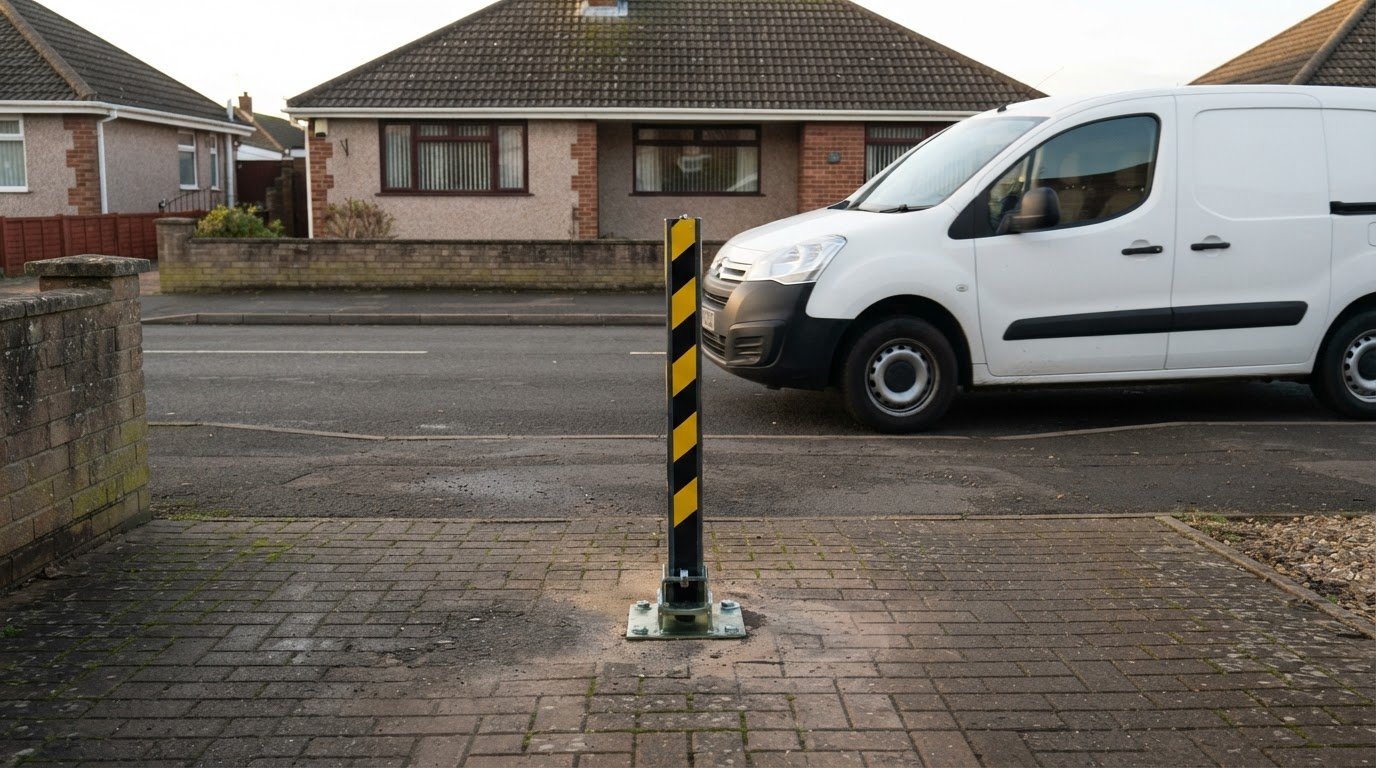
Planning permission for parking posts
A parking post can reserve a space, but permission depends on who owns the land and where the post will stand. The key distinction is between a post on a space you own and one on rented, shared or public land.
If you own the parking space and the land beneath it, installing a post on your private property generally doesn’t need planning permission. Keep it within the boundary: outside it, the post may be on a council verge or someone else’s land, so a different person’s consent is needed. If restrictions or placement rules are unclear, contact the local council.
At a rented home, check whether permission is needed before installing a post. Your tenancy agreement may also set conditions for altering the parking area. For a leasehold space, check whether it is for your exclusive use or part of shared land. If it’s shared, obtain the relevant landowner’s agreement rather than assuming that an allocated space gives you permission to install a post.
Commercial parking requires a separate ownership check. A business tenant should get the landowner’s agreement before making a planning application. If an application is required, describe the number and type of posts, their exact positions and how vehicles will enter, turn and leave. Posts that change how a shared site operates may prompt a change-of-use review.
Planning rules differ across England, Scotland, Wales and Northern Ireland. England’s permitted development rules include limits for enclosures, while Scotland and Wales have their own rules. A parking post’s height, position, heritage setting and effect on access can all affect the planning position. Check the local planning authority’s requirements before fixing a post into the ground, particularly on a shared site or near a public road.
Choose a post only after settling ownership and consent. Explore parking posts to consider options for protecting a privately owned space.
Bollard Secure: Fold-down Bollards
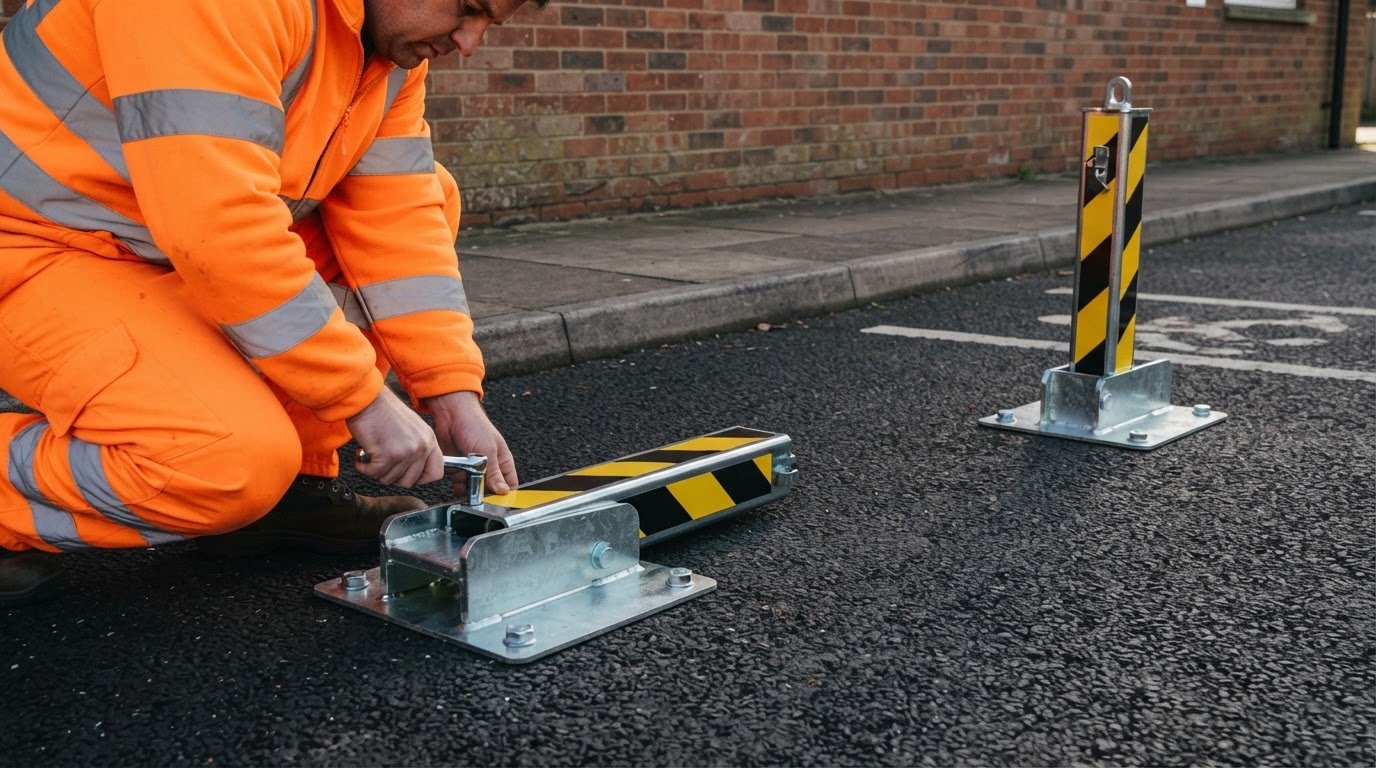
Bollard Secure supplies fold-down bollards for managing access to private parking spaces and driveways. Once you’ve established ownership and any planning requirements, choose a bollard that suits how the space is used. A fold-down model can be lowered when access is needed; telescopic and removable bollards offer other ways to manage access.
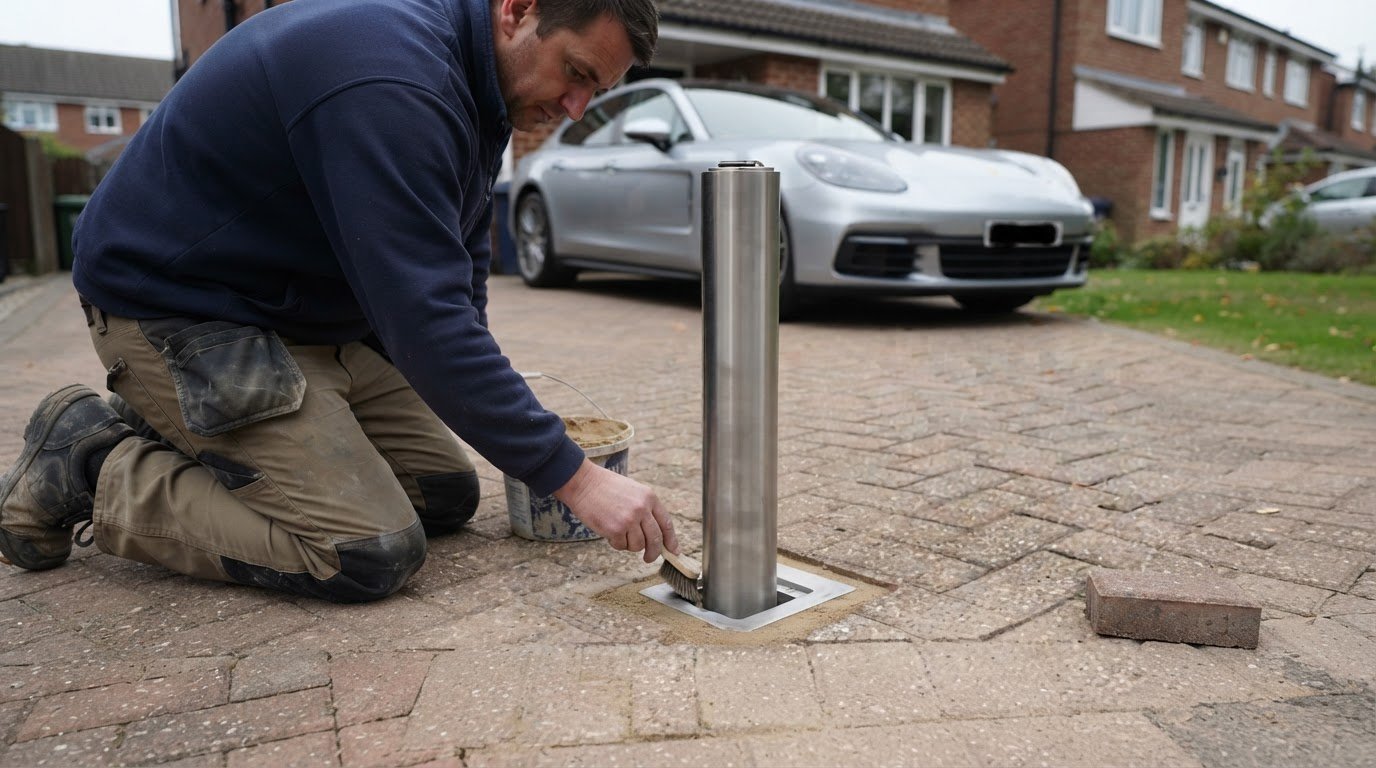
Consider the location, who needs access and whether the post must be removed or lowered regularly. Bollard Secure also offers parking posts and a bollard installation only service, giving you options for a residential space or a defined installation requirement.
Contact Bollard Secure to discuss bollards or installation for your site.
Plan the next step with confidence
Before choosing a security measure, consider how the space needs to work day to day. A home driveway, shared entrance and commercial parking area each have different access patterns. Choose an option that matches how people and vehicles use the site, not simply one that can be fitted in a particular spot. This practical assessment helps turn the planning decision into a clear project brief.
Planning permission for security bollards in the UK depends on the exact site and proposal, so keep your intended location and access needs in view as you move forward. Bollard Secure offers fold-down bollards, telescopic bollards and parking posts to suit different parking and access requirements. For help with your next step, contact Bollard Secure for advice. A well-planned installation starts with a clear understanding of your site and its needs.
Frequently Asked Questions
Can I put bollards outside my house on the pavement or road?
No, you can’t install bollards on a public pavement or road without the relevant consent. The local council or highway authority controls that space, even if it is directly outside your home. A bollard must not obstruct people using the pavement or vehicles on the road. Contact the authority responsible for the highway before arranging any work there.
Can I put bollards on my verge?
Only if you have the right to use the land and any required consent. A verge beside your property may belong to the council rather than form part of your garden. Check the boundary and ownership first. If the verge is council-controlled, ask the council about permission; if it’s shared or privately owned, get agreement from whoever controls it.
Can I put a bollard on my drive?
Usually, you can put a bollard on a driveway you own if it stays within your boundary and no local restriction prevents it. The answer may differ for a rented home, leasehold property or shared driveway: get the owner’s agreement and consider other users’ access. Also check whether the property is listed or in a conservation area, as additional consent may apply.
Do bollards need building regulations approval?
Not every bollard installation needs building control approval. In England, building control may need to review plans if the work connects to ramps, steps, retaining walls or other structural elements. For example, a bollard built into a retaining wall raises different considerations from one installed separately in a driveway. Planning consent and building control are separate matters, so one approval does not automatically cover the other.
What are the costs involved?
Costs depend on whether you need a planning application and what type of application applies. In England, a householder application for gates, fences, walls or other means of enclosure along an existing house boundary costs £272 from 1 April 2026. That is an application fee, not the price of a bollard or installation. Check the fee category for your proposal before applying.
What are the rules for bollards in the UK?
Rules depend on the UK nation, land ownership, location and proposed height. In England, permitted development allows bollards up to 2 metres high elsewhere on a plot, with a lower limit beside a highway used by vehicles. Public land, listed buildings, conservation areas and local restrictions can affect what consent is needed. A parking post reserves a space; it isn’t a security bollard.
Comments