
Nationwide Bollard Installation
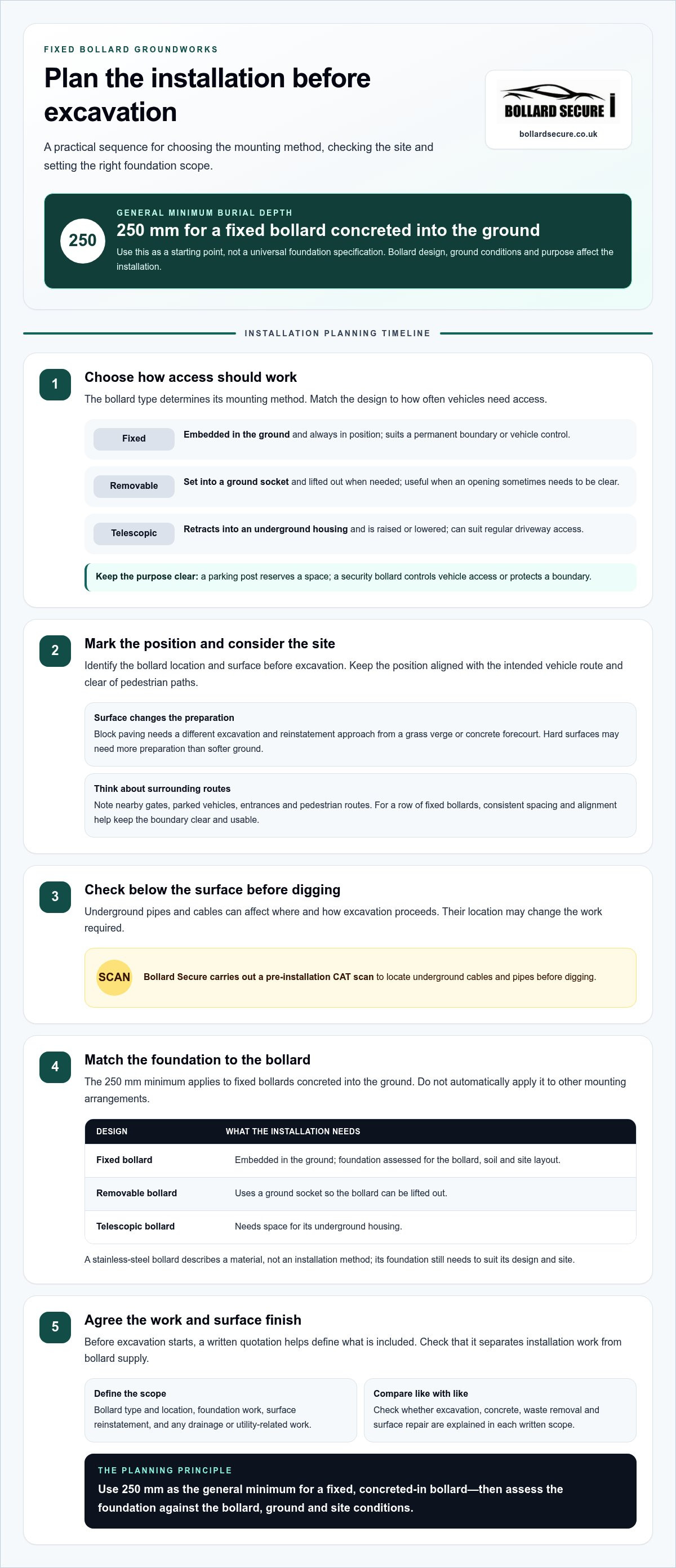
A fixed bollard concreted into the ground generally needs a minimum burial depth of 250 mm. The right installation also depends on what lies beneath the surface and how the site handles water. If you’re considering a bollard installation only service, understanding the groundworks can help you plan the job clearly.
It’s natural to focus on the bollard itself, but the base and surrounding surface matter too. A properly prepared base helps secure the bollard, while hard surfaces such as tarmac or concrete may need more preparation than softer ground.
This guide explains the recommended burial depth, what affects installation pricing and when drainage or surface restoration may form part of the work. It also compares key installation considerations for residential and commercial sites, so you can see what may shape the job before deciding on the next step.
Table of Contents
Security bollard installation for residential and commercial sites
Fixed bollards are set into the ground, removable bollards fit into ground sockets, and telescopic bollards retract into underground housings. The installation method depends on the bollard type, surface and how often vehicles need access.
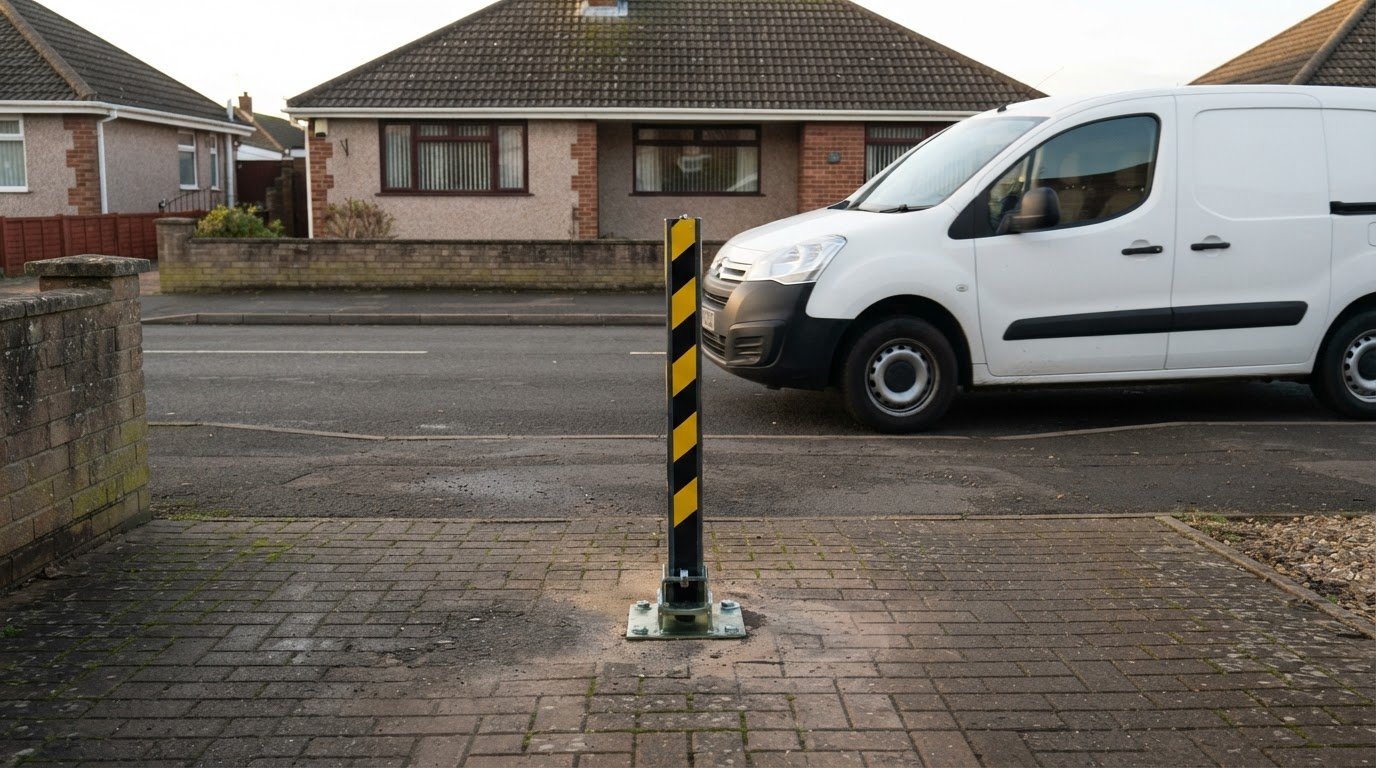
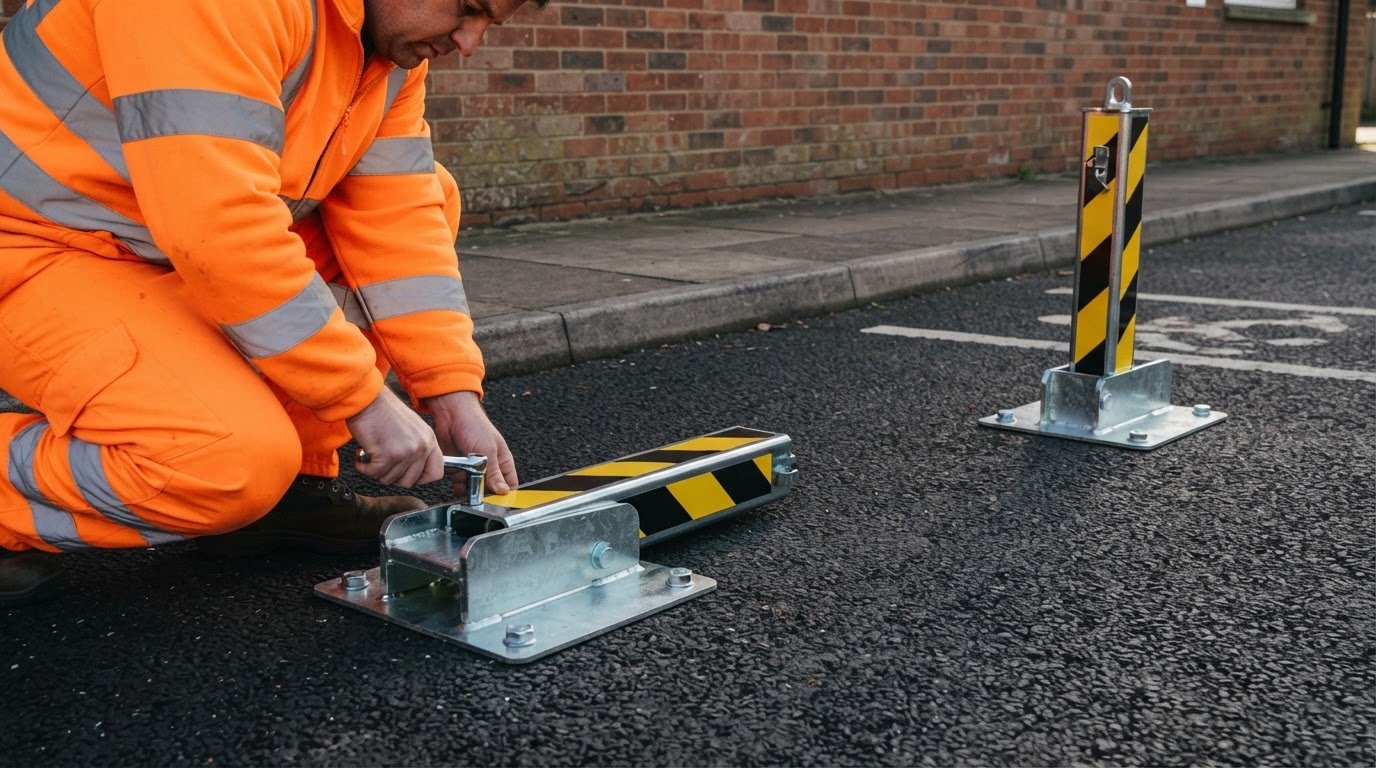
For a domestic driveway, start by deciding whether you need a permanent barrier or occasional vehicle access. A telescopic bollard retracts into its housing when access is needed, while a fixed bollard stays in place. A removable bollard lifts out of its socket, making it useful when the opening sometimes needs to be clear.
Parking posts and security bollards serve different purposes. A parking post reserves a parking space and acts as a deterrent, but it is not a security bollard. Security bollards are designed to control vehicle access or protect a boundary. Choose according to the risk and access required, not appearance alone.
Installation depends on the design. Fixed bollards are embedded in the ground, removable models use a socket, and telescopic units need an underground housing. The installer prepares the opening, positions the unit and finishes the surrounding surface. The precise work depends on the product and site conditions.
Choose a parking post to reserve a space; choose a security bollard when controlling vehicle access or protecting a boundary is the priority.
For UK permissions, private property typically does not require permission for installation. Public pavements or walkways require appropriate local council authorisation, and the guide advises checking council regulations before work begins. Shared spaces and commercial properties may also need to meet specific safety and accessibility requirements.
A telescopic bollard installation typically takes around 2-3 hours. Excavation, surface type and underground utilities can affect the work involved, so a straightforward driveway job may differ from a commercial car park installation.
For installer protection, look for public liability insurance. Ask for written warranty terms covering the bollard and installation, and clarify what each covers before work starts.
On a commercial site, consider how bollards will affect vehicle routes, pedestrian access and daily operations. A telescopic option may suit an entrance that needs to be clear during deliveries. For a driveway with occasional access, a removable design may be more suitable. These practical differences help narrow the choice before installation.
Recommended burial depth for fixed bollards
Fixed bollards concreted into the ground generally require a minimum burial depth of 250 mm. Treat this as a starting point, not a universal foundation specification: the bollard design, ground conditions and purpose all affect the installation. A post intended to resist vehicle access may need a different foundation design from one used to mark a pedestrian boundary.
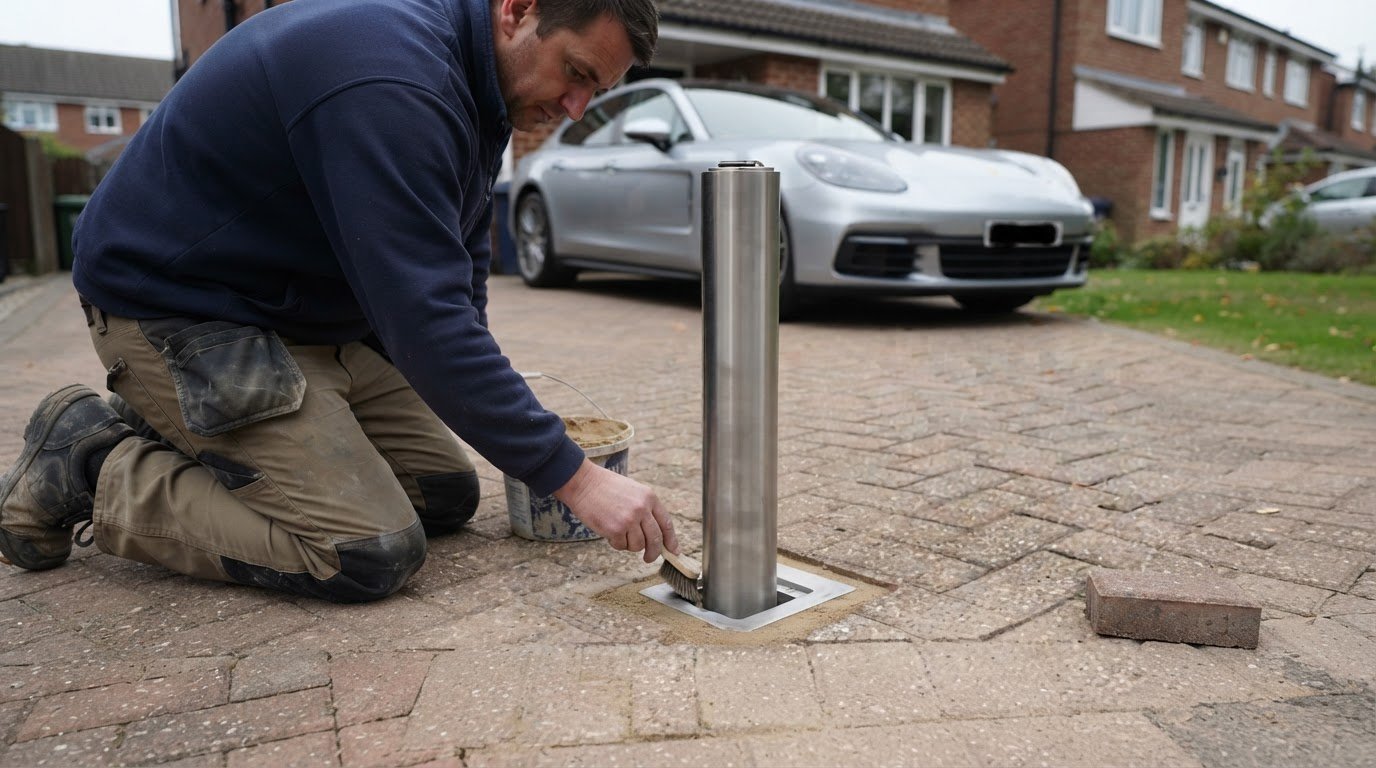
Before installing a bollard, identify its position and the surface. Block paving needs a different excavation and reinstatement approach from a grass verge or concrete forecourt. Underground pipes and cables can also affect where and how excavation proceeds. Bollard Secure carries out a pre-installation CAT scan to locate underground cables and pipes before digging. Keep the bollard aligned with the intended vehicle route and clear of pedestrian paths.
The 250 mm minimum applies to fixed bollards concreted into the ground. It shouldn’t be transferred automatically to a parking post, removable bollard or telescopic security bollard, because each has a different mounting arrangement. A removable model uses a ground socket, while a telescopic model needs space for its housing. Follow the installation requirements for the selected design.
Stainless steel describes a material, not an installation method. A stainless-steel bollard still needs a foundation suited to its design and site. A fixed post beside a commercial entrance is embedded, while a removable post needs a socket that allows it to be lifted out.
A written quotation helps define the work before excavation starts. It should identify the bollard type, location, foundation work, surface reinstatement and any drainage or utility-related work included. A free written quotation can be useful for comparing the same scope across proposed options; check that it clearly separates installation work from bollard supply.
To find local installation-only contractors, search using your town or postcode alongside terms such as “fixed bollard installation” or “bollard fitting only”. Compare written scopes that explain excavation, concrete, waste removal and surface repair, rather than judging proposals by the bollard description alone.
Before work begins, mark each proposed position and note nearby gates, parked vehicles and pedestrian routes. For a row of fixed bollards, consistent spacing and alignment help keep the boundary clear and usable. On a commercial forecourt, plan around vehicle entrances and walking routes; on a domestic driveway, preserve the usual access and parking space.
Use 250 mm as the general minimum burial depth for a fixed bollard concreted into the ground, then assess the foundation against the bollard, soil and site layout. A parking post or telescopic security model requires its own installation method, so match the excavation to the unit rather than assuming every bollard is installed alike.
Base preparation and drainage
A properly prepared base helps secure a bollard in place. Preparation also affects drainage and the finish around the installation. Block paving, a concrete forecourt and a landscaped area each need a suitable approach to excavation and reinstatement.
Start by identifying the bollard position, surface type and expected water flow. Mark the location and consider whether rainwater already drains towards it. A base that obstructs an existing flow path can leave water collecting around the bollard. Keeping the drainage route in mind helps guide the installation and final finish.
Hard surfaces such as concrete or tarmac may need more preparation than softer ground. Cutting or breaking the existing surface adds work before the base can be prepared. The installer also needs to finish the surface around the bollard, so clarify what reinstatement is included in the quotation.
Underground pipes or cables can affect excavation. A pre-installation CAT scan helps locate them before digging, which can inform how the ground is opened and prepared. Identify known site features and discuss the proposed position before work begins.
For a ground-fixed bollard, the installer prepares the opening, positions the unit, secures it in the base and finishes the surrounding surface. The bollard must stay correctly aligned during installation. A removable bollard also needs its socket positioned accurately, so it can be lifted out and replaced without catching on the surrounding finish.
Check the surface: distinguish paving, concrete, tarmac or softer ground before planning excavation.
Plan the water route: note where rainwater currently runs and avoid blocking that path with the base.
Locate utilities: account for pipes and cables before excavation or concrete work begins.
Agree the finish: include surface restoration and waste disposal in the installation scope.
Drainage may form part of the installation cost, alongside excavation, waste disposal, fitting and surface restoration. For electric bollards, the work may also include wiring and control-system installation. These items depend on the chosen bollard and site layout, so a quote should separate the base work from any drainage or electrical tasks.
On a commercial forecourt, for example, plan the concrete base around vehicle access, pedestrian routes and the existing surface fall. At a residential entrance, preserve the driveway finish and avoid directing runoff towards the property. A well-planned base supports the bollard, while careful drainage and reinstatement leave the surrounding area usable.
Bollard installation pricing
There isn’t one installation price for every UK site. The work depends on the bollard type, ground conditions and installation scope. Fitting a single bollard in a clear driveway differs from installing several across a commercial car park. Compare what each quotation covers, not just the headline figure.
Keep product supply separate from installation when comparing quotations. Bollard Secure offers both supply and installation, as well as an installation-only service for customers who have already purchased a bollard. Its installation charge includes travel, labour and materials required to complete the installation. Check that the quotation clearly states which service you need.
The ground and surface affect the preparation required. Concrete or tarmac may need more work than softer ground, and underground pipes or cables can affect excavation. Bollard Secure carries out a pre-installation CAT scan to locate underground cables and pipes before digging.
Quantity and layout matter too. Installing several bollards at one site may involve a different overall scope from fitting one driveway bollard. The number of excavation points, access to the work area, waste removal and reinstatement all affect the tasks involved. A quote should make clear whether it covers every planned position.
Compare proposals using the same checklist:
Bollard type: distinguish manual, semi-automatic and automatic models.
Groundworks: identify excavation, concrete preparation and disposal of excavated material.
Utilities: state whether utility scanning and any additional excavation are included.
Finishing work: clarify drainage and restoration of the existing surface.
Electrical work: for automatic bollards, show wiring and control-system installation separately.
Manual and telescopic bollards involve different installation methods. A telescopic unit retracts into an underground housing, while a fixed bollard stays in place. Check that the quotation describes the selected product and the fitting work it requires.
Check whether VAT is included and whether the quote covers supply as well as fitting. This matters when comparing a supply-and-install proposal with an installation-only arrangement. Ask for the bollard specification, quantity, excavation scope and surface finish to be written down, so each proposal describes the same job.
For a residential driveway, note the paving type and whether the bollard needs to retract or remain fixed. For a commercial car park, record the number and positions of units, vehicle access constraints and any electrical requirements. These details help define the work before installation begins.
Use the written scope to compare like with like: match the bollard type, groundworks, utility scans, electrical work and reinstatement. If one proposal excludes drainage or surface repair, its lower total may not represent the same completed installation.
Which UK contractors offer bollard installation without supplying the bollards?
If you already have a bollard, Bollard Secure’s bollard installation only service provides professional groundwork and fitting. Describe the bollard type and site surface when arranging the work. This helps define the installation method for a fixed, removable or telescopic bollard.
An installation-only scope separates fitting from product supply. Bollard Secure provides professional groundwork and installation for customers who have already purchased their bollards. The installation charge includes travel, labour and materials required to complete the installation. Explain the bollard type and site conditions so the work can be planned around the product and location.
When comparing a bollard installation only service, look for a provider whose work covers the bollard type and site conditions. Bollard Secure offers installation for customers who have already purchased their bollards. A driveway and a commercial car park may require different preparation and access arrangements.
Bollard details: type, dimensions and installation instructions supplied with the unit.
Site information: address, surface material and photographs showing the proposed position.
Work required: whether excavation, a concrete base, drainage or reinstatement is needed.
Access details: vehicle access, pedestrian routes and any restrictions on reaching the work area.
Make the division of responsibility clear. State who supplies the bollards, fixings and any ground socket, and who removes excavation waste. If the supplied bollard needs an electrical connection, identify that requirement at the quotation stage. The installation scope should describe the work, rather than assume the installer will provide missing parts or extra tasks.
Compare written proposals using the same details: bollard type, installation work and surface finishing. Underground pipes or cables can affect excavation, so Bollard Secure carries out a pre-installation CAT scan before digging. Check that the agreed scope reflects the work required at your site.
Installation-only work suits a project where the correct bollards have already been selected and are available for fitting. It may not suit a site where the bollard type, foundation or access layout remains undecided. In that case, settle those choices first, so the installer can plan the work around the actual unit and location.
Prepare a short project brief with the bollard model, quantity, site surface and photographs. This gives a UK installer practical information to assess the job and set out its scope. Plan your bollard installation by outlining the site and work required.
Bollard Secure: Fold-down Bollards
Bollard Secure offers a bollard installation only service for customers who have already purchased their bollards. It’s a practical next step when you need professional groundwork and fitting planned for your site.
For driveways where vehicle access must be opened and secured again, consider Fold-down Bollards. Telescopic Bollards, Removable Bollards and Parking Posts provide other options for managing access, depending on how you use the space. Share the bollard type and installation location so the required work can be understood.
To discuss installation or choosing a bollard, contact Bollard Secure or visit bollardsecure.co.uk.
Plan your next step with confidence
Before arranging work, decide what you need the bollard to do in everyday use. A driveway that needs to open regularly calls for a different option from a boundary that should remain fixed. Bollard Secure offers Fold-down Bollards, Telescopic Bollards and Parking Posts for different access and parking needs.
If you already have bollards, a bollard installation only service can help move the project from product selection to fitting. Set out the site location, surface and bollard type when describing the work. This gives the installation discussion a clear starting point without making assumptions about your layout.
The next step is straightforward: decide whether you need installation, a suitable bollard, or both. You can contact Bollard Secure about installation and outline what your site requires. With the key details to hand, you can move forward with a clearer plan for your property.
Frequently Asked Questions
How deep should bollards be buried?
Fixed bollards concreted into the ground generally need a minimum burial depth of 250 mm. This is a general minimum, not a full foundation design for every site. The bollard’s installation instructions, the ground and its intended use affect the preparation required. A fixed post beside a pedestrian route, for example, has a different role from one intended to restrict vehicle access across an entrance.
What’s included in the installation cost?
Bollard Secure’s installation charge includes travel, labour and materials required to complete the installation. The work depends on the bollard and site, so review the written scope to understand what is planned. Product supply and installation are separate parts of a project, so make sure the quotation states whether it covers installation only or supply and installation.
What does bollard installation-only service include in the UK?
An installation-only arrangement is for fitting bollards you’ve already purchased. Bollard Secure provides professional groundwork and installation for customers supplying their own bollards. The installation charge includes travel, labour and materials required to complete the work. Have the bollard’s fitting instructions and product details ready to help clarify the installation method and its suitability for the proposed position.
How much does bollard installation-only cost in the UK?
The work depends on the bollard type, surface and site conditions. To understand the project total, distinguish the cost of the bollard from installation, then review the quotation for the work and materials included. A difficult surface or underground utility can affect the preparation required.
What information is needed to get a quote for bollard installation only?
Provide the installation address, bollard model and quantity, along with photographs of the proposed positions and surrounding surface. Include the product’s fitting instructions if available. Explain whether the location is a driveway, shared entrance or commercial site, and note access restrictions or visible drainage features. These details help describe the work accurately and identify any extra preparation needed.
What site preparation and ground conditions are required for bollard installation?
The site needs a suitable position, an appropriate fixing method and enough access for the installation. Bollard Secure can install on surfaces such as concrete, tarmac and block paving, but checks the site first to make sure the fixing method is suitable. Before work, clear the proposed area and identify any known services or drainage routes. Existing paving and ground conditions affect the preparation required.
What installation risks include underground utilities, drainage and concrete foundations?
Underground pipes or cables can affect excavation, while poor water management can leave water collecting around a bollard. The foundation also needs to suit the chosen product and ground. Bollard Secure carries out a pre-installation CAT scan to locate underground cables and pipes before digging. Share any known site plans or drainage concerns, and keep the proposed position clear of vehicle and pedestrian routes.
Do bollard installation-only services include excavation, reinstatement or waste removal?
The answer depends on the agreed scope. Bollard Secure’s installation-only service covers professional groundwork and fitting, and the installation charge includes travel, labour and materials required to complete the installation. Review the quotation to understand the work planned, including excavation and surface finishing, so the agreed scope matches your requirements.
Comments