
Insurance-Approved Driveway Bollards: UK Guide 2026
What if a bollard described as “insurance approved” still doesn’t meet the terms of your policy? The phrase can sound like a clear guarantee, but insurance approved driveway bollards aren’t covered by one universal certification. A product’s security accreditation and your insurer’s specific requirements are separate things.
It’s understandable to want certainty before choosing and installing a bollard. A Sold Secure rating or Secured by Design recognition may provide useful evidence, but it doesn’t automatically mean your insurer will accept the product or installation. Your policy wording has the final say.
This guide explains what insurers may mean by approved driveway security and how to distinguish an independent rating, a recommendation and a policy condition. You’ll learn which product documents and installation records to review, then compare options such as telescopic and fold-down bollards. By checking the details before you buy, you can choose a suitable solution and plan your next steps with confidence.
Table of Contents
What does “insurance-approved driveway bollard” actually mean?
“Insurance approved” isn’t, by itself, proof that a bollard will satisfy every insurer or policy. There’s no single approval implied by the phrase. Insurers may set their own security conditions, so your policy wording and any guidance from your insurer are the practical reference points.
It helps to separate three things. Product certification is evidence that a particular product has been assessed against a named scheme or standard. An insurer recommendation indicates a product or security measure the insurer considers suitable, but a recommendation isn’t automatically a policy condition. A policy condition is a requirement stated in your cover documents. If your policy specifies a bollard type, lock, position or installation method, don’t assume a general approval claim overrides that wording.
This distinction matters when comparing insurance approved driveway bollards. A seller’s description may be a useful starting point, but it isn’t the same as evidence for the exact product or confirmation from your insurer. Check the documents and compare them with the terms that apply to your cover.
Is “insurance approved” a universal bollard certification?
No. On its own, the phrase doesn’t identify one universal certification that applies across all UK insurance policies. It may describe a seller’s claim, refer to a recommendation or point to a product assessment. Look for the precise meaning rather than relying on the label.
Look for product-specific evidence, such as the exact model name and any stated assessment or accreditation. Then compare it with your policy and insurer guidance. General information about what a bollard is and how bollards are used can provide background, but it can’t establish whether a particular product meets your policy’s security conditions.
What does Sold Secure accreditation tell you?
Sold Secure is a security testing and accreditation scheme. Its accreditation can show that a specific product has been assessed through that scheme. It doesn’t, on its own, confirm that the product meets every insurer’s requirements or that your policy will recognise it.
Check the exact product and supporting accreditation evidence, not just a broad reference to Sold Secure in an advert or description. Make sure the model details match. If your policy names a specific rating, product type or installation condition, compare that requirement with the evidence and insurer guidance before buying.
Even a suitable product and installation can’t guarantee a lower premium or prevent every theft. A bollard is one part of a property’s security, and its insurance relevance depends on the terms of your cover. Treat approval language as a prompt to verify the details, not as a promise of acceptance.
How to check whether a driveway bollard meets your insurer’s requirements
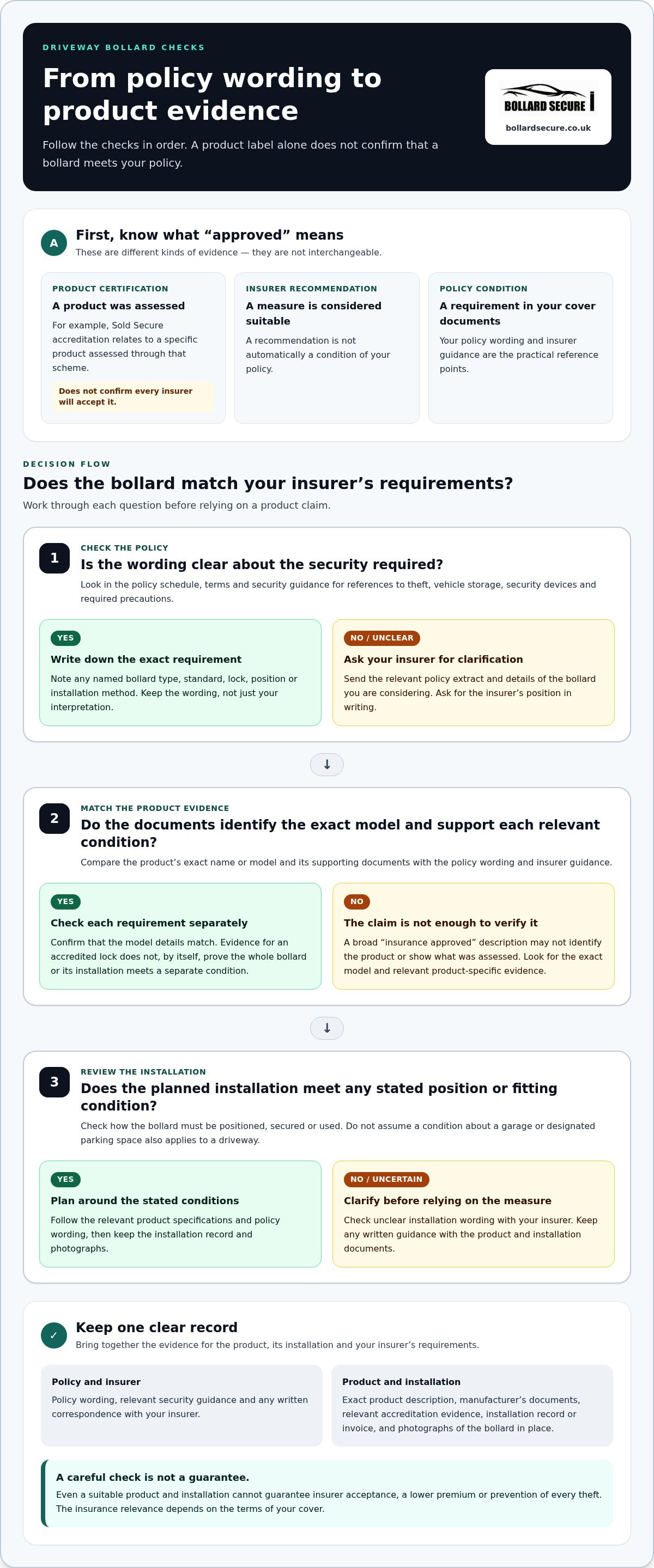
Use your policy as the checklist, rather than starting with a product label. The aim is to match the insurer’s stated conditions with evidence for the exact bollard and its installation. A rating, a particular lock or a recommendation may be relevant, but none should be treated as a substitute for the wording that applies to your cover.
Work through the checks in order:
Read the policy documents. Search the policy schedule, terms and any security guidance for references to theft, vehicle storage, security devices and precautions you must take.
Identify the precise requirement. Note any named bollard type, standard, lock, position or installation condition. Record the wording, not just your interpretation of it.
Compare product evidence. Match the product’s exact name or model and supporting documents to each relevant condition. For example, evidence that a lock has an accreditation doesn’t automatically show that the whole bollard or its installation meets a separate policy requirement. You can review the scheme’s information on Sold Secure Certification when checking a product-specific claim.
Keep a clear record. Save the policy wording, product documents, installation records, photographs and any written guidance from your insurer together.
Which details should you look for in your policy?
Search for wording about security devices, where the vehicle is kept, theft exclusions and steps you’re required to take. Check whether the policy names a product type, standard, locking requirement or installation method. Requirements can be specific, so note whether they describe what must be fitted, how it must be secured or how it must be used.
Don’t assume that a condition about a garage or designated parking space also applies to a driveway. If the wording is unclear, send your insurer the relevant extract and details of the bollard you’re considering. Ask for its position in writing before relying on the measure as meeting a policy condition.
What product evidence should you keep?
Keep the exact product description and manufacturer’s documents, along with any relevant certification evidence for that model. A general category page or a phrase such as “insurance approved” may not identify the product or show what was assessed. Check that the evidence names the same model you plan to install, and retain the original files or copies.
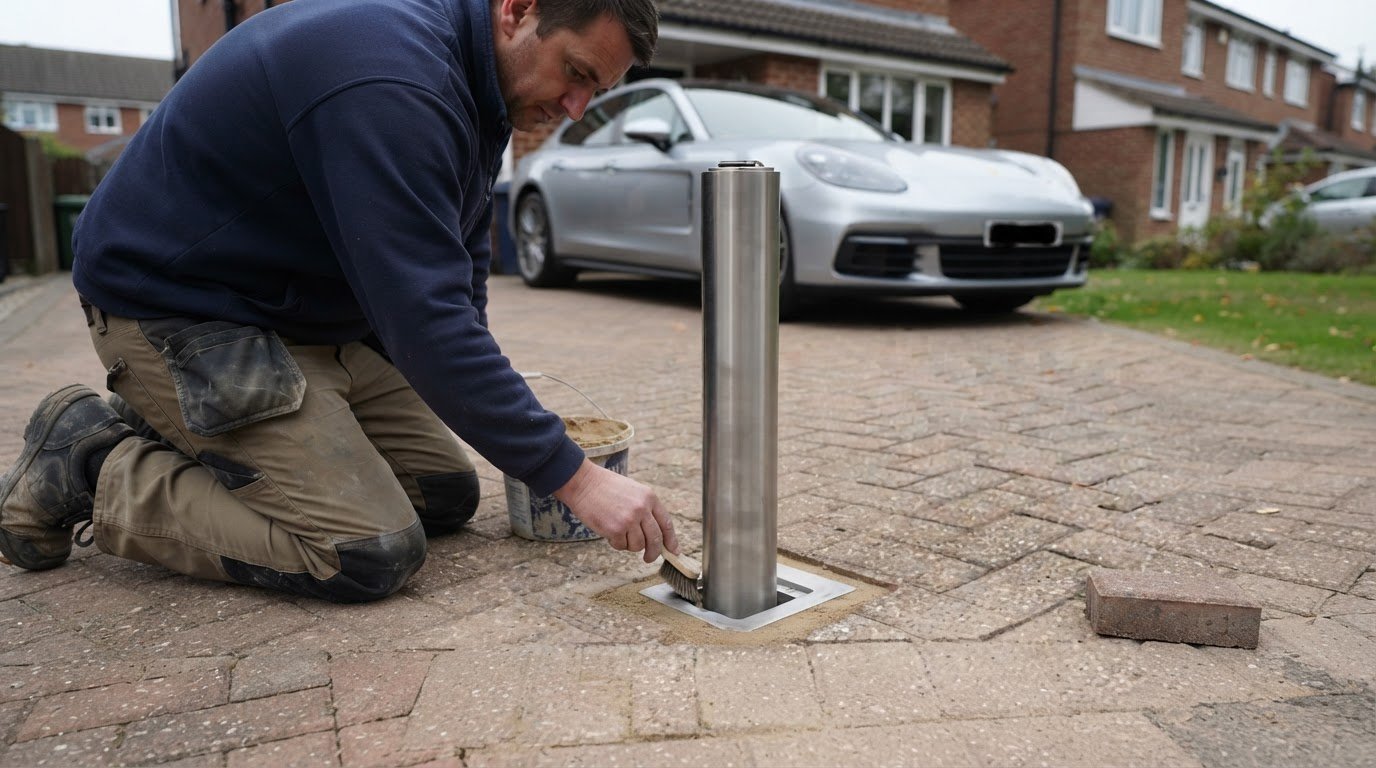
After installation, add the invoice or installation record, photographs showing the bollard in place and any correspondence with your insurer. If you already own the bollard, Bollard Secure’s bollard installation service covers groundwork, core drilling and secure concreting according to product specifications. Keep the installation documentation with your other policy records.
This paper trail makes it easier to explain what you’ve fitted and how it relates to the requirements you identified. It also helps keep product suitability and insurer acceptance distinct: evidence can support your conversation with the insurer, but your policy terms and the insurer’s written guidance determine what applies to your cover.
Telescopic, fold-down or removable: which driveway bollard should you compare?
Start with your routine, not a security label. How often does a vehicle need to pass? Is there space to operate a bollard and, for a removable option, store its component? The driveway surface and ground beneath it matter too. These details help narrow the format, but the bollard type alone doesn’t establish accreditation or acceptance under your insurance policy.
A useful comparison looks at four things:
Operation: How do you move the bollard out of the way for vehicle access?
Access routine: Will you need to operate it frequently, or only occasionally?
Storage: Does any part need to be lifted out and stored elsewhere?
Ground requirements: Is there space and a suitable surface for the installation approach?
When might a telescopic driveway bollard suit your routine?
A telescopic bollard retracts into a housing in the ground, keeping the driveway clear when it’s lowered. This can suit a household that needs regular vehicle access but wants the bollard to remain in place rather than be carried away and stored. Consider where the housing can be installed and whether the ground and driveway layout are suitable. Understand the installation requirements before choosing this format.
Compare that routine with a fold-down option, which operates differently and has different ground and access considerations. The fold-down bollard driveway buying guide offers a closer look at that alternative format.
When should you compare fold-down and removable bollards?
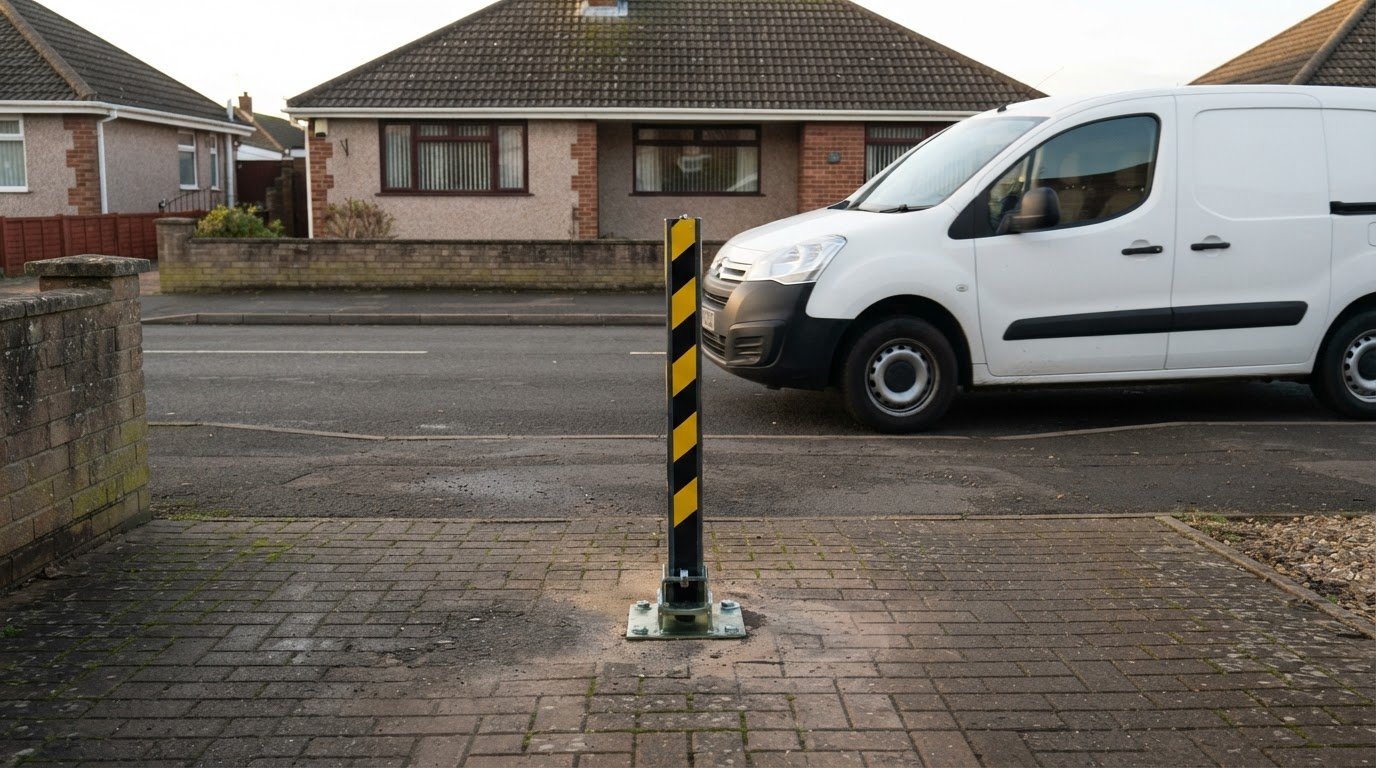
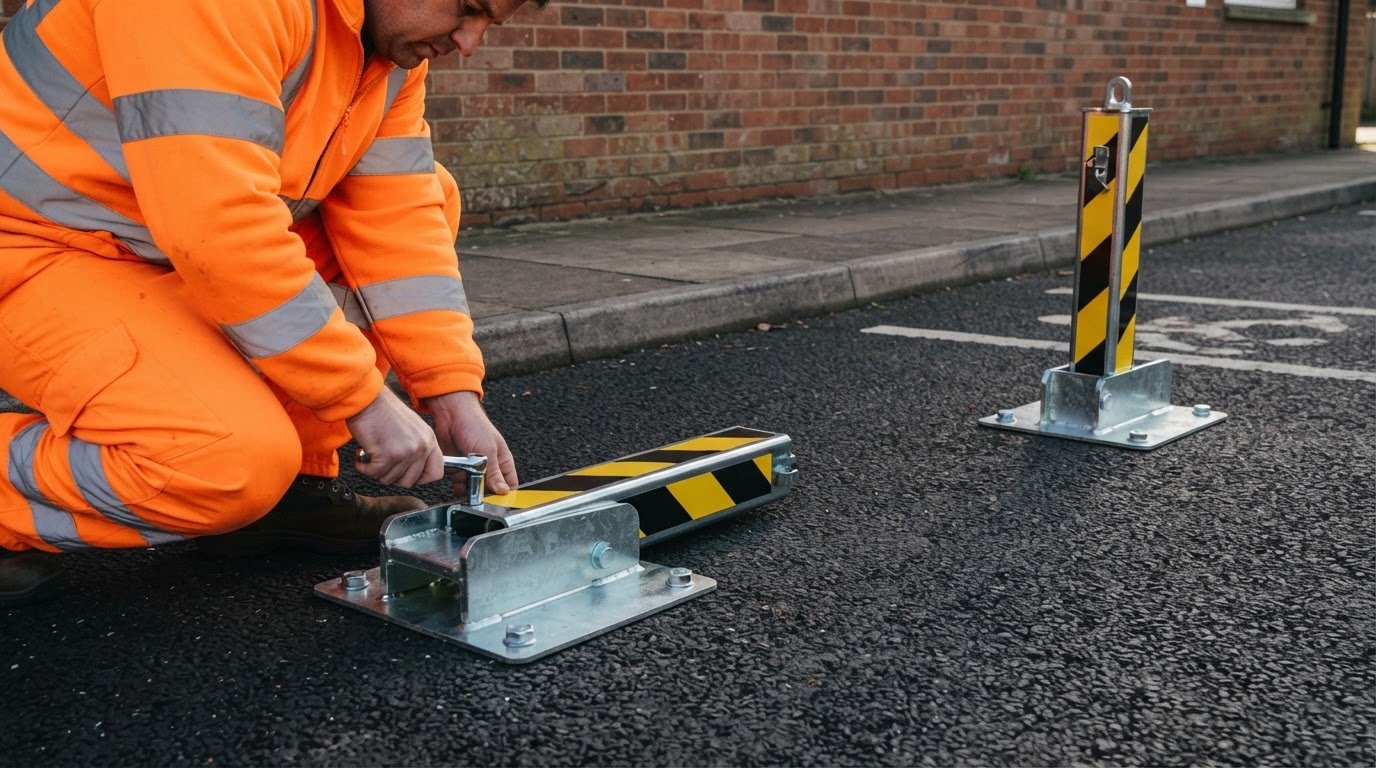
A fold-down bollard is lowered into a horizontal position when access is needed, so consider where it will sit and whether that position works with your driveway and vehicle movements. A removable bollard is taken out of its ground fitting, so consider where the removed section can be kept. The more often you need access, the more important a simple, manageable routine becomes.
Neither format is automatically the better choice for every driveway. Think about who will operate it, how often access is needed and whether a folded or removed component could get in the way. For a deeper alternative-format comparison, see the removable bollards for driveways guide.
Once you have a preferred format, compare the specific product evidence with your insurer’s stated conditions. A telescopic, fold-down or removable design doesn’t prove by itself that the product is accredited or that your policy accepts it. Keep those checks separate: first find a bollard that suits the driveway and household routine, then establish whether its evidence and installation match the policy requirements.
A practical checklist before buying or installing a driveway bollard
A good choice needs to work on two levels: it must suit the driveway and household routine, and its product evidence must be relevant to the policy. Before ordering, use this checklist to spot practical issues early. A product label or DIY installation, by itself, doesn’t prove that your insurer’s conditions have been met.
Policy wording: Note any requirements for bollard type, locking, position, use or installation. If a condition is unclear, get the insurer’s interpretation in writing.
Product evidence: Match the exact product description and any manufacturer or certification documents to the policy wording. Avoid relying only on a general category page or broad “insurance approved” claim.
Access routine: Consider how often vehicles need to enter or leave, and who will operate the bollard. The chosen format should fit everyday use.
Driveway layout: Check the vehicle route, intended position, surface and available ground space. Consider what lies beneath the proposed location before planning groundwork.
Installation and records: Follow the chosen product’s installation specifications. Keep product documents, installation details, dated photographs and any insurer response together.
What should you assess at the driveway?
Look at the whole access route, not just the spot where you hope to place the bollard. Check that its position won’t obstruct normal vehicle movements, and consider how people will move around it when it’s raised, folded or removed. Note the driveway surface and any known subsurface constraints that could affect groundwork or the installation method.
Requirements vary with the product and site. For example, a design that needs a ground housing calls for different preparation from one fixed to the surface. Don’t assume the same installation method will suit every driveway. Let the product specifications and actual site conditions guide the plan.
What should you record after installation?
Take dated photographs showing the bollard in place and its position in relation to the driveway. Keep the product description, manufacturer documentation and any relevant certification with your installation details. Save correspondence from your insurer too, especially if it explains how a specific condition applies. These records make it easier to refer back to what was fitted and what guidance you received.
For existing hardware, Bollard Secure’s installation-only service covers groundwork, core drilling and secure concreting according to product specifications. Review the installation-only service for existing bollards when planning the fitting. Keep insurer acceptance separate from installation quality: following the product instructions and retaining records are useful steps, but the policy wording remains the reference for your cover.
Choose a driveway bollard and move forward with confidence
A suitable choice comes from matching the policy, the driveway and your day-to-day access needs. First, check what your insurer requires. Then assess the available ground space and driveway surface, compare the evidence for the specific product, and plan an installation that follows its specifications. This helps you assess insurance approved driveway bollards without treating a product description as a promise of acceptance.
Keep the decisions distinct. A bollard may fit your driveway and suit your routine, but that alone doesn’t establish that it meets an insurance condition. Use the insurer’s wording and any written guidance as the reference for policy acceptance, and retain product and installation records for your files.
Which Bollard Secure options can you consider?
Bollard Secure supplies several driveway formats to compare. Telescopic and fold-down bollards provide ways to move the bollard out of the access route when required, with different operating routines and installation considerations. Removable bollards offer another approach, whilst static bollards are an alternative where a fixed bollard suits the access arrangement.
There’s no single format that suits every property. Consider how often vehicles need to pass, who will operate the bollard, where any folded or removed part will sit, and what the driveway surface and available ground space allow. Then compare the product information with the requirements you identified in your policy. Don’t infer insurer approval or a security rating from the product category alone.
What is the next step towards a suitable installation?
Before choosing, have the relevant policy wording, any insurer response and your preferred access routine to hand. Note the proposed bollard position and the driveway conditions too. These details help keep the product choice and installation plan grounded in the actual property, rather than a generic label or assumption.
If you already own suitable bollard hardware, Bollard Secure’s installation-only service can support the fitting. It covers groundwork, core drilling and secure concreting according to the product specifications. Installation planning should account for both the chosen product and the site, whilst insurer acceptance remains a separate matter governed by your policy.
For a practical next step, explore driveway bollards and installation support with Bollard Secure. Have your policy requirements and driveway access needs ready, then consider which product format and installation approach may suit your property. A clear brief makes it easier to move from comparing options to planning a suitable solution.
Take the next step with a clear plan
Choosing insurance approved driveway bollards is best treated as a property-specific decision, not a search for a label that promises universal acceptance. Bring your insurer’s requirements and driveway needs into the same decision, so you can consider the product and installation plan together.
If you’re still weighing up the options, note what matters most in daily use: how vehicles enter and leave, who will operate the bollard and what the driveway can accommodate. If you already own suitable hardware, Bollard Secure’s installation-only service can support fitting it in line with the product specifications.
Explore Bollard Secure’s driveway bollards and installation-only service to choose a suitable product or plan professional fitting for hardware you already own.
Frequently Asked Questions
Does an insurance-approved driveway bollard guarantee a lower premium?
No. Installing a bollard doesn’t guarantee a premium reduction, even if an insurer accepts it as meeting a security condition. Premiums depend on the insurer’s assessment of your circumstances and cover. If you’re budgeting based on a possible saving, don’t assume one will apply. Ask your insurer whether the measure affects your policy, and check your renewal documents for any confirmed change.
Is Sold Secure accreditation the same as insurer approval?
No. Sold Secure accreditation relates to a product’s assessment under that scheme; insurer approval means the insurer accepts a measure under its own policy terms. For example, evidence for an accredited lock doesn’t necessarily show that the complete bollard installation meets a policy condition. Match the accreditation evidence to the exact product, then establish how your insurer treats it.
Can an insurer require a particular type of driveway bollard?
An insurer may set security conditions in your policy, which could specify a product type or another feature. The exact terms vary, so don’t assume a telescopic, fold-down or removable bollard will meet a requirement simply because it’s a driveway security product. If the wording names a particular type, compare products against that condition before purchasing and keep the insurer’s interpretation if you seek clarification.
Are telescopic driveway bollards automatically insurance approved?
No. “Telescopic” describes a bollard format, not an insurance decision or a security accreditation. A product’s suitability depends on its specific evidence and the wording of your policy. Choosing a telescopic design because it suits your access routine doesn’t confirm that the model or its installation satisfies your insurer’s conditions. Check those points separately before relying on it for cover.
What evidence should I keep after installing a driveway bollard?
Keep the product’s exact model details, manufacturer documents, any relevant certification and records describing the installation. Dated photographs can show the bollard’s position and the finished work. Save your insurer’s written response alongside these documents. If you later need to explain what was fitted, a clear record is more useful than relying on memory or an undated product listing.
Will a driveway bollard prevent every vehicle theft?
No bollard can guarantee that a vehicle won’t be stolen. A correctly installed and used bollard can form part of a driveway security plan, but it shouldn’t be treated as complete protection. Think about other sensible precautions too, such as securing the vehicle and keeping its keys safe. Choose a bollard that fits your site and routine, and use it consistently.
Can Bollard Secure install a bollard I have already purchased?
Yes. Bollard Secure offers an installation-only service for customers who have already bought their bollard hardware. The work covers groundwork, core drilling and secure concreting according to the product specifications. Keep the product documentation available so the installation can follow the requirements for that hardware. Installation support doesn’t itself determine whether your insurer accepts the bollard, so check your policy separately.
Comments