
Fold Down Bollard vs Removable Bollard: Which Is Best for Your Site in 2026?
Could the bollard that seems simplest to operate become the one that slows access every day? That’s the practical question behind the fold down bollard vs removable bollard choice. Both can help control vehicle entry, but they work differently when you need to open a route: a fold-down model stays attached and lies flat, while a removable one lifts out and needs somewhere safe to be stored.
Security matters, but so does the everyday routine. How often will vehicles pass? Who will operate the bollard, and will a lowered post affect the route? Answering these questions can help narrow down the right style before you compare specific models.
This guide compares operation, handling, storage and site requirements. It also explains what to check before arranging installation, including how Bollard Secure’s installation-only service may help if you already own suitable bollards.
Table of Contents
Fold Down Bollard vs Removable Bollard: What Is the Difference?
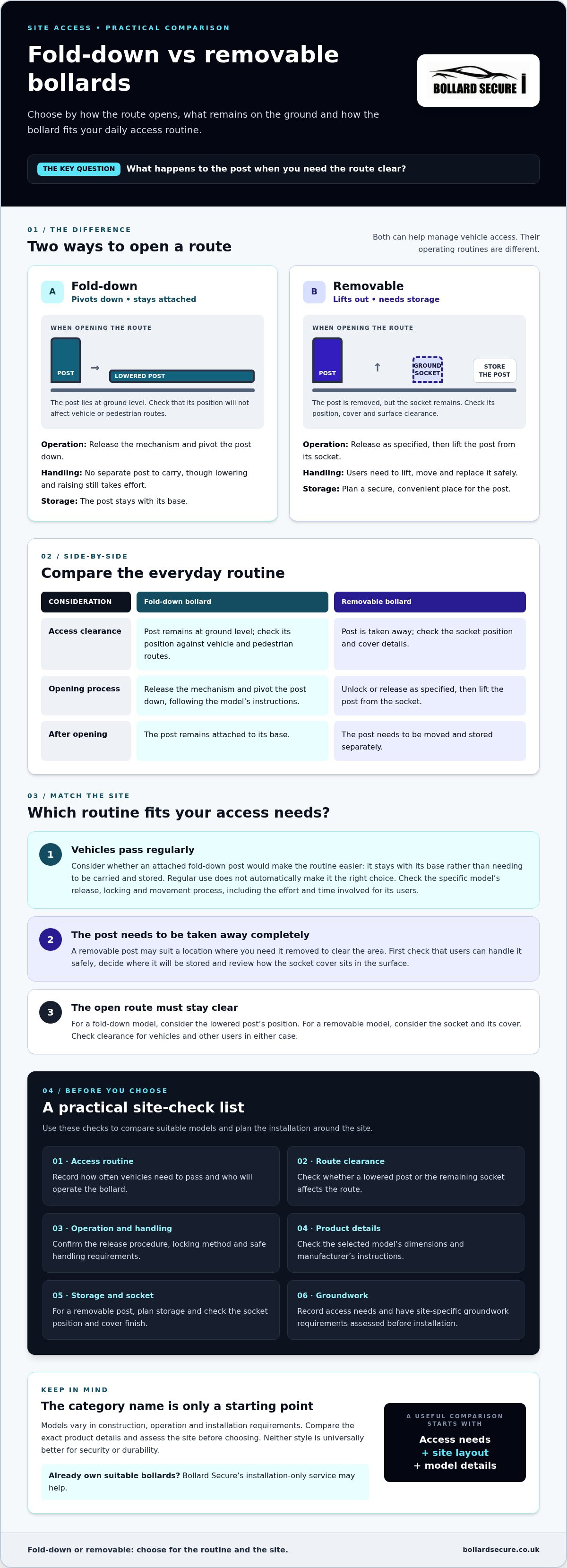
A fold-down bollard pivots down but remains attached to a fixed base. A removable bollard lifts out of a ground socket when access is needed, leaving the socket in place. Both styles can help manage vehicle access. The main difference is what happens to the post when the route needs to be clear.
A lowered post remains at ground level, while a removed post has to be handled and stored elsewhere. The socket also remains in the route, so check how it is finished and whether it provides suitable clearance for the vehicles and other users. Traffic bollards are used in a range of traffic-management and security contexts, but the precise design and operation depend on the model.
In the fold down bollard vs removable bollard comparison, don’t assume that every model works in the same way. Check the manufacturer’s instructions for dimensions, locking method, release procedure and installation requirements before choosing.
How does a fold-down bollard work?
A fold-down bollard is secured to a base and pivots at a hinge. To open the route, an authorised user releases the mechanism and lowers the post. It remains connected, so there is no separate post to carry away. However, the lowered bollard still occupies space on the ground. Check where it will sit in relation to vehicle and pedestrian routes, and make sure users understand the model’s locking and release instructions.
How does a removable bollard work?
A removable bollard is lifted out of a compatible ground socket to open the route. The socket stays in the ground, so check how it is covered or finished and whether the surface is suitable for the access you need. Plan where the post will be stored, and check its weight and handling method before purchase, particularly if different people may need to remove and replace it.
These operating differences are a starting point, not a complete measure of suitability or security. Models vary in construction and operating procedure, so confirm product details rather than relying on the category name alone. Installation needs also depend on the selected bollard and the site. Check the product specifications and have the groundwork requirements assessed before arranging installation.
Fold Down and Removable Bollards Compared for Everyday Access
For everyday access, consider the whole process: how the user opens the route, what remains on the ground and where the bollard goes afterwards. A fold-down post stays attached to its base; a removable one must be lifted out and managed separately. The better fit depends on the site layout and access routine, not on a universal advantage in security or durability.
Which type suits frequent vehicle access?
If vehicles pass regularly, consider whether an attached fold-down post would make the routine easier. It stays with its base rather than needing to be carried and stored. Frequent use does not automatically make this the right choice, though. Check how the specific model releases, locks and moves, then consider the effort and time involved for the people who will operate it. The bollard design and security guidance from the Whole Building Design Guide also highlights how bollard selection fits into wider site and facility planning.
When does a removable bollard make sense?
A removable post may suit a location where you need the bollard taken away completely to clear the area. First, make sure users can handle it safely and decide where it will be stored between uses. Check the socket’s position and how its cover sits in the surface when the post is out. These details affect whether the cleared route works for vehicles and other users.
For a useful comparison, record how often access is needed, who will operate the bollard and what must remain clear when it is open. Then compare the exact operating and installation details for suitable fold-down and removable bollards.
Fold Down vs Removable Bollard: Which Suits Your Site?
The right choice depends on the access routine, the people who will use the bollard and the space around the entrance. A residential driveway used by a household may have different needs from a commercial access point shared by staff, visitors or delivery drivers. In either setting, think about what happens each time the route needs to open, not just how the bollard looks when it is in place.
Questions to ask about your access pattern
Start by mapping out access. Who needs to pass? How often do vehicles arrive, and are arrival times predictable? If access is frequent, keeping a fold-down post attached may suit a routine where users lower and raise it regularly. If the post needs to be completely out of the way, consider a removable option, provided there is a practical place to store it.
Think about the users as well. A driveway bollard may be operated by a small household, while a commercial access point could have several authorised users. Check the selected model’s locking arrangement and operating instructions, then make sure each user can operate it as intended. Don’t assume that a mechanism convenient for one person will work equally well for everyone who needs access.
Check the site before choosing a bollard
Mark the proposed position and consider the full movement of the vehicle. Will a lowered post sit clear of the vehicle’s path? Is there enough room for someone to operate the mechanism? For a removable model, can the post be lifted and carried without obstructing the entrance, and is storage nearby? These checks can help rule out a poor fit before installation is planned.
Ground conditions and buried services may affect where and how a bollard can be installed. Ask a competent installer to assess the proposed location, and confirm the selected product’s requirements for its socket, foundation and surrounding surface. Requirements vary by model, so don’t assume that a position suitable for one style will work for another.
Finally, compare security performance using the product’s verified specifications, not the broad category name. Fold-down and removable describe how a post moves; they don’t, on their own, confirm how it performs. For a sound fold down bollard vs removable bollard decision, match the model to your access routine and check that its documented specifications meet the site’s needs.
How to Choose Between a Fold Down and Removable Bollard
Work through the decision in order: define how access works, choose what should happen to the post when the route is open, then check whether the model and site are compatible. This keeps daily convenience and installation requirements in view before you settle on a style.
A five-step decision checklist
List the vehicles and access pattern. Record which vehicles need to pass, how often access is required and whether arrival times are predictable.
Decide where the post should go when access is open. Should it stay attached to its base, or be removed and stored elsewhere?
Check the operating routine with users. Confirm who will operate the bollard and whether they can manage the specific release or locking method. For a removable model, include lifting, carrying and storage in the plan.
Review the proposed position. Check vehicle clearance and the space needed to operate the post. Ask a competent installer to assess the ground and any buried services that could affect the location.
Verify the model and installation details. Check the product’s dimensions, locking method, supplied components and documented security specifications. Confirm site preparation requirements against the chosen model’s guidance.
Keep two lists as you work through these steps. Mark access needs, users, vehicle clearance and available storage as site requirements. Put dimensions, operating details, components and groundwork on a separate verification list for the supplier or installer. This helps distinguish your site needs from details that still need to be confirmed about a product.
What to confirm before ordering
Product details vary, so check the exact model rather than relying on a general description. Ask which components are included and confirm how the bollard is released, operated and secured. Then have the installation requirements checked against the proposed position and ground conditions before work is arranged.
If you already own suitable bollards, Bollard Secure’s installation-only service may be relevant. Confirm that your existing hardware is appropriate for the site and that its installation requirements are understood before proceeding.
Decision rule: Choose a fold-down style if keeping the post attached fits your access routine. Consider a removable style if taking it away suits the site and you can manage its handling and storage. In either case, verify the model and installation requirements.
Use your checklist to compare fold-down and removable bollards before deciding which operating style fits your property.
Choose Your Bollard and Plan the Next Step
There’s no single winner in the fold down bollard vs removable bollard decision. Choose based on how people use the access point, how often vehicles need to pass and what needs to happen to the post when the route is open. A post that remains attached may suit users who prefer not to carry and store it. A removable post may fit a site where taking the bollard away completely is useful, provided users can handle it safely and storage is available.
Match your decision to the right bollard category
Use your checklist to narrow down the operating style, then check the actual model against the site. Consider access frequency, who will operate the bollard, vehicle clearance, storage and any constraints identified during a site assessment. The selected model’s dimensions, locking method and operating procedure matter as much as its general category.
Post stays attached: Explore Bollard Secure’s fold-down bollards if keeping the post with its base suits your access routine.
Post lifts out: Explore the removable bollard category if you need to take the post away when access is open and have a safe handling and storage plan.
Neither category guarantees a particular level of security or site suitability. Confirm performance claims against the exact product specifications, and check that the proposed position and installation requirements work for your property. Ground conditions and existing services may affect what’s feasible, so don’t finalise the choice on appearance or operating style alone.
Prepare for product advice or installation
A little preparation can make an initial discussion more useful. Gather photographs of the access point, relevant measurements and a clear description of which vehicles need to pass and how often. Note where the post could sit when access is open, who will operate it and, for a removable bollard, where it could be stored. These details help identify questions to confirm, but don’t replace checking product guidance or site requirements.
Already own suitable hardware? Have its specifications available and confirm that the model and site requirements are understood before arranging work. Bollard Secure also offers an installation-only service for customers with existing bollards.
Once you’ve recorded your access needs and checked the outstanding product and site details, discuss whether the fold-down or removable category is the better fit. Discuss your bollard requirements with Bollard Secure, including installation-only requirements if you already have suitable hardware.
Choose the Bollard Style That Fits Your Access Routine
The fold down bollard vs removable bollard decision comes down to how access works on your site. A fold-down post stays attached when lowered, while a removable post is lifted out and needs safe handling and storage. Consider how often vehicles pass, who will operate the bollard and what clearance the route needs.
Before settling on a model, check its operating instructions and specifications, then confirm that its installation requirements suit the site. Ground conditions, buried services and available space can all affect the final choice. There’s no blanket winner, only the option that best matches your practical needs.
Bollard Secure supplies fold-down and removable bollards across the UK. If you already have suitable hardware, its installation-only service may also be relevant. Discuss your bollard requirements with Bollard Secure and have your access details and product specifications ready.
Frequently Asked Questions
What is the main difference between a fold-down and a removable bollard?
A fold-down bollard pivots down but remains attached to its base; a removable bollard lifts out of a ground socket and must be stored elsewhere. That’s the central difference in the fold down bollard vs removable bollard choice. With either type, check the exact model’s release method, locking arrangement and dimensions. Also consider what remains in the vehicle route when the bollard is lowered or removed.
Is a fold-down bollard or a removable bollard better for a driveway?
Either may suit a driveway, depending on how you use it and what the site allows. A fold-down model keeps the post attached when lowered, while a removable one can be taken away and stored. Consider how often vehicles need access, who will operate the bollard, whether a lowered post affects the route and where a removed post could be kept. Check the chosen model’s specifications and installation requirements before deciding.
Can a removable bollard be used every day?
A removable bollard can be operated regularly if its model suits the routine and users can manage it safely. Each opening involves releasing and lifting the post, then storing it; access also involves replacing it in the socket. Consider the effort and time involved, especially if several people will use it. Check the manufacturer’s operating instructions and plan a convenient storage place before choosing it for daily access.
Is a fold-down bollard easier to use than a removable bollard?
Not necessarily. A fold-down bollard stays attached, so users don’t need to carry and store the post, but they still need to release, lower and raise it. A removable model requires lifting and separate storage, which may or may not suit the users. Ease of operation depends on the exact mechanism, site layout and people using it. Check the product instructions and consider the full routine before selecting a style.
Do removable bollards need a ground socket?
Yes, a removable bollard is designed to lift out of a compatible ground socket, which remains in place when the post is removed. Check the selected model’s guidance to confirm socket compatibility, installation requirements and how the socket is covered or finished when clear access is needed. Its position matters too: consider whether it will affect vehicle clearance or the surface used by pedestrians once the bollard is out.
Can I install a fold-down or removable bollard myself?
Whether you can install one yourself depends on the specific product, your experience and the site’s groundwork requirements. Read the manufacturer’s instructions and confirm what preparation, tools and components are needed. Check the proposed position for ground conditions and buried services before work begins. If you already own suitable bollards but want installation support, Bollard Secure offers a dedicated installation-only service. Confirm hardware suitability and installation details first.
Which bollard is more secure, fold-down or removable?
Neither style is automatically more secure because it folds down or lifts out. Security depends on the exact model and its verified specifications, as well as whether it suits the site’s requirements. Compare documented performance, construction and locking details rather than relying on the category name. If you’re unsure what specification is appropriate, ask the supplier or installer to clarify the product information before purchase and installation.


Comments