
Driveway Bollard Regulations: Where You Can Install Bollards
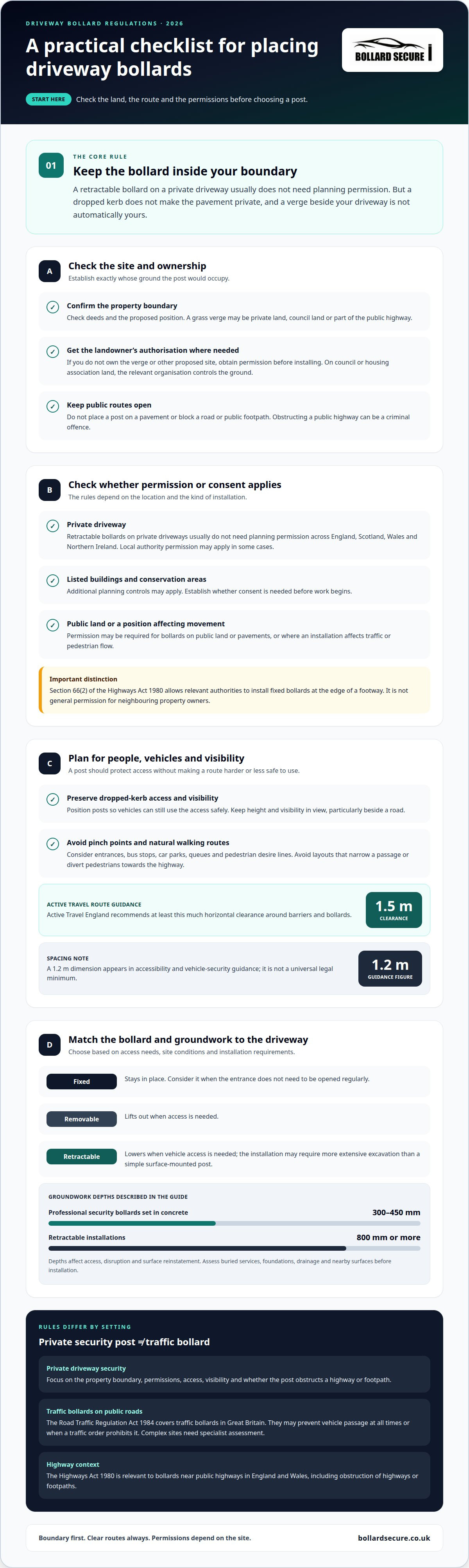
A bollard can be allowed on a private driveway but still be in the wrong place. For driveway bollard regulations in 2026, the general rule is that retractable bollards on private driveways usually don’t need planning permission, but you should consider property boundaries and deeds. Don’t install them on a pavement, and get the landowner’s authorisation before placing them on a verge you don’t own.
It’s understandable to expect a simple yes-or-no answer, especially when a verge looks like part of your driveway. The details matter: who owns the ground, whether the bollard affects people using the road or pavement, and whether it’s a private security post or a traffic bollard. This guide explains where driveway bollards can go, what applies to grass verges and public highways, and how traffic-bollard guidance differs from the rules for private security posts. You’ll also find the practical considerations that help keep an installation clear of boundaries, access routes and pedestrian movement.
Table of Contents
Where Can You Install Bollards?
Install bollards within your property boundary, where they can protect vehicles without obstructing a pavement or road. Near a dropped kerb, position them so they preserve access and visibility.
Fixed bollards stay in place, removable models lift out, and retractable types lower when vehicle access is needed. Choose according to how often you need the driveway entrance to remain open.
There is no single UK purchase and installation cost: the bollard type, excavation, foundations and surface reinstatement all affect the total. Powered retractable systems also require different groundwork from a simple surface-mounted post.
Installation groundwork and building regulations
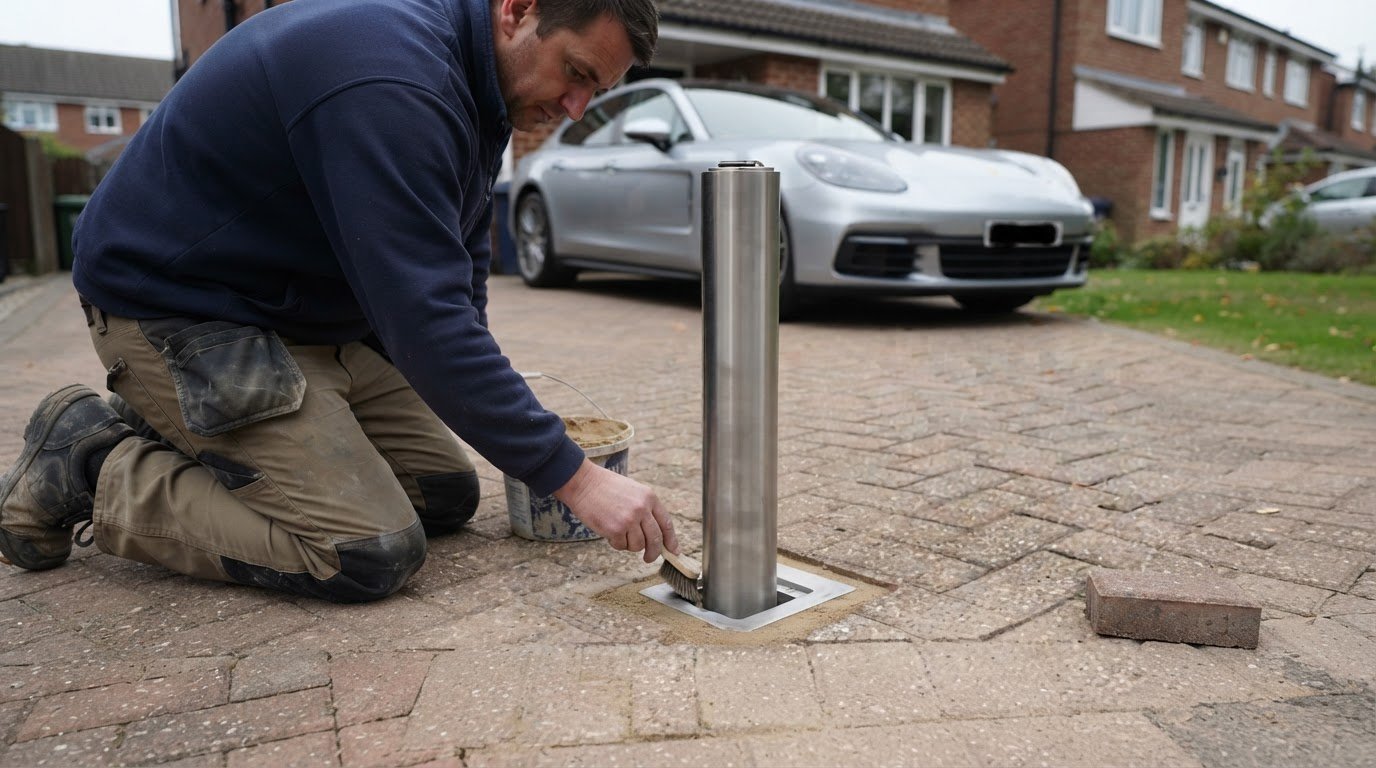
Groundwork means preparing a stable foundation and fitting the bollard without damaging buried services or nearby surfaces. Professional security bollards are typically set 300-450 mm deep in concrete, while retractable installations can require excavation to 800 mm or more. Those depths affect access, disruption and reinstatement. Building regulations are separate from planning permission; assess the site, mounting method and drainage before installing. For posts beside a road, keep height and visibility in view.
Planning and heritage permissions
Planning permission concerns whether an installation is allowed at a particular property. Across England, Scotland, Wales and Northern Ireland, retractable bollards on private driveways usually don’t need it, but local authority permission may apply in some cases. Check property deeds and boundaries as part of planning the location. Listed buildings and conservation areas can have additional planning controls, so establish whether consent applies before work begins. Public land, pavements and installations affecting traffic or pedestrian flow may also require permission.
A dropped kerb allows vehicles to cross the pavement; it does not make the pavement private property. Keep posts within your boundary and clear of the footway so people and vehicles can pass safely. Consider visibility, safe access and ongoing maintenance: keep moving parts clear and make sure posts remain secure. An installation that obstructs a highway can create liability, even when it is beside a driveway.
Is Putting Bollards on Grass Verges Illegal?
A grass verge may be private land, council land or part of the public highway. Before placing a bollard there, establish who owns or manages the ground. Installation on land you do not own generally requires the landowner’s authorisation. A verge beside your driveway is not automatically part of your property.
The Highways Act 1980 consolidates highway and roadway regulations in England and Wales and is relevant to bollards near public highways, including obstruction of highways or footpaths, according to UK legislation. Obstructing a public highway, including a road or pavement, can be a criminal offence. Keep any post clear of the route, rather than narrowing or blocking it.
Public rights of way must remain usable. A bollard across a footpath could obstruct people travelling through, even if it helps prevent unwanted parking. Do not treat the roadside edge as spare driveway space. Consider pedestrians and vehicles as well as the property boundary when choosing a position.
On a council or housing association property, the relevant organisation controls the land. Obtain its permission before installing bollards. Using a driveway or parking area does not itself give residents permission to alter shared or public ground.
Public-sector and commercial installations also need authority over the site and a layout that preserves safe access. Relevant authorities may install fixed bollards at the edge of a footway under section 66(2) of the Highways Act 1980. That power applies to relevant authorities, not as a general permission for neighbouring property owners.
Parking on a public road or pavement is different from securing a private entrance. A bollard placed to reserve public parking or block pavement access can obstruct the highway. Planning permission may be required for bollards on public land or pavements, or where they affect traffic or pedestrian flow. For a private site, a bollard installation service can help match the installation to its intended location.
What are Traffic Bollard Regulations?
Traffic bollards on public roads are governed by traffic rules, while placement guidance also considers pedestrian movement. Treat spacing figures as guidance, not as a universal legal minimum.
The Road Traffic Regulation Act 1984 covers traffic bollards in Great Britain. They may prevent vehicle passage at all times or when a traffic order prohibits it. For placement, consider route capacity, comfort and convenience, and avoid blocking entrances or diverting pedestrians towards the highway. A complex site needs specialist assessment before installation.
Pedestrian and cyclist clearance
Clearance is the usable space around a bollard for people travelling on foot, by wheelchair or by cycle. It matters because a post can narrow a route or push people into conflict with vehicles. Active Travel England recommends at least 1.5 metres of horizontal clearance around barriers and bollards on active travel routes. The route’s use and surrounding layout inform placement.
Assess pedestrian desire lines, meaning the natural routes people take between destinations. A shop entrance, bus stop or car park can shape these paths. Position bollards to avoid narrow passageways, queues and areas with limited visibility. The Centre for Protection of National Infrastructure has published guidance on bollards and pedestrian movement; placement should avoid pinch points and opposing flows.
Pedestrian access and spacing
Spacing is the clear gap between posts, which determines whether people can pass comfortably. A 1.2 m dimension appears in accessibility and vehicle-security guidance, but it isn’t a universal legal minimum. The Department for Transport’s Inclusive Mobility guidance advises leaving at least 1.5 metres between street bollards if possible. That space helps preserve access for wheelchairs, prams and mobility scooters.
Reinstalling bollards or adding them near parking areas calls for a fresh look at actual pedestrian routes. A 1.3 to 1.5 metre gap is generally considered sufficient for pedestrians to pass between posts, but the full layout matters. Check whether bollards block entrances, create a pinch point, or make people walk close to traffic. Keep access and vehicle security in balance.
Rules for driveway security posts
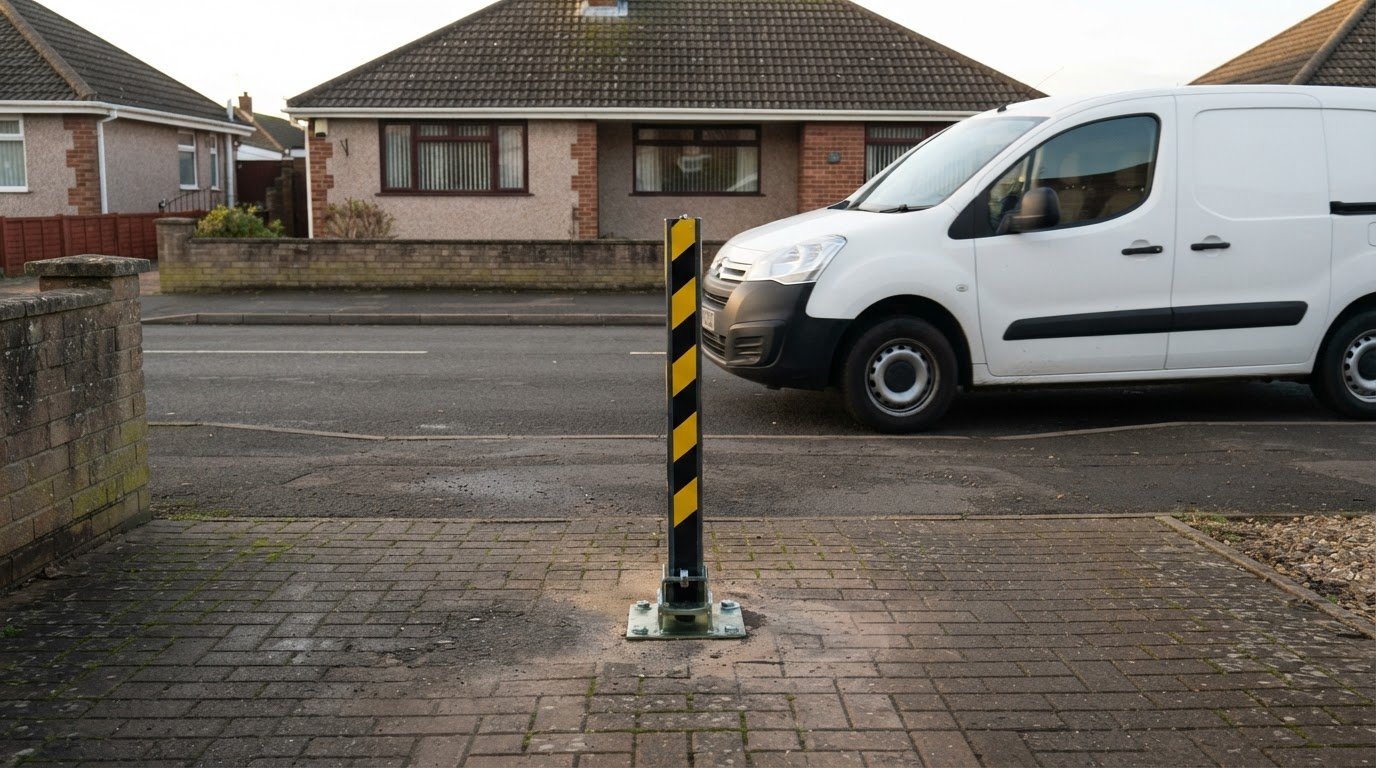
Residential security posts protect a driveway entrance from unauthorised vehicle access. They differ from traffic bollards, which manage movement on public roads and may carry regulated traffic signs. A post on private property is not automatically a traffic-control device, but its position must not obstruct a public route.
According to UK legislation, the Traffic Signs Regulations and General Directions 2016 (TSRGD) sets out national rules for traffic signs, including signs on bollards. The TSRGD lists traffic-bollard signs including diagrams 606, 610, 611, 616, 951, 955, 956 and 957. Signs 610 and 611 don’t require a traffic order; sign 611 is permitted only when traffic may pass either side to reach the same destination. These provisions concern traffic signs, not a blanket specification for private driveway posts.
For a residential entrance, plan the security posts around the opening they protect. The arrangement should extend beyond the exit, and its overall width should exceed the entrance width. Security guidance recommends no more than 1.2 metres between posts where they’re used as a vehicle security barrier. That spacing helps limit vehicle access, but the layout must still preserve pedestrian access and avoid blocking the pavement.
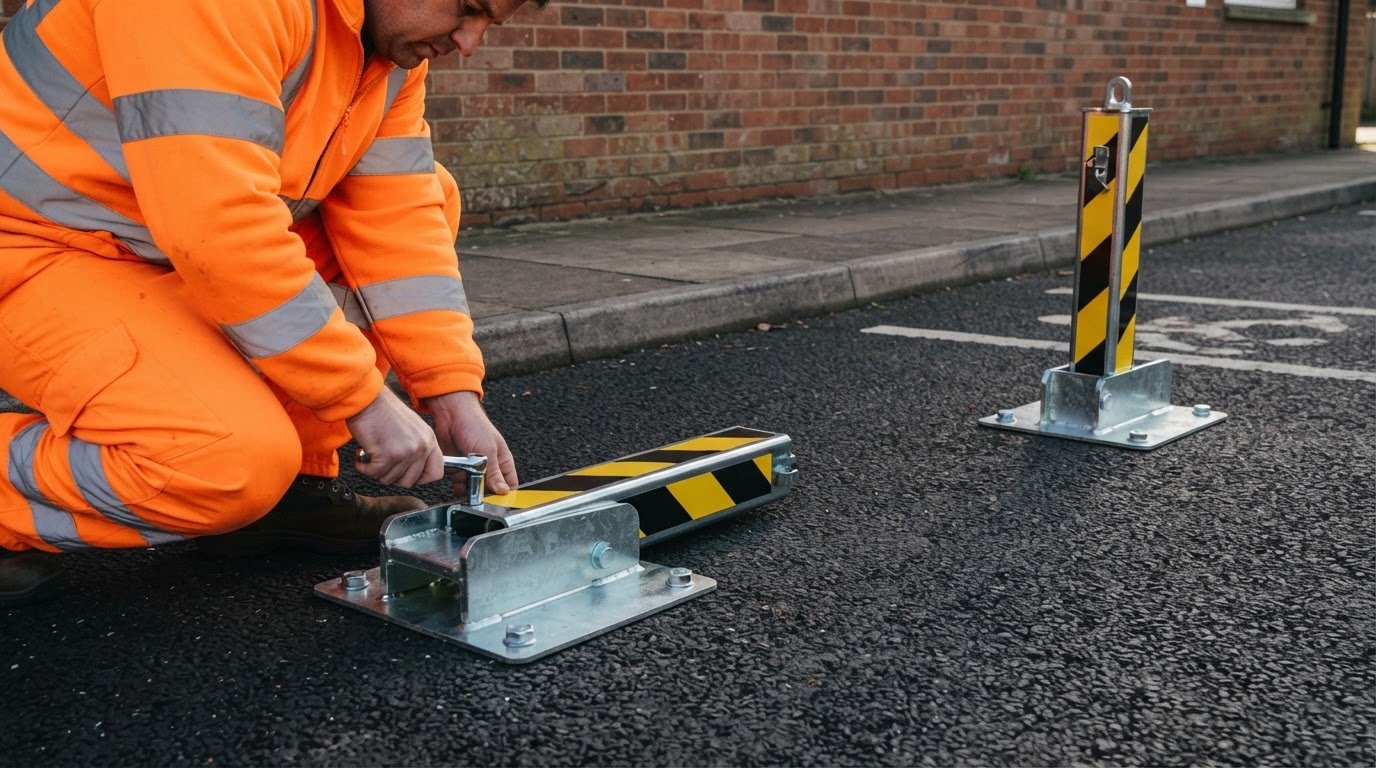
Choose a fixed post when the entrance does not need regular clearance. A removable or fold-down type suits access that must be opened manually, while a telescopic post retracts into the ground. Visibility matters for every type: consider whether parked vehicles, darkness or weather could conceal a raised post. Keep moving parts clear and maintain the installation so damage does not affect operation.
For posts beside a road, height and visibility deserve particular attention. Avoid placing them where they obstruct sightlines or create a hazard for pedestrians and traffic. A suitable position also depends on the driveway boundary and ground conditions. Arrange bollard installation for a driveway layout that needs a professionally fitted security post.
Bollard Secure
Bollard Secure helps you choose a driveway security post that suits your access needs and installation location. If you need to deter unauthorised parking but still use the entrance regularly, consider whether a fold-down, removable or telescopic option fits the way you use the space. Parking Posts provide another option for managing a residential driveway.
Before choosing, gather the key details: where the property boundary lies, how vehicles enter, and whether pedestrians need clear access nearby. These points help narrow down a suitable bollard type and installation approach, without confusing private security posts with traffic-control equipment.
If you’re planning a driveway installation and want to discuss the options, contact Bollard Secure.
Plan a compliant driveway installation
Before choosing a post, decide what the entrance needs to do day to day. Consider how vehicles use the space, whether access must remain clear at times, and how the proposed position relates to the property boundary. Applying driveway bollard regulations in 2026 starts with matching the installation to the site, not simply selecting a post by appearance.
Bollard Secure supplies Fold-down Bollards, Telescopic Bollards and Parking Posts for different driveway needs, and offers nationwide installation across the UK. Share your intended use and site layout to discuss the options and plan a suitable installation.
For practical advice on a driveway security post, contact Bollard Secure for advice. A clear plan is a positive first step towards protecting your entrance while keeping access in mind.
Frequently Asked Questions
Are bollards legally required in the UK?
No, bollards are not a universal legal requirement for private driveways. They are generally installed to manage vehicle access or protect a space, rather than because every property must have them. Traffic bollards serve a different purpose and may be used alongside traffic restrictions. For a homeowner, the key question is whether a post can be installed at the chosen location without creating an obstruction.
What are the rules for bollards in the UK?
The rules depend on whether bollards are on private property or form part of traffic management. Private installations must respect ownership boundaries and mustn’t obstruct public routes. Traffic signs on bollards are covered by the Traffic Signs Regulations and General Directions 2016. For instance, a post carrying a road sign isn’t simply a private security post with an added sign; traffic-sign requirements apply.
Can I use bollards outside my house?
Yes, you can use bollards outside your house if the installation is within land you are entitled to use and does not obstruct the public highway. A post on your driveway differs from one placed on a shared access route, pavement or verge. For example, you cannot reserve public kerbside parking by placing a private post on the road without lawful authority.
What colour should bollards be?
Private driveway security posts do not have one universal colour requirement. Choose a finish that makes the post easy to distinguish from its surroundings, particularly if parked vehicles or low light could affect visibility. Traffic bollards carrying signs are different: the sign must follow applicable traffic-sign rules. Colour alone does not make a private security post an authorised traffic-control device.
What is the recommended spacing for bollards?
Spacing depends on whether the priority is restricting vehicles or preserving pedestrian access. For a vehicle security barrier, guidance cited for UK bollards recommends a maximum gap of 1.2 metres. For pedestrian routes, the Department for Transport advises at least 1.5 metres between street bollards if possible. These figures address different uses, so plan the layout around the route being protected.
What UK regulations apply to installing bollards on a private driveway in 2026?
For driveway bollard regulations in 2026, consider land ownership, planning controls and any effect on public access. Retractable bollards on private driveways usually don’t need planning permission, but property deeds and boundaries matter. Listed buildings or conservation areas may involve additional controls. Keep posts off pavements and public highways unless authorised. Traffic-sign rules apply to traffic bollards, not automatically to an unmarked private security post.
Comments