
Battery Powered Driveway Bollards: UK Buyer's Guide
Solar powered driveway bollards can help illuminate an entrance, but they may do little to stop a vehicle entering it. Solar bollard lights are usually designed to light paths and entrances, while security bollards provide a physical barrier to vehicle access. The right choice depends on what you need your driveway to do.
It’s understandable to want lighting that’s simple to install and works without mains wiring. However, UK daylight, winter conditions and shade can affect how reliably solar lights perform. And a light alone isn’t a substitute for physical protection. This guide explains what solar bollard lights can and can’t do, how to assess light output and placement, and when a separate security measure may be needed.
You’ll find practical points to consider before buying, from driveway layout and available sunlight to upkeep and access requirements. If vehicle access protection is the priority, we explain how dedicated security bollards differ from lighting products, including Bollard Secure’s supply-and-install and installation-only services. That way, you can choose a setup that suits your driveway instead of expecting one type of bollard to solve two different problems.
Table of Contents
What are solar powered driveway bollards, and what do they actually protect?
The term can refer to two very different products. A solar bollard light is an outdoor light fitting that collects solar energy and stores it for use after dark. A security bollard is a physical product intended to control vehicle access. One helps you see the driveway; the other is selected to restrict vehicle movement.
In a solar light, a panel converts daylight into electrical energy, which is stored for later use. The panel generates power, but it doesn’t make the fitting a security barrier. For a simple explanation of the technology, see How Solar Panels Work. A light’s performance depends on its design and the conditions at the installation site, so don’t assume every model will provide the same output or operate for the same length of time.
Illumination can make an entrance, path or driveway edge easier to see, but light alone doesn’t physically stop a vehicle entering. A sturdy-looking shape or a position near the entrance doesn’t mean a light fitting is designed to resist vehicle impact. Keep the decisions separate: choose lighting for visibility and access protection for controlling vehicle movement, or use both when your driveway calls for both functions.
Are solar bollard lights the same as security bollards?
No. A solar bollard light provides illumination, while a security bollard creates a physical obstacle to vehicle access. Their appearance may overlap, but their purposes and performance are different. If you want to protect a vehicle or control access to your property, choose a dedicated security bollard for that requirement. Don’t treat a light fitting as a barrier simply because it stands beside a driveway.
When can solar bollard lights suit a driveway?
Solar bollard lights may suit driveways where you want to mark an edge, highlight a path or make a pedestrian route easier to see after dark. They can also be useful where running power cables would be difficult or undesirable. First decide what needs lighting and where fittings could sit without obstructing vehicles. The result depends on the product and site conditions, so avoid assuming a particular brightness, runtime or security outcome.
Start by naming the problem you’re trying to solve. Is it difficult to see the driveway boundary at night, or do you need to prevent unauthorised vehicle access? The first points towards lighting; the second calls for a physical access-control measure. If both matter, plan for each function separately and make sure each product is suited to its job.
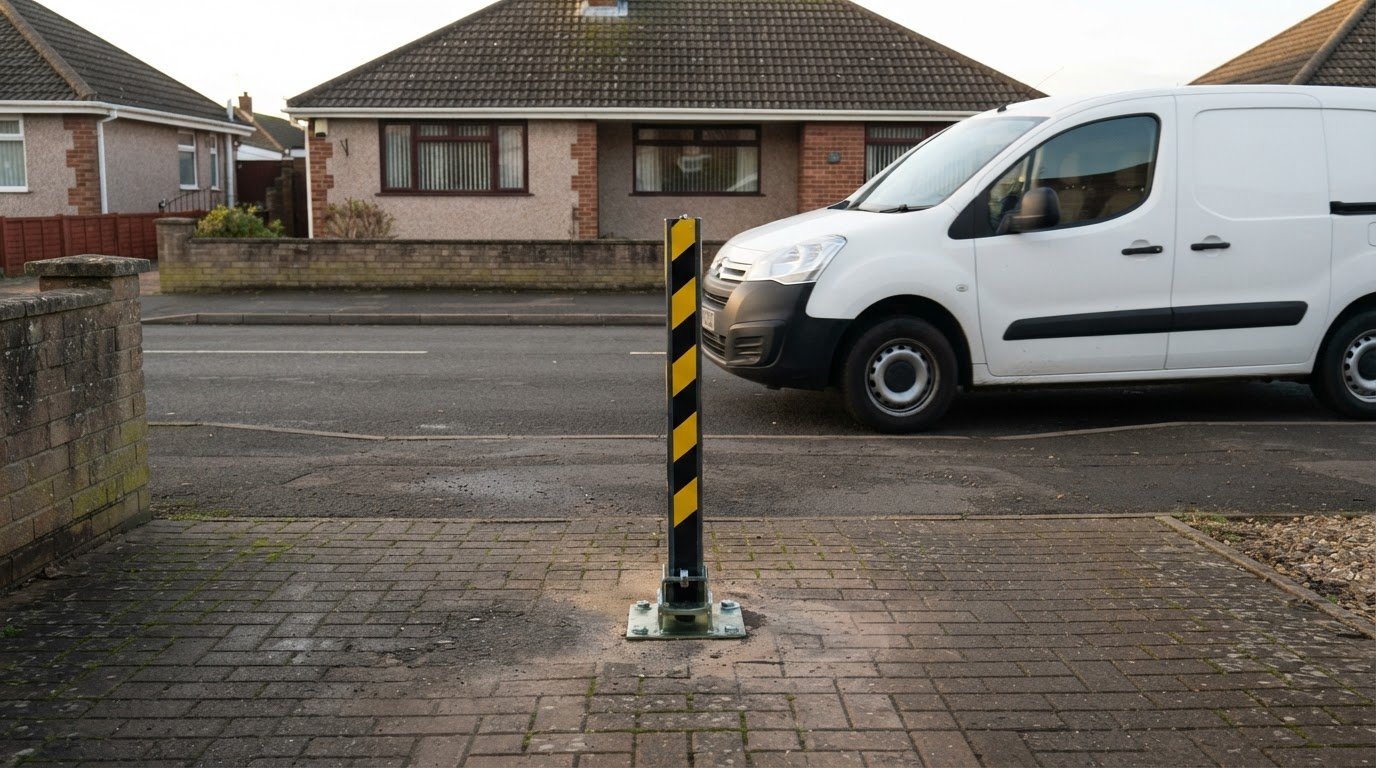
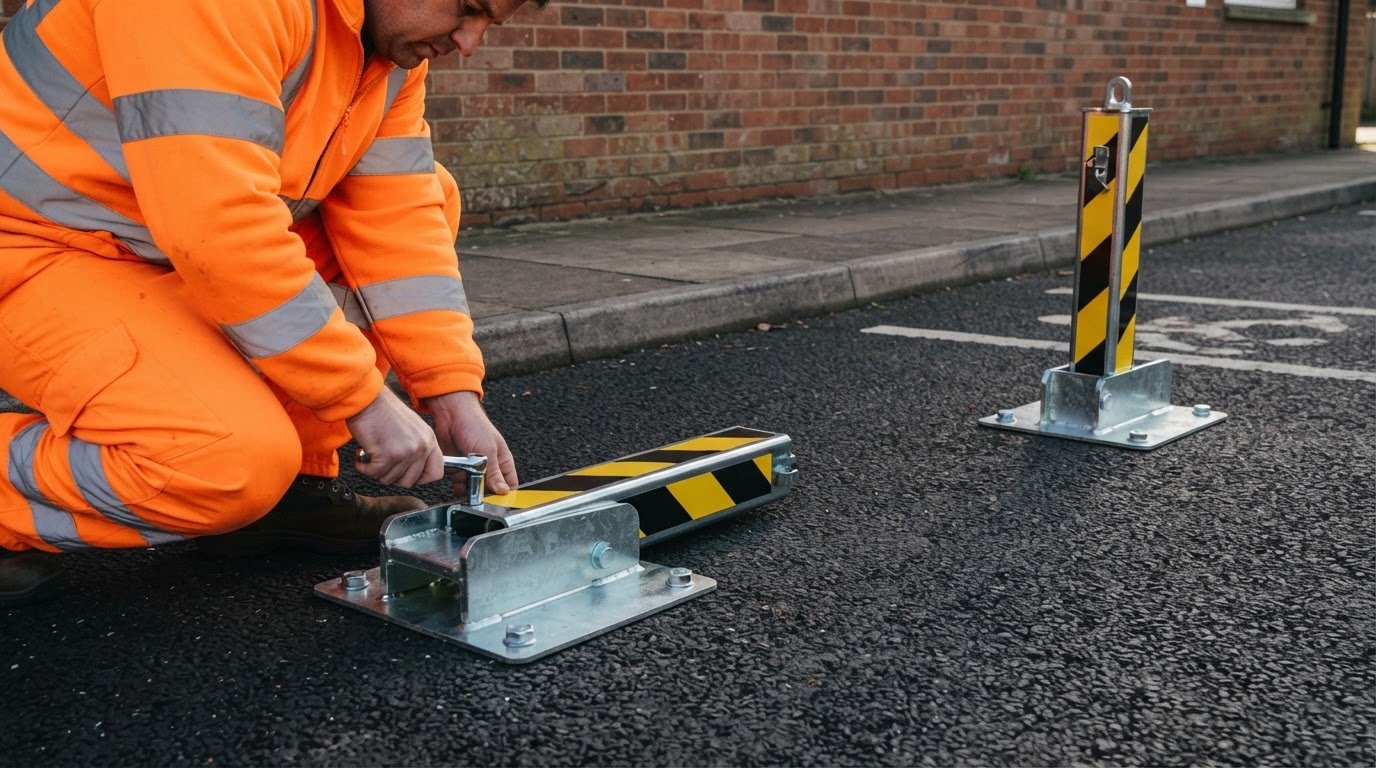
For vehicle-access protection, Bollard Secure supplies security bollards and offers supply-and-install or installation-only services. The range includes fold-down, telescopic, removable and static bollards. Consider how vehicles use the entrance and whether the bollard needs to move out of the way for authorised access. This helps you compare products by function, rather than relying on the word “bollard” alone.
How do solar driveway bollards work in UK conditions?
A solar bollard light follows a straightforward cycle: daylight reaches its solar panel, the panel converts light into electrical energy, and stored energy powers the lamp after dark. The arrangement varies by product, so check how its panel, energy storage and light are designed to work together.
Performance depends on both the product and its position. A fitting in an open spot may receive more useful daylight than one shaded by a building or tree. Seasonal changes matter too: UK days are shorter in winter, and lower daylight can affect how much energy a panel collects. This doesn’t mean every solar light will perform poorly in winter, but it does make site conditions and the maker’s performance guidance important.
Unobstructed daylight gives a solar panel a better opportunity to collect energy, so assess the spot throughout the day before positioning a light.
How do shade and panel position affect solar bollard lights?
Look for shade cast by trees, walls, buildings and even vehicles left in a regular parking spot. An area that seems bright at midday may be shaded for much of the morning or afternoon. Panel position also affects exposure, but there’s no universal direction that suits every driveway. Observe where and when sunlight reaches the proposed locations, then compare what you find with the product’s guidance.
For a useful check, walk the driveway at different times and note which areas stay clear of shade. Consider seasonal changes too, such as a tree canopy that blocks more light in summer. The UK Government’s information on plug-in solar panels provides broader context on solar power in the UK; it doesn’t determine how a particular bollard light will perform at your property.
What should buyers know about light output and upkeep?
Compare each product’s specifications, especially its stated brightness and runtime. Treat those figures as product information, not a promise that you’ll get the same results in every driveway. Shade, seasonal daylight and the light’s design all affect what to expect. Check whether the stated performance conditions resemble your site, rather than choosing on headline claims alone.
Follow the manufacturer’s instructions for cleaning and caring for the panel and rechargeable components. Dust, dirt and other surface deposits can affect the panel’s exposure, while care guidance may differ between products. Build occasional checks into your routine, particularly if nearby plants grow or outdoor conditions change. If a light no longer performs as expected, review its position and follow the product guidance before assuming it’s faulty.
Make your decision based on the driveway itself: note shade, likely panel exposure and the areas that need illumination. If physical vehicle-access protection is a separate priority, explore security bollard options from Bollard Secure, with supply-and-install and installation-only services available.
Solar bollard lights vs security bollards: which driveway need comes first?
Start with the job you need done. A light can improve visibility along a driveway, but it doesn’t create a physical barrier to vehicle access. A security bollard is chosen to control vehicle movement. If you need both better visibility and access protection, plan for both functions instead of expecting one product to do both.
Solar lighting provides illumination; a security bollard provides a physical access barrier. Keep that distinction in mind as you decide what comes first. If the main issue is seeing the driveway route after dark, assess lighting. If the priority is controlling vehicle access, focus on a security bollard. Where both needs matter, plan them separately and consider how their positions will work together.
Choose solar bollard lights when visibility is the priority
Match the light to the area you want to see: the entrance, a pedestrian route or the edge of a driveway. Then assess daylight exposure alongside the product’s stated brightness and runtime. A shaded position or a layout that doesn’t receive suitable daylight may affect performance. Solar lights are for illumination, not for stopping vehicle theft.
Choose a security bollard when controlling vehicle access matters
If you need to manage vehicle entry, consider a security bollard suited to how the driveway is used. Bollard Secure supplies Telescopic Bollards, Fold-down Bollards and High-security Bollards. The right access-control approach depends on the site and how authorised vehicles need to use it. A site assessment helps establish surface suitability and an appropriate fixing method.
For driveways where the bollard needs to move out of the way, explore the fold-down bollard driveway buying guide. If you’re considering an option that can be removed, the removable bollards driveway guide covers that choice. These options address access control, not solar illumination.
Make a simple two-part plan: mark where light is needed, then identify where vehicle access needs controlling. This keeps the lighting decision clear and helps you choose a security bollard based on the driveway’s practical use.
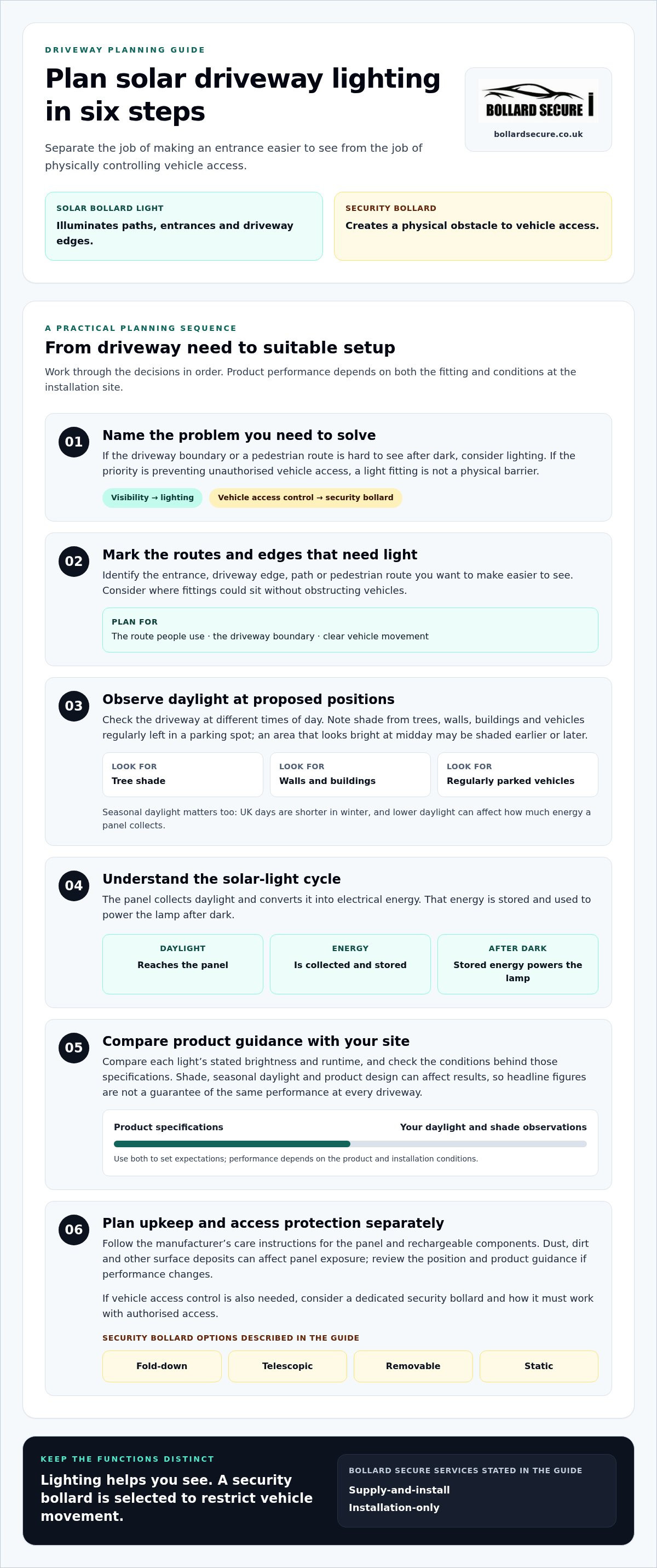
How to plan solar lighting and driveway bollard positions
A useful layout starts with the driveway, not the product. Mark where vehicles enter, park and turn, then note pedestrian routes, gates and existing obstructions. Next, observe daylight at possible solar-light positions. Finally, plan lighting and physical access protection as separate functions. This sequence helps you avoid placing a light where it’s shaded or a bollard where it interferes with everyday vehicle movement.
Map the layout. Sketch the entrance, parking spaces, turning areas, gates and usual walking routes. Include features such as walls, planting and steps that could affect visibility or movement.
Observe daylight. Check proposed light positions at different times of day, noting shade from buildings, trees and regularly parked vehicles.
Mark the routes. Identify where people walk and the sightlines drivers need when entering, parking or reversing.
Plan each function. Position lights to illuminate useful areas; consider security bollards separately wherever physical vehicle-access control is needed.
Assess the driveway before selecting lighting positions
Once you’ve mapped the site, consider whether each light can illuminate its intended area without shining unnecessarily into a window or creating confusing glare for drivers. Compare the daylight available at that exact position with the product’s stated performance. Solar powered driveway bollards need practical placement as well as a suitable product: a spot that looks convenient may be shaded for much of the day.
Check that fittings won’t narrow a vehicle route or sit where they’re likely to be struck during parking or turning. A light should help people understand the driveway layout, not create a new obstacle or distraction. If the route changes direction, consider whether the light makes that change visible.
Plan physical access protection around the site
Security bollards have a different purpose. Bollard Secure checks the site and surface before selecting a suitable fixing method, since surfaces vary. Recommended spacing for security bollards is 1.3 to 1.5 metres. This guidance applies to physical access protection, not the spacing of solar lights, which should be positioned according to the area that needs illumination and each product’s specifications.
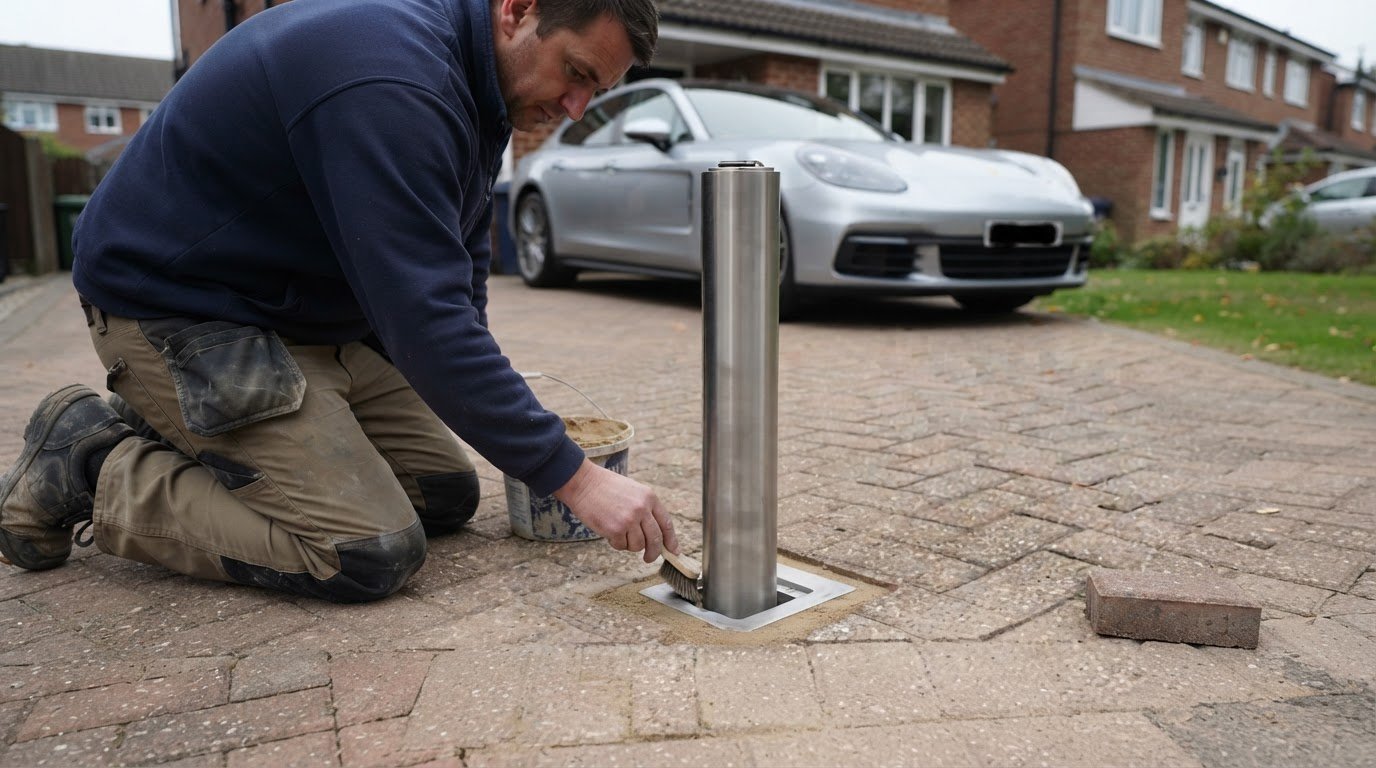
Installation planning includes a pre-installation CAT scan before digging. After fitting, the installer demonstrates how to use the product. These steps connect the position chosen on the plan with practical operation on site. Leave enough room to use the bollard as intended and to move authorised vehicles through the entrance.
Before finalising the arrangement, review the layout from both a driver’s and a pedestrian’s viewpoint. Check that lights illuminate the necessary routes and that security bollards suit the site, surface and access needs. For a security-bollard requirement, arrange a bollard installation with Bollard Secure, with supply-and-install and installation-only services available.
Protect your driveway with the right Bollard Secure next step
The decision is straightforward: choose solar lighting to illuminate a driveway and a security bollard to control physical vehicle access. If you need both, plan for both functions. A light won’t act as a vehicle barrier, and a security bollard shouldn’t be treated as a lighting product. This distinction helps you focus on the actual requirement.
For a security-bollard requirement, Bollard Secure offers supply-and-install and installation-only services across the UK. Installation-only suits customers who have already purchased a bollard and need it fitted. For a new project, the supply-and-install service brings the bollard and fitting together. A free, no-obligation quotation helps you understand the proposed work before proceeding, with a typical response within 24 hours.
What happens when you arrange security-bollard installation?
Before digging, Bollard Secure carries out a pre-installation CAT scan to locate underground services. The site and surface are checked so a suitable fixing method can be selected. This matters because driveway surfaces vary, and the installation needs to suit the specific site rather than assume every surface is the same.
Most installations are completed in a few hours, although timing can vary. After fitting, the installer demonstrates how to use the product. This handover gives you a practical opportunity to see how the bollard operates and understand how to use it at your property.
How can you take the next step?
Before requesting a quotation, note what you need to control, how vehicles use the entrance and whether you already have hardware. These details help define the requirement. If you already own a bollard, the installation-only service provides a route to have it fitted. If you need a new security-bollard solution, Bollard Secure can supply and install it.
Solar powered driveway bollards may help illuminate an entrance or route, but if your priority is physical vehicle-access control, a quotation from Bollard Secure is a practical starting point. Professional installation is available nationwide across the UK, with the work planned around the site and its requirements.
Explore Bollard Secure’s driveway security options and request a free, no-obligation quotation for your security-bollard requirements. First separate your lighting and access-control needs, then choose the option that fits your driveway.
Turn your driveway plan into a practical next step
Before choosing equipment, decide what you want to improve first: visibility, control over vehicle access, or both. That priority gives you a clearer basis for planning solar powered driveway bollards alongside a separate physical security measure, without expecting one to do the other’s job.
If access control is your main concern, consider a security bollard suited to how your driveway is used. Bollard Secure is 5-star rated, Sold Secure Approved and Fully Insured. A quotation gives you a practical way to discuss the project and its installation route, with no obligation to proceed.
For a driveway security requirement, request a free, no-obligation quotation. Take the next step with a clearer sense of what your driveway needs and a solution planned around your property.
Frequently Asked Questions
Do solar powered driveway bollards stop car theft?
No. A solar bollard light is designed to provide illumination, not to physically prevent a vehicle entering or leaving. It may help you see a driveway more clearly, but it isn’t a substitute for a security measure. If you need to control vehicle access, consider a dedicated security bollard suited to the site and how authorised vehicles need to use the entrance.
Do solar bollard lights work during winter in the UK?
They can work in winter, but shorter days and reduced available daylight may affect charging and performance. The result depends on the product and its position, so don’t assume every model will behave the same way. Look for the manufacturer’s seasonal performance guidance, and consider whether the panel will receive daylight without being shaded by buildings, trees or other obstructions.
How much sunlight do solar driveway bollard lights need?
There isn’t one sunlight duration that applies to every model. Panel size, battery capacity and the light’s design affect how it uses collected energy. Compare the maker’s guidance with the daylight available at your intended position. A spot that receives some direct daylight may be more suitable than one shaded for most of the day, but check the product’s stated conditions rather than relying on a general rule.
Can solar bollard lights work in a shaded driveway?
They may still receive some daylight in partial shade, but reduced exposure can affect charging and performance. A location beneath a dense tree canopy or beside a tall wall may be less suitable than a clearer position. Observe the proposed spot at different times of day, including when vehicles are parked. If the area remains heavily shaded, compare alternatives using the manufacturer’s guidance and your lighting needs.
Are solar bollard lights bright enough to light a driveway?
It depends on the product specifications and the area you want to illuminate. A fitting intended to mark a path may not provide the coverage needed across a wider parking area. Compare the stated brightness and coverage information, then consider the layout, obstructions and intended use. For a larger or uneven driveway, you may need more than one light, positioned to avoid dark gaps and confusing glare.
Can solar bollard lights and security bollards be used together?
Yes. They can serve separate purposes in the same driveway: lights help illuminate routes, while security bollards provide physical vehicle-access control. Plan their positions together so lighting doesn’t obstruct vehicle movement and bollards don’t create avoidable dark spots. For example, you might illuminate a pedestrian route while locating security bollards at the access point. Choose each product for its intended function.
Do I need planning permission to install security bollards on private land?
Planning permission is usually not needed for bollards on private land, but this isn’t true in every situation. Requirements may differ for listed properties, conservation areas or proposals affecting public land, verges or pavements. The bollard’s height and position can also matter. If your site has a special designation or the installation may affect land beyond your property, check with your local planning authority before proceeding.
Comments